
Plants
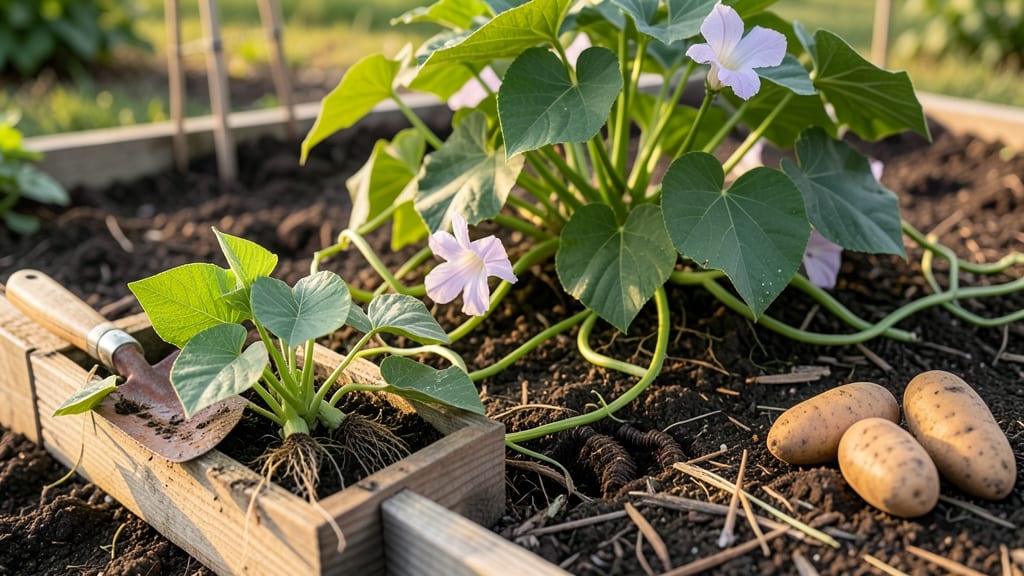
Plant sweet potatoes in Arizona when soil temperatures hit 65°F (18°C)—not by the calendar, but by the thermometer—because the desert’s microclimates demand precision.
Sweet potatoes thrive in Arizona’s heat—but planting them at the wrong time means stunted growth or bitter tubers. Timing isn’t just about the calendar; it’s about soil temperature, elevation, and even your local microclimate.
In Phoenix, that’s usually late March to early May, but in cooler mountain areas like Flagstaff, you might wait until June. The key? A soil thermometer and knowing your zone’s frost-free deadlines—because Arizona’s 365 frost-free days still hide surprises.
Below, I’ll break down the exact soil temp triggers, microclimate risks, and the best heat-tolerant varieties for your yard—so you can grow sweet, plump 🍠 tubers without the guesswork.
Arizona sweet potato planting dates by soil temperature (not calendar months)
Sweet potatoes love Arizona’s heat—but they’re picky about soil temperature. Planting too early in cool soils causes rotten slips, while waiting too long stunts tuber growth. Unlike calendar-based planting, Arizona’s microclimates (Phoenix vs. Flagstaff vs. Yuma) demand soil thermometer precision for success.
The key? 65°F (18°C) minimum for germination and 70°F+ (21°C+) for tuber development.
Your neighbor’s March planting might work in Yuma’s low desert, but Flagstaff’s cooler high desert could need a June start. Even within cities, urban heat islands can shift planting windows by 2-4 weeks.
A soil thermometer ($10 at garden centers) is your best tool—ignore the calendar and listen to the soil.
Why soil temp matters: Sweet potatoes germinate best between 65°F–75°F (18°C–24°C). Below 60°F (15°C), slips rot; above 85°F (29°C), tubers turn woody or bitter. Arizona’s elevation-driven temps mean Phoenix hits ideal ranges in March–April, while Flagstaff waits until June.
Here’s how to use soil temperature to pinpoint your exact planting window—no guesswork:
For Phoenix gardeners, aim to plant when daytime highs hit 85°F+ (29°C+)—this usually aligns with late March–early April. Use black plastic mulch to warm soils 5–10°F faster if your soil runs cool.
In Flagstaff, wait until June when soils consistently stay above 70°F (21°C); otherwise, slips won’t root.
Soil prep is half the battle: Sweet potatoes hate compacted or rocky soil. Amend with 3–4 inches of compost and sand (for desert areas) to improve drainage. Test your soil’s pH (5.8–6.5 ideal)—Arizona’s alkaline soils often need sulfur or peat moss adjustments. Raised beds in cooler microclimates warm up 1–2 weeks faster than in-ground plots.
Once planted, water deeply 2–3 times weekly to encourage tuber growth. Avoid overhead watering—drip irrigation or soaker hoses prevent fungal diseases like black rot, common in Arizona’s humid monsoon season.
Mature vines can stretch 5–10 feet, so give them space or use trellises to save garden real estate.
Harvest time comes when vines yellow and die back (usually 100–120 days after planting). Dig carefully—sweet potatoes bruise easily. Cure them at 80°F–85°F (27°C–29°C) and 80% humidity for 10 days to sweeten the flesh.
Store in a cool, dark place (like a root cellar) for up to 6 months.
🌱 Remember: Arizona’s no-frost rule means you can experiment with fall plantings (September–October) for a winter harvest. Just monitor soil temps—cooler nights in November can drop temps below ideal ranges. Happy planting!
Microclimate risks: why your neighbor’s planting schedule might fail for you
Arizona’s diverse landscapes—from the Sonoran Desert to the White Mountains—create wildly different growing conditions. Your neighbor’s perfectly timed sweet potato planting might fail in your yard due to localized microclimates.
Even in the same city, a 5-degree temperature difference or extra 2 hours of sun can shift your ideal planting window by weeks.
For example, Phoenix’s urban heat island can be 10°F hotter than nearby suburbs, while Flagstaff’s high elevation delays soil warming. These variations affect soil temperature, water evaporation rates, and even pest activity. Ignoring them means risking rotten slips or bitter tubers—not the sweet harvest you’re after.
Even within your own yard, south-facing slopes can be 10°F warmer than north-facing areas. Test your soil with a thermometer at 2-inch depth—this is the real deadline, not the calendar.
For example, a Phoenix backyard might hit 65°F soil by mid-March, while a shaded patio in the same city could need until late April.
Adjust your schedule by observing local plant behavior. If mesquite trees bloom early in your area, it’s a sign to plant sweet potato slips.
Conversely, if paloverde leaves stay curled in June heat, delay planting until temps drop. Monsoon rains can also reset your timeline—soil stays cooler longer, and fungal risks increase.
Pro tip: Use black plastic mulch to warm soil 5-7°F faster in cool microclimates. In hotter zones, opt for straw mulch to insulate roots. These small tweaks can turn a failed harvest into a bountiful one—even if your neighbor’s garden is thriving on a different schedule. 🌱