
Plants
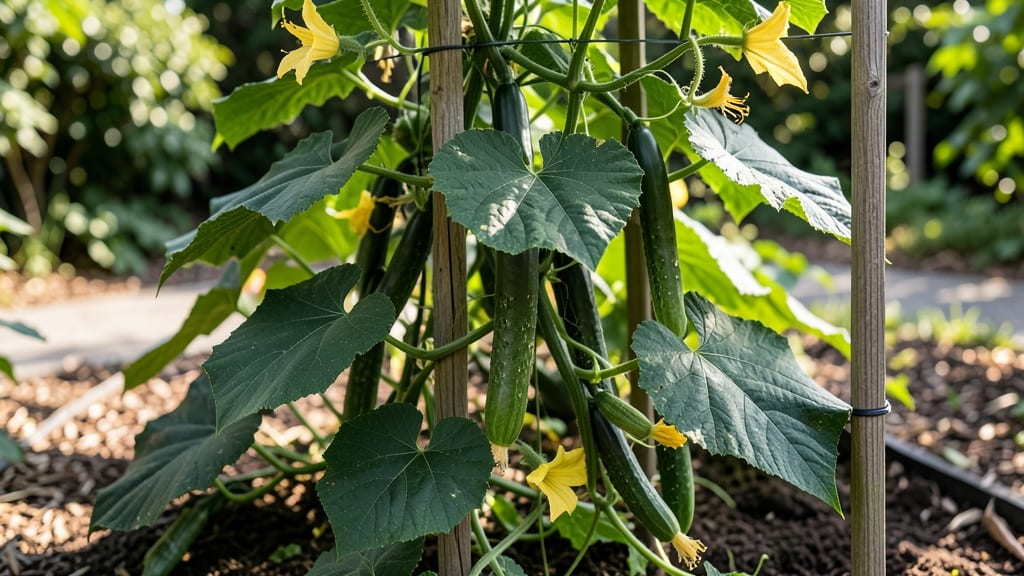
How tall can cucumber plants grow? They can reach up to 20 feet or more when given the right conditions, though most vining varieties top out between 6 and 10 feet—and bush types stay compact at just 1 to 3 feet.
If you’ve ever imagined your cucumbers sprawling across the garden like a jungle vine, you’re not wrong—but that doesn’t mean you’re stuck with a chaotic mess. The key lies in choosing the right variety for your space and providing the support they need to thrive.
Whether you’re working with a small balcony or a sprawling backyard, understanding how tall your cucumbers can grow helps you plan for trellises, spacing, and even pruning to keep things manageable. The right approach can turn a wild tangle into a neat, high-yielding vertical garden.
Below, I’ll break down the differences between vining and bush cucumbers, share tips for managing their growth, and recommend the best compact varieties for small spaces—so you can grow more without the sprawl.


Cucumber plant growth heights: vining vs bush varieties explained
When planning your garden, knowing how tall can cucumber plants grow helps you choose the right varieties for your space. Cucumbers come in two main growth types: vining varieties that climb and sprawl, and bush varieties that stay compact.
The difference isn't just about height—it affects your garden layout, support needs, and even yield potential.
Most gardeners assume all cucumbers sprawl wildly, but bush cucumbers stay under 5 feet tall, making them perfect for containers or small plots. Meanwhile, standard vining cucumbers can reach 10-20 feet if left unchecked. Understanding these differences ensures you pick the right type for your garden's size and style.
Here's the key distinction: Vining cucumbers need vertical support (like trellises) to grow efficiently, while bush types thrive without it. This comparison table breaks down the differences so you can plan your garden layout with confidence.
If you're working with limited space, bush cucumbers are the clear winners. Varieties like 'Bush Champion' or 'Spacemaster' stay under 3 feet tall and produce just as many cucumbers as their taller cousins—without the sprawl. These are ideal for container gardening or small urban plots where vertical space is limited.
On the other hand, vining cucumbers like 'Straight Eight' or 'Marketmore' can reach 15-20 feet if given the right conditions. Without support, they'll sprawl across your garden, competing with other plants for sunlight and nutrients.
But with a proper trellis, they grow vertically, saving space and improving air circulation to reduce disease risk.
One common misconception is that dwarf cucumbers produce fewer fruits. In reality, many compact varieties yield just as much as their taller counterparts—sometimes even more—because they focus energy on fruit production rather than excessive vine growth.
For example, 'Diva' and 'Sweet Success' are high-yielding bush types that thrive in 5-gallon containers.
Your garden's layout plays a huge role in determining which cucumber type to choose. If you have a small balcony, prioritize bush or semi-dwarf varieties. For a large backyard, vining types can create a stunning vertical garden while maximizing your harvest.
Always check the seed packet or plant tag for specific height ranges—some "bush" types might still reach 4-5 feet.
Another factor to consider is pruning habits. Vining cucumbers often benefit from regular pruning to control height and improve fruit quality, while bush types require minimal maintenance. If you're new to gardening, bush varieties are more forgiving and easier to manage without extensive training.
For maximum yield, always pair your cucumber choice with the right growing conditions. All varieties need full sun (6+ hours daily) and well-draining soil, but vining types may need extra water during their rapid growth phases.
Mulching around the base of plants helps retain moisture and keeps vines from drying out in hot climates.
Ready to plan your cucumber garden? Start by measuring your available space and choosing varieties that fit your layout. Whether you go for towering vines or compact bushes, understanding these growth habits ensures a bountiful harvest—no matter how much (or little) room you have to work with. 🥒🌱
How to manage tall cucumber vines: trellising and space-saving tips
Tall cucumber vines can quickly become unruly, sprawling across your garden and creating a tangled mess. Without proper support, these vigorous plants often max out at 10–20 feet or more, depending on the variety.
The good news? With the right techniques, you can train them vertically, save space, and even boost your harvest by improving air circulation and reducing disease risk.
Vertical gardening isn’t just for small spaces—it’s a game-changer for large gardens too. By guiding cucumber vines upward, you free up valuable ground space for other crops, keep fruits cleaner (less soil contact), and make harvesting easier. Plus, trellised plants produce straighter, more marketable cucumbers with fewer blemishes.
🌱 Key Strategies for Managing Tall Cucumber Vines
- ✂️ Prune Regularly: Trim side shoots to focus energy on main vines. Remove suckers (shoots in leaf axils) to reduce sprawl and improve airflow.
- 🪴 Use Sturdy Trellises: Opt for 6–10 ft tall trellises made of metal, wood, or heavy-duty netting. A-frame or pyramid designs work best for cucumbers.
- 🌿 Vertical Gardening: Train vines along fences, pergolas, or A-frame cages (3–4 ft wide). For balconies, use 5-gallon bucket trellises with built-in support.
- 💧 Water at Base: Avoid wetting leaves to prevent fungal diseases. Use drip irrigation or soaker hoses to keep foliage dry.
- 🌱 Mulch Heavily: Apply 3–4 inches of mulch to retain moisture and suppress weeds. Straw or shredded leaves work well.
When choosing a trellis, consider the maturity height of your cucumber variety. Standard vining types (like 'Straight Eight') need 10+ feet of support, while bush varieties (like 'Bush Champion') only require 3–5 feet.
For tall varieties, install trellises at planting to avoid disturbing roots later. Gently weave vines through the structure as they grow, securing them with soft ties or twine.
Pruning is another critical step. Focus on removing sucker growth (small shoots in leaf junctions) to redirect energy to fruit production. Leave 3–5 main vines per plant for optimal yield.
For heirloom or slicing varieties, you can be more aggressive with pruning, while pickling cucumbers may benefit from slightly less pruning to encourage bushier growth.
Don’t overlook the benefits of vertical training for disease prevention. Elevated vines stay drier, reducing the risk of powdery mildew and downy mildew, two common cucumber ailments. Plus, harvesting becomes effortless—no more bending or crawling through tangled vines.
With these space-saving tips, you’ll transform even the most unruly cucumber plants into a neat, productive vertical garden. 🌿