
Companion Plants
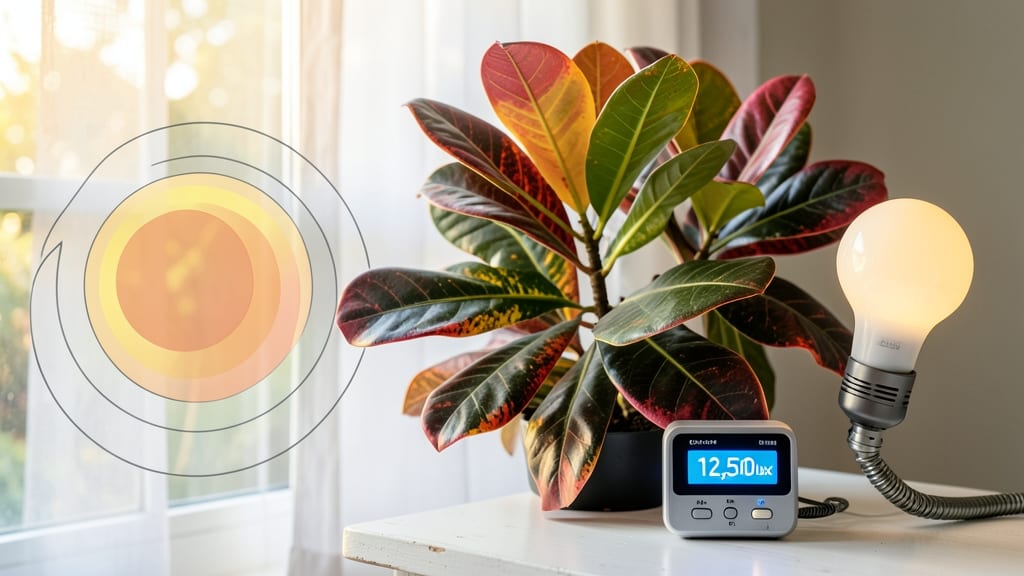
A croton plant needs bright, indirect light for 6+ hours daily to keep its stunning foliage vibrant and healthy 🌿 — the key to preventing dull leaves or leggy growth.
Struggling to keep your croton plant’s leaves vibrant and healthy? The answer lies in mastering its light needs—too much or too little can turn those stunning variegated leaves dull or even cause irreversible damage.
This tropical beauty thrives in spots like an east-facing window, where morning sun warms the leaves without scorching them, but it can also adapt to filtered light indoors if you adjust its position seasonally.
Below, I’ll walk you through how to spot light issues early, tweak your home’s lighting for optimal growth, and keep those vivid colors popping year-round—no guesswork required.
 Best Window Placement
Ideal light requirements for croton plants: bright indirect sunlight explained
If you’ve ever watched your croton plant’s leaves lose their vibrant colors or stretch painfully toward a window, you’re not alone. Crotons thrive on bright indirect sunlight, but getting the balance right can feel like solving a puzzle.
Too little light dulls their foliage, while too much scorches those stunning variegated patterns. Let’s break down exactly what your croton needs to stay lush and healthy all year round.
The key to happy crotons lies in understanding light intensity levels—low, medium, and high—and how they affect your plant’s growth. Most homes struggle to provide the perfect 6+ hours of bright indirect light daily, which is why many gardeners accidentally under- or over-expose their plants.
The solution? Strategic placement and seasonal adjustments that mimic natural light cycles.
Low light (below 30% sunlight) causes crotons to stretch and lose color, while high light (direct afternoon sun) can burn leaves. The sweet spot? Medium to bright indirect light (50-70% sunlight) with morning sun exposure. Let’s explore how to identify and create this ideal environment for your plant.
Seasonal changes dramatically affect your croton’s light needs. During spring and fall, when sunlight is softer, you can place your plant closer to east or west-facing windows. But in summer’s intense heat, afternoon sun becomes dangerous—even east-facing windows can deliver too much direct light by midday.
My trick? Use sheer curtains or a light filter to diffuse harsh rays while maintaining brightness.
Outdoor crotons need even more attention. While they can handle morning sun exposure outdoors, afternoon heat will scorch their leaves. If you’re growing crotons in your garden, position them in partial shade under trees or on patios with dappled sunlight.
A quick test: If you can cast a shadow on the leaves at peak sun (around 2 PM), they’re getting too much direct light.
One common mistake is assuming all bright light equals good light. Crotons are tropical plants that evolved under filtered canopy light, not the harsh glare of midday sun.
If your plant starts showing brown patches or yellowing, it’s a clear sign of sunburn. Move it back immediately and monitor for 2-3 days to see improvement.
For indoor gardeners, grow lights can be a game-changer when natural light falls short. A full-spectrum LED grow light placed 12-18 inches above your croton for 12-14 hours daily mimics ideal conditions. Just remember: rotate your plant weekly so all sides get even exposure, preventing lopsided growth.
Pro tip: Observe your croton’s leaves daily. Healthy crotons have glossy, upright leaves with vibrant colors. If you notice leaves turning dull green or stretching toward light sources, it’s time to adjust placement.
The goal is to find that perfect balance where your plant feels challenged but never stressed.
Remember, every home’s light conditions are unique. What works for your neighbor’s croton might not suit yours. Experiment with placement, keep an eye on your plant’s response, and don’t hesitate to move it if you see signs of distress.
With the right light, your croton will reward you with bold, colorful foliage that’s the envy of every plant lover.
How to adjust light for croton plants in different environments
Your croton plant’s foliage vibrancy depends entirely on getting the right balance of light—whether you’re growing it indoors or outdoors.
In low-light homes, you’ll need to supplement natural light with grow bulbs or rotate your plant frequently, while high-sun balconies may require sheer curtains or afternoon shade to prevent leaf scorch. The key is adapting to your space’s unique conditions without causing stress to the plant.
Outdoor crotons also need seasonal adjustments—summer’s intense rays demand afternoon shade, while winter’s weaker light might require moving potted plants closer to windows or under grow lights.
Let’s break down how to fine-tune your croton’s light exposure for every environment, so you can keep those stunning variegated leaves looking their best year-round.
⚠️ Critical Light Thresholds for Croton Plants
Too little light: Leaves lose color, stretch toward light (etiolation), and grow weak. Fix: Move to brighter spot or add grow lights within 3-5 feet.
Too much light: Yellowing, crispy edges, or bleached patches appear. Fix: Use sheer curtains or filter direct sun with a DIY cheesecloth screen.
Perfect balance: 6+ hours of bright indirect light daily—think east-facing windows or dappled shade outdoors.
For low-light homes, I recommend placing your croton near a north-facing window or under a full-spectrum LED grow bulb (12-16 hours/day). Rotate the pot quarter-turn weekly to prevent uneven growth, and supplement with a reflective surface like aluminum foil behind the plant to bounce extra light onto the leaves.
If you notice new growth fading to green, it’s a clear sign you need to boost light intensity.
If your croton lives on a sun-drenched balcony, protect it from midday sun (10 AM–4 PM) using a lightweight sheer curtain or a DIY shade cloth made from cheesecloth.
For outdoor crotons, position them where they receive morning sun and afternoon shade, like under a patio umbrella or near a building wall. In hot climates, water deeply in the morning to help the plant regulate its temperature and reduce stress from intense light.
Seasonal shifts require proactive adjustments—when days shorten in fall and winter, move potted crotons to the brightest window or extend light with a grow light timer set to 14 hours/day.
In spring and summer, gradually acclimate your croton to outdoor conditions by starting with 2-3 hours of morning sun and increasing exposure over 2 weeks. This prevents sunburn shock and helps the plant develop natural protection.
Pro tip: Use a light meter app (like Light Meter by Adexin) to measure foot-candles in your croton’s spot. Aim for 1,000–2,000 foot-candles of bright indirect light—any lower, and you’ll see dull foliage; any higher without filtering, and you risk damage.
With these adjustments, your croton will thrive in any environment, from cozy apartments to sunny patios.