
How To
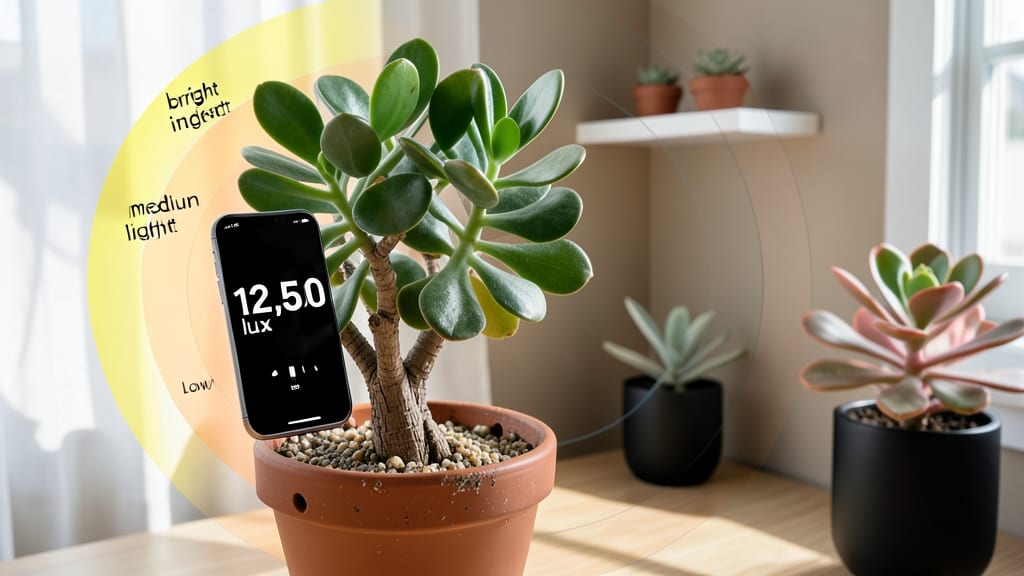
A jade plant needs bright indirect light for 4-6 hours daily to thrive—too little and it stretches, too much and it burns. 🌿
Picture this: your jade plant’s leaves turning pale and leggy, reaching desperately toward the window like a starving child. That’s your plant screaming for more light—but not the harsh, midday glare that’ll fry its edges.
The key is finding that sweet spot where it gets enough sun to stay plump and happy without turning into a crispy critter.
Indoors, a south-facing window is your best bet, but if your home is dim, don’t panic. Grow lights or rotating the plant every few weeks can work wonders.
Outdoors in USDA Zone 6, morning sun is ideal, while afternoon rays can scorch those thick leaves faster than you can say "oops."
Below, I’ll break down exactly how to spot light issues—yellowing leaves, sunburn, or that dreaded stretch—and how to fix them fast. No more guessing games, just a jade plant that stays perky and proud all year.
 Best Window Placement
Optimal light requirements for jade plants: bright indirect sun explained
Jade plants (Crassula ovata) thrive under bright indirect light, but their exact needs depend on your environment. These succulents originate from South Africa, where they bask in morning sun with afternoon shade.
Mimicking this natural pattern is key to preventing sunburn or leggy growth—two common light-related issues.
Indoors, the best spot is near a south-facing window, where they receive 4-6 hours of filtered sunlight daily. East or west windows work too, but you may need to rotate your plant every few weeks for even growth.
Outdoor jade plants love partial shade, especially in hot climates where afternoon sun can scorch their leaves.
Here’s how different light conditions affect your jade plant’s health, along with actionable adjustments to optimize growth:
If your jade plant shows yellowing leaves, it’s likely getting too much direct sun. Trim the damaged areas with sterilized scissors and relocate it to a spot with filtered light.
For leggy growth, the issue is usually insufficient light—supplement with a LED grow light or move it closer to a window.
Outdoor jade plants need seasonal adjustments. In summer, provide afternoon shade with a lightweight shade cloth (30-50% coverage). In winter, they can tolerate cooler temperatures but still need bright light to prevent dormancy-related issues like dropping leaves.
Pro tip: Use a light meter (or your phone’s lux app) to check light levels. Jade plants thrive at 10,000-15,000 lux—similar to a brightly lit office. If your space falls short, a 10-12 watt LED grow bulb will bridge the gap without overheating your plant.
Remember, jade plants are drought-tolerant but light-sensitive. The right balance of bright indirect light and proper spacing from windows will keep your plant compact, vibrant, and healthy for years. Start with these adjustments, and you’ll see a noticeable difference in just a few weeks!
How to adjust light for jade plants in different environments: indoor vs. outdoor
Jade plants thrive in bright light, but their needs shift dramatically between indoor and outdoor settings. In my experience, the same plant can flourish outdoors in full sun while struggling indoors near a north-facing window. Understanding these differences is key to keeping your jade plant healthy year-round.
Indoors, most homes lack the intensity and duration of natural sunlight. Without adjustments, your jade plant may stretch toward light sources or develop weak, leggy growth. Outdoors, the challenge shifts to protecting your plant from harsh afternoon sun, which can scorch delicate leaves.
Let’s explore how to adapt care for both scenarios.
🌿
🌱 Jade Plant Light Checklist
- ✅ Indoors: Place 2-3 feet from south-facing window
- ✅ Outdoors: Provide morning sun + afternoon shade
- ✅ Low-light homes: Use grow lights 12-14 hrs/day
- ✅ Rotate plants weekly for even growth
- ✅ Watch for: Yellow leaves (too much light) or stretching (too little)
For indoor jade plants, start by placing them near the brightest window in your home—typically south-facing. If your space lacks natural light, supplement with a full-spectrum LED grow light placed 6-12 inches above the plant.
I recommend using lights on a timer for 12-14 hours daily to mimic natural daylight cycles. Avoid placing jade plants near drafty windows or air conditioning vents, as temperature fluctuations can stress the plant.
When transitioning a jade plant outdoors, do it gradually over 1-2 weeks to prevent sunburn. Start with morning sun exposure and move to partial shade by midday. In hot climates, provide afternoon shade using a sheer curtain or shade cloth with 30-50% coverage.
Remember, jade plants can handle some direct sun, but their leaves may develop a reddish tint as a natural sun protection mechanism.
Seasonal changes also affect light exposure. During winter months, shorter daylight hours may require moving your jade plant closer to a window or extending grow light use.
In summer, the intense sun can be overwhelming, so monitor your plant closely for signs of stress like brown leaf tips or wilting. Adjust shade coverage as needed to maintain that perfect balance of bright indirect light.
To ensure even growth, rotate your jade plant quarter-turns every 1-2 weeks. This prevents one side from leaning toward the light source, which can create an uneven, lopsided appearance. I’ve found that this simple habit makes a noticeable difference in the plant’s overall shape and health over time.
Pair this with proper watering—deep but infrequent—to keep your jade plant thriving in any environment.
☀️