
Trees
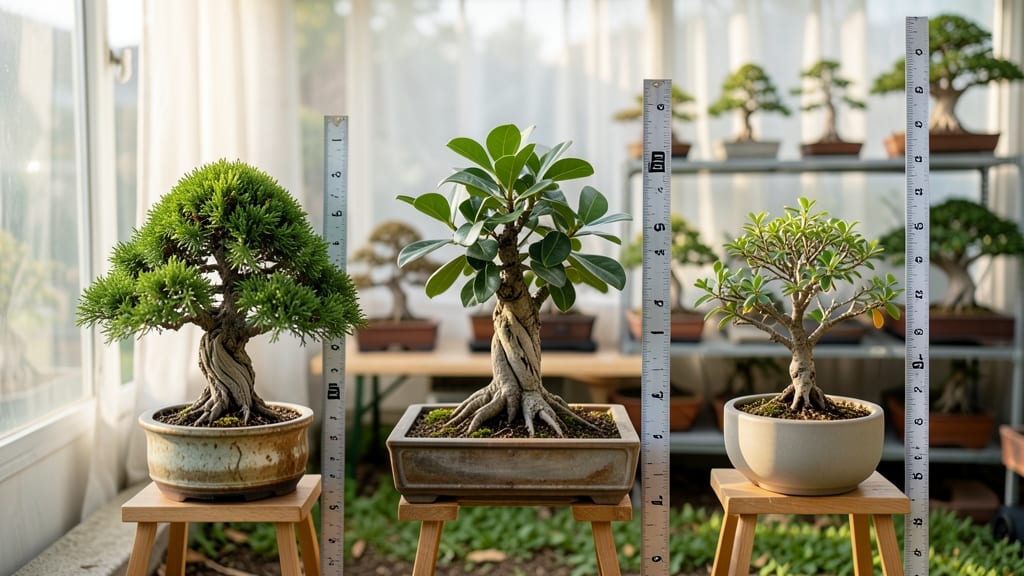
Bonsai trees can grow anywhere from a few inches to over three feet tall, depending on the species and your pruning skills — and yes, some even defy expectations by reaching human height with the right care.
Did you know bonsai trees can range from tiny tabletop displays to towering masterpieces—some even reaching human height? The answer depends entirely on the species, care techniques, and your patience as a grower.
Most bonsai enthusiasts aim for standard heights between 1 and 3 feet, but certain species like junipers or ficus can stretch taller if left unchecked. The key lies in understanding how pruning, root restriction, and training shape their growth over time.
In this guide, I’ll break down the natural height ranges of popular bonsai species, share proven techniques to control their size, and even highlight record-breaking trees that push the limits of what’s possible.


Natural maximum heights of popular bonsai tree species
When I first started growing bonsai, I was amazed to discover that these tiny trees could grow into impressive specimens—some even reaching heights that dwarf most indoor plants. The natural maximum height of a bonsai depends entirely on its species.
While most bonsai enthusiasts aim for tabletop-sized trees (1-3 feet), some species can grow much taller if given the right conditions and space. Understanding these species-specific growth potentials helps you choose the perfect bonsai for your space and goals.
For example, a Juniper bonsai might naturally reach 10-15 feet tall in the wild, but with careful pruning and root restriction, it can be kept between 2-4 feet as a bonsai.
Meanwhile, a Ficus retusa (fig) can grow up to 6 feet tall as a bonsai, making it one of the taller options for indoor growers. The key is balancing the tree's natural growth habits with your artistic vision and available space.
| Species | Wild Height | Bonsai Height Range | Growth Rate | Best For |
|---|---|---|---|---|
| Juniper (e.g., Juniper procumbens) | 10-15 ft | 2-4 ft | Slow to moderate | Outdoor, cold-hardy |
| Ficus retusa (Ginseng Ficus) | 30-50 ft | 3-6 ft | Moderate | Indoor/outdoor, beginner-friendly |
| Azalea (e.g., Rhododendron indicum) | 6-10 ft | 1-3 ft | Slow | Indoor, flowering |
| Chinese Elm (Ulmus parvifolia) | 20-30 ft | 2-5 ft | Moderate | Outdoor, durable |
| Pine (e.g., Pinus thunbergii) | 20-40 ft | 2-4 ft | Slow | Outdoor, long-lived |
| Japanese Maple (Acer palmatum) | 20-30 ft | 1.5-3 ft | Slow | Outdoor, ornamental |
| Serissa (Serissa foetida) | 3-5 ft | 0.5-1.5 ft | Very slow | Indoor, delicate |
| Carmona (Carmona microphylla) | 10-15 ft | 1-3 ft | Moderate | Outdoor, drought-tolerant |
Note: Heights are for mature bonsai under ideal care. Growth rates vary by climate and pruning techniques.
If you're working with a Ficus retusa, you'll find it one of the fastest-growing bonsai species, capable of reaching 3-6 feet tall with proper care. This makes it ideal for growers who want a larger statement piece without waiting decades.
On the other hand, Serissa and Japanese Maple are much slower growers, typically staying under 1.5 feet even after years of cultivation. This makes them perfect for small spaces or those who prefer a miniature aesthetic.
For outdoor bonsai, Juniper and Pine species are popular choices because they can handle cold temperatures and still maintain a compact form. My Juniper procumbens bonsai, for example, has grown steadily to 3 feet tall over 5 years, thanks to regular pruning and root restriction.
Meanwhile, Chinese Elm is a favorite for beginners because of its tolerance for neglect and ability to reach 2-5 feet without requiring constant attention.
The growth rate of a bons
How pruning and training techniques control bonsai height
Mastering the art of bonsai height control starts with understanding that bonsai growth is all about artistic restriction, not natural expansion. While some species can grow taller than 6 feet in the wild, bonsai techniques like defoliation and wiring let you sculpt them into miniature masterpieces.
The key is balancing pruning frequency with growth stimulation—too much pruning stunts development, while too little lets your tree tower uncontrollably.
I’ve found that species selection is your first tool in height control. Fast-growing trees like ficus or trident maple need aggressive pruning, while slower growers like juniper or pine respond better to gradual shaping. Even within a species, root restriction through smaller pots can dramatically slow vertical growth.
For example, a ficus bonsai left unrestrained might reach 3–6 feet, but with proper training, it stays under 2 feet—perfect for a desk display.
- 1
- 2
- 3
- 4
- 5
- Spring: Structural pruning (remove 1/3 of new growth)
- Summer: Defoliation (every 6–8 weeks)
- Fall/Winter: Minimal pruning (focus on cleaning deadwood)
Timing is everything—prune just after flowering to avoid sacrificing blooms, and avoid heavy pruning in winter when trees are dormant. For indoor bonsai like jade or ficus, reduce pruning in winter to match their resting period.
Outdoor species like pine or juniper can handle year-round light pruning, but avoid winter wiring—branches are too brittle.
Pro tip: Combine techniques for maximum control. For example, wire a juniper to shape its trunk, then defoliate to reduce needle size, and root-prune during repotting to keep it under 2 feet. Species like Chinese elm benefit from grafting if you want a desk-sized tree (under 1 foot).
Always monitor your bonsai’s growth rate—some species (like azalea) grow only 1–2 inches per year, while willow or elm can shoot up 6+ inches in a season without intervention.
Remember, bonsai height isn’t fixed—it’s a dynamic process. With consistent training, even a 6-foot ficus can be transformed into a 1-foot masterpiece over 5–10 years. The secret? Patience and precision. Start with one technique (like defoliation), master it, then layer in others as your skills grow.