
How To
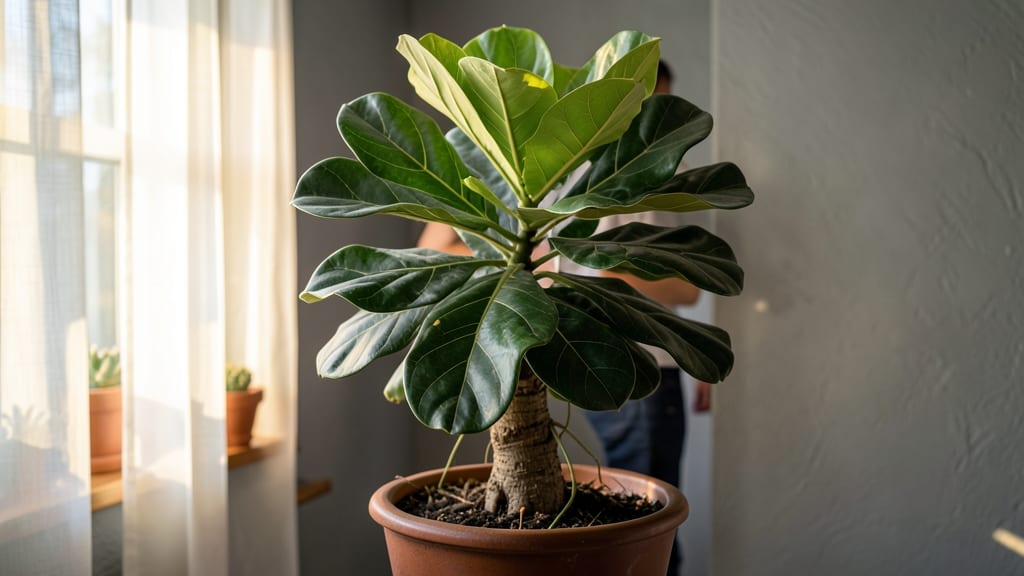
Fiddle leaf figs indoors can grow anywhere from 2 feet to over 10 feet tall, depending entirely on how you care for them 🌿.
If you’ve ever watched your plant stretch toward the ceiling like a teenager, you’re not alone—most growers underestimate how much their care routine (or lack of it) shapes that height.
The good news? You can steer your fiddle leaf fig toward a compact, manageable size with a few simple adjustments. Whether you’re working with a 6-foot ceiling or just prefer a smaller statement plant, light, pruning, and pot size are the real game-changers.
In this guide, I’ll break down the typical growth stages by year, the factors that send your plant skyrocketing (or keep it grounded), and the 5 proven techniques to control its height—no guesswork required.
Ready to turn your fiddle leaf fig from a ceiling hazard into a stylish centerpiece? Let’s get started.


Fiddle leaf fig height guide: expected growth stages indoors by year
Your fiddle leaf fig (Ficus lyrata) can become a stunning centerpiece—but its height growth is entirely within your control. Without proper care, these plants can reach 10 feet indoors, but with the right techniques, you can keep them compact and manageable.
Understanding the growth stages by year helps you plan for space and adjust care routines accordingly.
Fiddle leaf figs grow fastest during their first 3 years, with dramatic height increases each season. By year 5, growth slows significantly, making this the ideal time to control height through pruning and other methods. Let’s break down what to expect at each stage and how to influence growth patterns.
The first year is critical for establishing your fiddle leaf fig’s growth pattern. Plants in bright indirect light with consistent moisture can grow 2-4 feet, while those in dimmer conditions may only reach 1-2 feet.
If your plant stretches toward light, it’s a sign it needs more light exposure or a rotation to balance growth.
By year 2, your fiddle leaf fig will likely hit 4-6 feet if given optimal care. This is when pruning becomes essential—focus on removing leggy stems to encourage bushier growth.
Use clean, sharp pruning shears and cut just above a leaf node to promote new branches. Avoid over-pruning, as this can stress the plant.
When your fiddle leaf fig reaches 6-8 feet by year 3, growth naturally slows as it approaches maturity. This is the perfect time to control height through root restriction.
If your plant is root-bound, repotting into a slightly larger container can encourage upward growth, but choosing a smaller pot forces the plant to focus on foliage rather than height.
By years 4-5, a mature fiddle leaf fig typically reaches 8-10 feet indoors. At this stage, growth becomes minimal, and maintenance shifts to pruning for shape and leaf health. Regularly dust leaves and check for pests like spider mites, which thrive on mature plants.
If your space is limited, this is when dwarfing techniques like growth regulators or limited fertilizer can help keep it compact.
Light plays the biggest role in determining your fiddle leaf fig’s height. Plants in low-light conditions grow taller and leggier, while those in bright indirect light develop denser foliage. If your plant is stretching toward a window, consider rotating it quarter-turns weekly to ensure even growth.
For extra-compact growth, place your plant near a north-facing window, which provides consistent, gentle light.
Pot size directly impacts height—smaller pots restrict root growth, which slows vertical expansion. If you want a shorter fiddle leaf fig, choose a container that’s only 1-2 inches larger than the root ball.
For example, a 6-inch pot for a 4-foot plant will encourage bushier growth. Just ensure the pot has drainage holes to prevent root rot.
Pruning isn’t just for height control—it also promotes fuller growth. Trim back overly long stems in early spring to encourage new branches. You can even propagate the cuttings in water or soil to grow new plants!
For a bushier look, pinch off the tips of young stems to stimulate branching. Just avoid heavy pruning in winter, as the plant enters a dormant phase.
With the right care, you can keep your fiddle leaf fig at a manageable height while still enjoying its stunning foli
5 Proven techniques to control fiddle leaf fig height indoors
Your fiddle leaf fig doesn't have to become a ceiling monster! With the right care, you can keep its height manageable while maintaining its lush, tropical beauty. The key lies in understanding how to manipulate its growth naturally—without sacrificing its health.
Whether you're working with a 6-foot apartment or a 10-foot living room, these techniques will help you control its vertical expansion.
Fiddle leaf figs thrive when given the right conditions, but their growth rate can be dramatically altered by simple adjustments. From pruning strategies to light positioning, each method targets a different aspect of the plant's development.
Let's dive into the five most effective ways to keep your fiddle leaf fig at your desired height, ensuring it stays a stunning centerpiece without dominating your space.
Trim overgrown stems just above a leaf node to encourage bushier growth. Use sterilized pruners and remove up to 1/3 of the plant in one session for best results.
Place your plant 3-6 feet from an east-facing window to slow vertical growth. Avoid south-facing windows, which accelerate height growth.
Use a smaller pot (1-2 inches smaller in diameter) to limit root expansion. Repot only when roots circle the drainage holes.
Apply a low-nitrogen fertilizer (e.g., 5-5-5) to reduce rapid growth. Use half-strength doses during spring and summer.
Use natural growth regulators like seaweed extract or hibiscus tea to slow elongation. Apply every 4-6 weeks during active growth.
Start with strategic pruning to immediately reduce height. Cut back leggy stems to encourage a fuller, bushier shape. This method is perfect for plants that have already outgrown their space, as it promotes denser foliage while controlling vertical growth.
For new plants, focus on light manipulation—positioning your fiddle leaf fig away from direct sunlight can significantly slow its upward growth.
If your plant is still growing too tall despite pruning and light adjustments, try root restriction. Repotting into a smaller container limits root expansion, which in turn slows the plant's overall growth rate. This technique works best when combined with a well-draining soil mix to prevent root rot.
For even finer control, incorporate dwarfing fertilizers into your routine. These products reduce nitrogen levels, which helps keep your fiddle leaf fig compact.
For those willing to experiment, growth regulators like seaweed extract can be incredibly effective. These natural solutions mimic the plant's own hormones to slow elongation without harming its health. Apply them sparingly, following the product's instructions, to avoid over-suppressing growth.
The key to success is consistency—combine these techniques for the best results and watch your fiddle leaf fig stay at a manageable height for years to come.
Remember, the goal is to maintain a healthy balance between control and care. Over-pruning or restricting growth too aggressively can stress your plant, so always monitor its response. With patience and the right approach, you'll have a compact, thriving fiddle leaf fig that fits perfectly in your home.