
How To
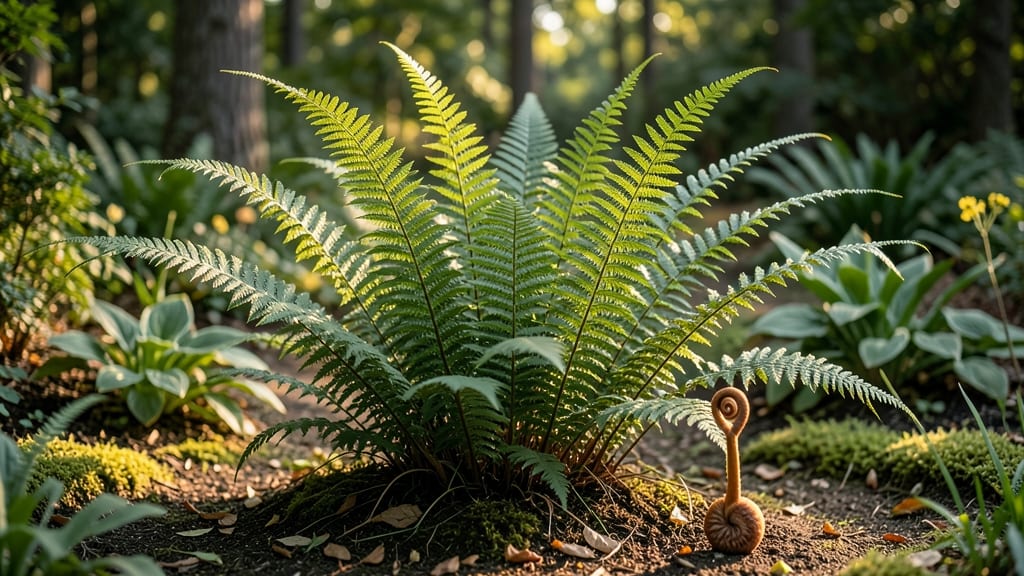
Ostrich ferns grow between 3 and 5 feet tall 🦴, making them the feathered showstoppers of shady gardens—but their final height depends more on where you plant them than luck.
Picture this: a 5-foot-tall fern in your woodland garden thriving under dappled light, while the same plant in a sunlit border barely hits 3 feet. That’s not a myth—it’s how light and soil team up to shape their growth.
If you’re wondering whether these ferns will outgrow your space, the good news is they’re slow growers. In their first year, they’ll only reach about 1.5 feet, giving you plenty of time to adjust their spot before they tower over your patio.
Below, I’ll break down how to predict their mature height, the best varieties for compact spaces, and simple tricks to keep them from becoming unruly giants—no pruning shears required.


Ostrich fern height by variety: from compact to towering giants
Ostrich ferns (Matteuccia struthiopteris) are prized for their arching, feathery fronds that create stunning vertical drama in shade gardens. But their mature height can vary dramatically—from compact clumps under 3 feet to towering giants reaching 5 feet.
The key lies in choosing the right variety for your space and understanding their growth habits.
Most ostrich ferns grow 12-18 inches per year under ideal conditions, with full maturity typically reached in 3-5 years. However, some alpine varieties stay dwarfed, while tropical hybrids stretch dramatically. Let’s explore the height ranges of five popular varieties and what influences their growth.
| Variety | Mature Height | Growth Rate | Ideal Conditions | Notes |
|---|---|---|---|---|
| Matteuccia struthiopteris (Common) | 3–5 ft | 12–18 in/year | Partial shade, moist soil | Fastest grower; needs space |
| Matteuccia pennsylvanica (Alpine) | 1.5–3 ft | 6–12 in/year | Full shade, rocky soil | Cold-hardy; slow-growing |
| Matteuccia japonica (Japanese) | 2–4 ft | 8–12 in/year | Partial shade, humus-rich soil | Disease-resistant; ornamental |
| Matteuccia orientalis (Oriental) | 4–6 ft | 18–24 in/year | Moist, acidic soil | Tallest variety; tropical look |
| Matteuccia 'Hohensteini' (Dwarf) | 1–2 ft | 4–8 in/year | Container-friendly, shade | Perfect for small gardens |
The common ostrich fern (Matteuccia struthiopteris) is the most widely grown variety, often reaching 5 feet in ideal conditions. In my own garden, I’ve seen them shoot up 18 inches in a single season when given consistent moisture and partial shade.
Their fronds arch gracefully, making them a vertical focal point in woodland gardens.
For smaller spaces, the Alpine variety (Matteuccia pennsylvanica) stays compact at just 1.5–3 feet tall. It’s perfect for rock gardens or containers and thrives in cooler climates. I’ve grown this variety in USDA Zone 5 with no issues—it even survives light frosts without damage.
If you’re after a tropical look without the height, the Japanese variety (Matteuccia japonica) hits 2–4 feet while maintaining dense, lush foliage. This one loves humus-rich soil and does well in woodland gardens. I’ve seen it outcompete weeds naturally, making it a low-maintenance choice.
One variety that always surprises gardeners is the Oriental ostrich fern (Matteuccia orientalis), which can top 6 feet in the right conditions. It’s the tallest of the bunch and requires moist, acidic soil to reach its full potential.
In my experience, it’s best planted near pond edges or streams where the soil stays consistently damp.
The 'Hohensteini' dwarf variety is my go-to for containers or small gardens. It maxes out at 2 feet tall and grows slowly, making it ideal for terrace planters or hanging baskets. I’ve even grown it indoors near a north-facing window with great success—just keep the soil moist.
All ostrich ferns are perennials, meaning they’ll return year after year, gradually increasing in size. The first year typically sees 12–18 inches of growth, while subsequent years add 6–12 inches annually
How light conditions dramatically change ostrich fern heights
Light isn't just a preference for ostrich ferns—it's the master controller of their height potential. Under full shade, these plants typically max out at 3 feet, while bright indirect light can push them toward 5 feet or taller.
The difference isn't just inches—it's about creating the perfect vertical statement for your garden without sacrificing space.
Think of light as a growth dial you can adjust. Too much direct sun? Your ferns may bolt or scorch, stunting growth entirely. Too little? They'll grow slowly and leggy, reaching for any light source.
The sweet spot? Morning sun with afternoon shade—this mimics their natural forest-floor habitat and keeps them lush while controlling height.
| Light Condition | Mature Height | Growth Rate | Frond Density | Best Varieties |
|---|---|---|---|---|
| Full Shade (<3 hrs light) | 2-3 ft | Slow (6-12 in/year) | Dense, bushy | Matteuccia struthiopteris 'Hohenstein' |
| Partial Shade (4-6 hrs light) | 3-5 ft | Moderate (12-18 in/year) | Balanced, upright | M. struthiopteris 'Plumosa-Aurea' |
| Dappled Sunlight (6+ hrs filtered) | 4-6 ft | Fast (18-24 in/year) | Tall, airy fronds | M. struthiopteris 'Alpina' |
| Direct Sun (Risk of Burn) | 1-2 ft (stunted) | Very slow or none | Sparse, damaged | Avoid all varieties |
For Japanese ostrich ferns, which are naturally taller and more delicate, even partial shade can send them soaring to 5-6 feet if given enough space. Meanwhile, Alpine varieties stay compact at 2-3 feet in full shade but may flop or yellow if exposed to too much light.
The key is matching the variety to your light—not forcing one size to fit all.
Pro tip: If you're growing ostrich ferns in containers, light control becomes even more critical. A north-facing window provides ideal bright indirect light without the risk of overheating. For ground plants, mulch heavily to retain moisture—dry soil under bright light will stress the roots and limit vertical growth.
Don't forget that seasonal light changes also affect height. In winter's shorter days, growth naturally slows, while spring's longer light exposure triggers a growth spurt. Plan your pruning schedule around these cycles to maintain your desired height year-round.
By mastering light, you're not just controlling height—you're shaping the character of your ferns. A shady corner creates a lush, bushy understory plant, while filtered sunlight produces tall, elegant specimens.
Experiment with placement, and watch your ostrich ferns transform into the perfect vertical accent for your space. 🌿🦴