
How To
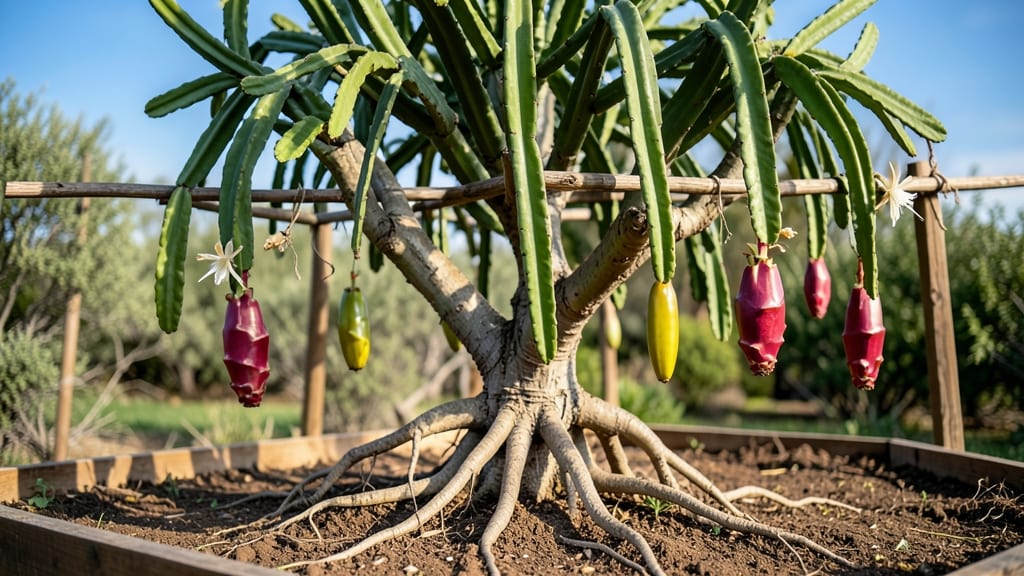
A dragon fruit tree can grow up to 20 feet tall in ideal conditions, but most home gardeners keep it between 6 and 10 feet with a little pruning.
If you're dreaming of growing your own dragon fruit but worry about space constraints, you're in luck—this tropical plant offers surprising flexibility for both sprawling gardens and cozy balconies.
Standard varieties like the Hylocereus undatus can climb like a vine or sprawl as a shrub, while dwarf types stay under 6 feet, making them perfect for containers or small yards.
Below, I’ll break down how height varies by variety, the best ways to control growth, and which compact types are easiest for beginners to manage—so you can enjoy those sweet, vibrant fruits without sacrificing space.


Dragon fruit tree height: standard growth ranges by variety
When planning your dragon fruit garden, understanding the height potential of different varieties is crucial for space management. Dragon fruit plants (Hylocereus spp.) are tropical vines that climb and spread, but their mature heights vary significantly depending on the variety.
Some can tower like small trees, while others stay compact enough for containers or small patios.
The most common varieties—Hylocereus undatus (pink-skinned) and Hylocereus monacanthus (red-skinned)—typically reach 15-20 feet when grown outdoors in ideal conditions. However, their height above ground is usually 6-12 feet when trained on trellises or fences, as they naturally sprawl horizontally.
Here’s where it gets exciting: many gardeners control height through pruning and support structures, allowing these tropical beauties to thrive even in limited spaces. For example, a well-pruned Hylocereus undatus can stay between 5-8 feet tall while still producing abundant fruit.
Now, let’s compare the standard growth ranges of the most popular dragon fruit varieties to help you choose the best fit for your garden or balcony:
If you’re growing dragon fruit in containers, expect heights of 3-8 feet depending on the variety and pruning. Dwarf varieties like 'Baby Dragon Fruit' are perfect for balconies or patios, while standard varieties thrive when given a sturdy trellis or fence to climb.
One key factor affecting height is climbing support. Without a trellis or fence, dragon fruit plants sprawl along the ground, reaching 10-15 feet in length but staying low to the ground.
This makes them ideal for ground covers in warm climates, though fruit production may be slightly reduced compared to vertical growth.
For indoor cultivation, choose dwarf varieties or heavily prune standard types to keep them under 4-5 feet tall. Place them near a south-facing window or under grow lights to ensure they receive the 6-8 hours of sunlight they need to thrive.
Remember, dragon fruit plants are perennial in frost-free zones (USDA zones 10-12) and can live for 10-15 years with proper care. Their height may slow after the first few years, but they’ll continue producing fruit if given the right conditions.
Whether you have a sprawling backyard or a tiny balcony, there’s a dragon fruit variety that will fit your space—just choose wisely based on your available height and support structures!
Space-saving techniques to control dragon fruit tree height
Dragon fruit trees (Hylocereus spp.) naturally climb or sprawl, but with the right techniques, you can keep them at a manageable height—even in small spaces.
The key is understanding their growth habits and using targeted methods like pruning, trellising, and container training to guide their size without sacrificing fruit production.
Unlike many fruit trees, dragon fruit vines thrive when directed vertically, which makes them perfect for balconies, patios, or even indoor growing near sunny windows. By controlling their height, you’ll also improve air circulation, reduce disease risk, and make harvesting easier. Let’s explore the most effective space-saving strategies.
- 🪴 Prune strategically: Trim back overgrown vines in late winter or early spring to encourage bushier growth. Focus on removing long, leggy stems while leaving 3-4 main branches for structure.
- ✂️ Use a trellis: Install a 5-6 foot tall trellis or cage system to guide vines upward. Train new growth along the trellis to keep the plant compact and maximize vertical space.
- 🪴 Choose dwarf varieties: Opt for Hylocereus 'Baby Dragon Fruit' or white-fleshed hybrids, which mature at 4-5 feet tall—ideal for containers or small yards.
- 💧 Container constraints: Grow in 15-20 gallon pots with well-draining soil to limit root spread. Prune roots annually if the plant outgrows its container.
- ☀️ Sunlight management: Place containers near south-facing windows or use grow lights to prevent leggy growth from insufficient light.
For urban gardeners, combining trellising with regular pruning can reduce a dragon fruit tree’s height by up to 50% while boosting fruit yield. Always use sterilized shears to avoid disease when trimming, and fertilize lightly after pruning to encourage new growth.
If you’re growing in containers, remember that root-bound plants grow slower but produce smaller fruits. Repot every 2-3 years to refresh the soil and give roots room to spread, which indirectly helps control height by promoting balanced growth.
With these techniques, you can enjoy harvest-ready dragon fruit in as little as 1-2 years, even in the tightest spaces. The secret? Consistent training and patient pruning—your future fruit harvest will thank you!