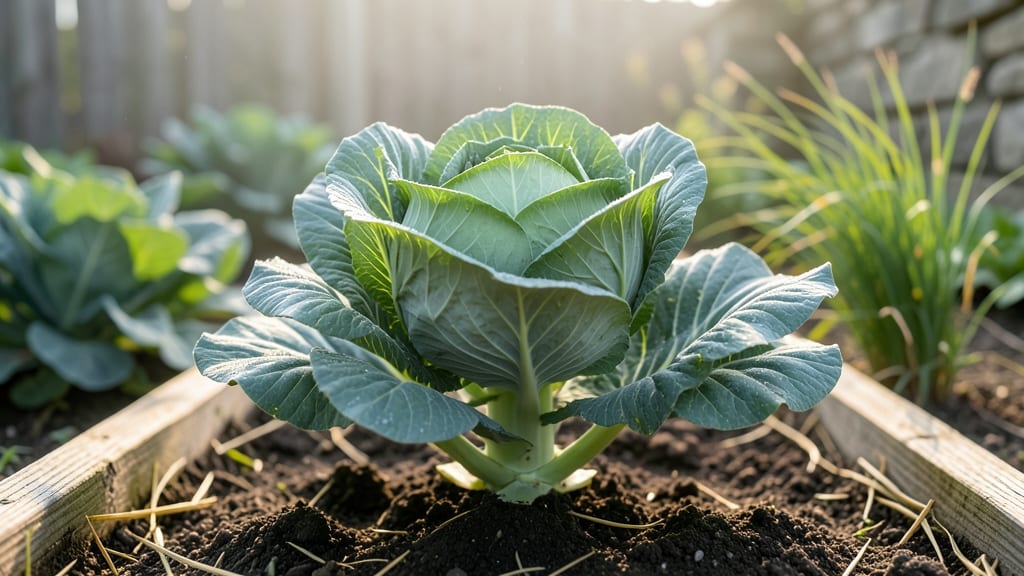
How tall does cabbage grow? It typically reaches heights between 1 and 2 feet, but the exact size depends on the variety you choose—some stay as small as 8 inches, while others reach nearly 24 inches.
If you’re working with limited garden space, you might be surprised to learn that dwarf varieties like 'Miniature Peanut' fit neatly into containers or tight beds, while standard types need more elbow room.
Beyond variety, sunlight and soil quality play a huge role in how tall your 🥬 plants grow—too little light or poor drainage can stunt growth or even trigger early bolting.
Below, I’ll break down the best space-saving options, how to spot overcrowding issues, and when to stake taller varieties to keep your harvest neat and productive.
📈
Cabbage Growth Timeline
Cabbage growth heights by variety: from dwarf to giant
Choosing the right cabbage variety for your garden starts with understanding their mature heights. Some varieties stay as short as 8 inches, while others can reach over 2 feet tall.
This variation means you can grow cabbage in containers, raised beds, or even small backyard plots—if you pick the right type. Let’s break down the height ranges and space needs for popular varieties to help you plan your garden layout.
For small gardens, dwarf varieties are a game-changer. They mature quickly and fit neatly into tight spaces, making them ideal for urban gardeners or those with limited square footage. On the other hand, giant varieties like savoy cabbage can dominate your garden, requiring more room to spread and grow.
Knowing these differences helps you avoid overcrowding and ensures a healthy harvest.
Below is a detailed breakdown of 12+ cabbage varieties, categorized by size, including their mature heights, spacing needs, and ideal growing conditions. This will help you decide which varieties will thrive in your space while maximizing your yield.
| Variety |
Type |
Mature Height |
Spacing (inches) |
Days to Maturity |
Best For |
| Miniature Peanut |
Dwarf |
8-10" |
12" |
50-60 |
Containers |
| Golden Acre |
Dwarf |
10-12" |
14" |
55-65 |
Small Gardens |
| Tendergreen |
Semi-Dwarf |
12-15" |
16" |
60-70 |
Early Harvest |
| Red Express |
Standard |
18-20" |
20" |
65-75 |
Colorful Heads |
| Green Express |
Standard |
18-22" |
22" |
60-70 |
Fast-Growing |
| Savoy King |
Giant |
24-30" |
24" |
80-90 |
Large Yields |
| January King |
How to choose cabbage varieties for small gardens
When space is limited, selecting the right cabbage varieties can mean the difference between a thriving harvest and wasted effort. Compact dwarf cabbages like 'Miniature Peanut' and 'Golden Acre' are perfect for containers or tight garden beds, reaching just 8-12 inches tall at maturity.
These space-saving options let you grow multiple plants in small areas without sacrificing yield.
For even tighter spaces, consider vertical-growing cabbages like 'Tendercrisp' or 'Red Express.' These varieties stay under 18 inches tall but produce large, dense heads ideal for salads and stir-fries. Pair them with trellises or stakes to free up ground space for other crops like radishes or lettuce.
1.
Dwarf varieties (8-12") like 'Miniature Peanut' fit in 5-gallon containers or 6-inch pots, perfect for balconies or windowsills.
2.
Semi-dwarf types (12-18") such as 'Golden Acre' need 12-18 inches apart in rows, ideal for raised beds or small plots.
3.
Vertical growers (18-24") like 'Red Express' thrive with trellis support, saving 50% more space than traditional varieties.
4.
Companion planting with radishes or lettuce between cabbage rows maximizes space by using vertical layers.
5.
Succession planting every 2-3 weeks ensures continuous harvests in small areas, preventing overcrowding.
To further optimize space, use companion planting strategies. For example, plant fast-growing radishes between cabbage rows—they’ll be harvested before the cabbage needs full space. Alternatively, interplant lettuce or spinach around the edges of your cabbage patch, as these shallow-rooted greens won’t compete for nutrients.
Don’t overlook container gardening for cabbage. Varieties like 'Crimson Delight' or 'Early Jersey Wakefield' thrive in large pots (at least 12 inches deep) and can be placed on patios or decks. Just ensure your containers have drainage holes and use a lightweight potting mix to prevent root-bound issues.
When selecting seeds, check the days to maturity on the packet—faster-growing varieties like 'Golden Ball' (ready in 55-60 days) allow for multiple plantings in a single season. This strategy lets you rotate crops and keep your small garden productive year-round.
Finally, monitor your cabbage’s growth habits. If leaves start yellowing or bolting (sending up flower stalks), it’s a sign of stress from overcrowding or nutrient deficiencies.
Thin seedlings early to give each plant 12-18 inches of space, and side-dress with compost tea every 4-6 weeks to support healthy development.
★★★★★4.9(3 reviews)
|