
How To
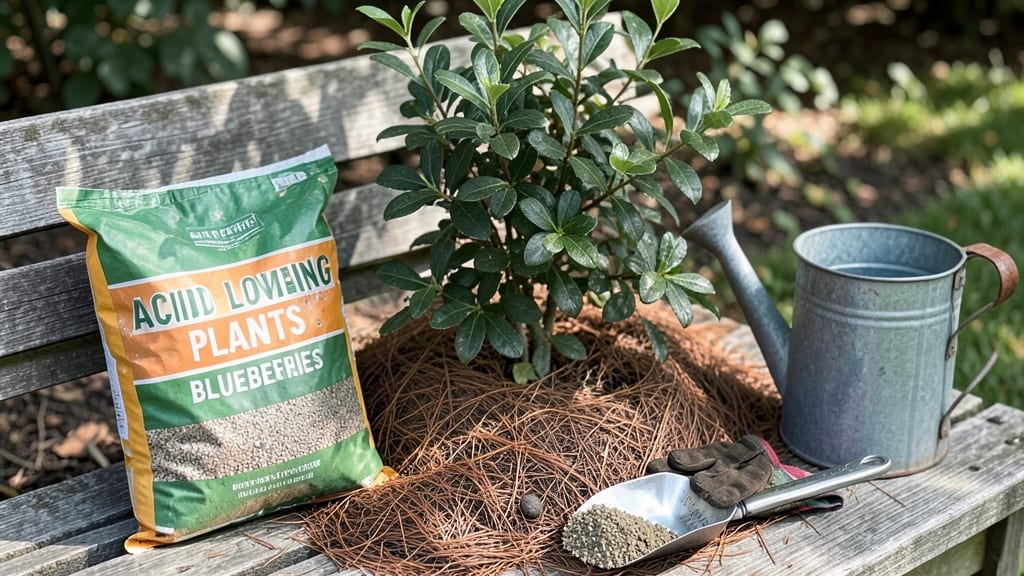
Fertilizing blueberry bushes at the right time is the secret to peak fruit production—and missing the window can leave you with sparse harvests or even stunted growth.
Blueberry bushes thrive when fed at the right time—but fertilizing too early or too late can stunt growth or reduce fruit production. Timing matters more than most gardeners realize, especially for acid-loving 🫐 blueberries that demand precision in care.
In this guide, I’ll walk you through the best times to fertilize—spring before blooming and late summer for fall growth—plus soil prep tips and fertilizer types tailored to your region.
You’ll also learn how to spot common mistakes (like over-fertilizing) and fix them before they hurt your bushes. Let’s get those blueberries bursting with flavor!

Spring fertilization schedule for blueberry bushes: when, what, and how to feed for maximum growth
Spring is the critical window for fertilizing blueberry bushes, but timing is everything. Too early, and you risk burning delicate roots still waking from dormancy. Too late, and your plant misses the foliage-building phase before flowering.
The sweet spot? Right after last frost but before buds swell—typically late March to early April in most USDA zones 5-8.
Blueberries are acid-loving plants that demand precision in care. Their soil pH must stay between 4.5 and 5.5, and their fertilizer should match this need.
A high-nitrogen blend (like 10-10-10 or 12-4-8) fuels leafy growth, but synthetic fertilizers can disrupt pH if not balanced with peat moss or sulfur. Organic options like cottonseed meal or blood meal are safer for acid-loving plants.
Soil testing is non-negotiable before fertilizing. Grab a pH test kit (digital or liquid) and sample soil 6 inches deep around your bushes. If your pH reads above 5.5, amend the soil with elemental sulfur (1/2 pound per 100 sq ft) 2-3 months before fertilizing. This gives sulfur time to acidify the soil naturally.
| Stage | Action | Fertilizer Type | NPK Ratio | Amount |
|---|---|---|---|---|
| After dormancy (late March) | Test soil pH | — | — | — |
| Bud swell (early April) | Apply light fertilizer | Organic (cottonseed meal) or synthetic (ammonium sulfate) | 10-10-10 or 12-4-8 | 1/4 cup per bush |
| Flowering (late April) | Water deeply | — | — | 1-2 gallons |
| Post-bloom (May) | Side-dress with compost | Compost or peat moss | — | 2 inches around base |
For organic fertilization, I recommend a two-step approach. Start with a 1-inch layer of compost around the base of the bush, keeping it 3 inches away from the stem to prevent rot. Then, sprinkle 1/4 cup of cottonseed meal (a slow-release nitrogen source) over the soil.
Water deeply to activate the nutrients without burning roots. Organic options like fish emulsion (diluted to half-strength) can also work but must be applied in early spring only.
If you prefer synthetic fertilizers, choose an acid-forming fertilizer like ammonium sulfate or a peat-based blend. Avoid quick-release fertilizers like urea, which can spike soil pH and harm blueberries.
Instead, opt for controlled-release granules applied in early spring and again after harvest. Always follow package instructions, but halve the recommended dose for blueberries—they’re sensitive to over-fertilization.
Application method matters just as much as the fertilizer itself. Scatter granules or pellets evenly around the drip line (the outer edge of the bush’s canopy), not on the soil surface. Use a hand fork or rake to lightly work them into the top 1/2 inch of soil.
Avoid piling fertilizer near the stem, as this can cause root burn. After applying, water the bush with 1-2 gallons of water to help nutrients penetrate the soil.
Watch for signs of over-fertilization, like yellowing leaves, stunted growth, or white crusts on soil. If you see these, flush the soil with 3-4 gallons of water and avoid fertilizing for 6-8 weeks.
Blueberries are light feeders—they prefer steady, low doses over heavy meals. Think of it like a slow-drip irrigation system for nutrients rather than a quick blast.
Pro tip: Pair your spring feeding with a 2-inch layer of pine needles or wood chips as mulch. This acidifies the soil naturally while suppressing weeds. Replenish mulch annually in early spring to maintain optimal pH. In USDA zones 9-10, fertilize in late winter (January-F
Fall fertilization for blueberry bushes: why late-season feeding boosts next year’s fruit production
Most gardeners focus on spring feeding for blueberries, but fall fertilization is just as critical for next year’s harvest. While your bushes enter dormancy, their roots remain active—absorbing nutrients to fuel early spring growth.
This late-season boost sets the stage for healthier canes, more flowers, and bigger berries in the following season.
Contrary to popular belief, fall fertilization isn’t about immediate growth—it’s about preparing your blueberries for winter resilience. The key lies in the 4–6 week window before your first frost, when roots can still process nutrients without stimulating tender new growth that could freeze.
Think of it as a nutrient bank account for spring.
Pros & Cons: When Is the Best Time to Fertilize Blueberry Bushes?
- Root strength for winter
- Early spring growth advantage
- Reduced spring fertilizer shock
- Improved fruit set next year
- Too late (after frost) wastes nutrients
- Wrong fertilizer (high nitrogen) causes winter dieback
- Over-application burns roots before dormancy
- Myth: "Fall feeding harms plants" (if done correctly, it helps!)
4–6 weeks before first frost (e.g., mid-September in Zone 6a)
Soil temp: Above 50°F (10°C) for root activity
Never fertilize after first frost or when soil is frozen
Use only low-nitrogen (5-10-10) blends
For fall feeding, choose a low-nitrogen, high-phosphorus-potassium fertilizer (like 5-10-10 or 6-12-12). Phosphorus (P) promotes root development, while potassium (K) strengthens cell walls for winter hardiness. Avoid high-nitrogen formulas—these can trigger tender new growth that won’t survive frost.
Apply fertilizer in a 3-inch-wide band around the drip line, not touching the stem. Water thoroughly to help nutrients penetrate the soil. For established bushes, use ½ cup per year of growth (e.g., ½ cup for a 3-foot bush).
Organic options like cottonseed meal or greensand also work well for potassium.
One common myth is that fall fertilization "burns" blueberries. In reality, the risk comes from wrong timing or overapplication, not the season itself. The secret is patience—let the roots slowly absorb nutrients before dormancy kicks in. This strategy mirrors how wild blueberries naturally prepare for winter.
After fertilizing, mulch with 2–3 inches of pine straw or wood chips to insulate roots and retain moisture. This double protection ensures your bushes wake up strong and ready for spring’s fruit production cycle. The payoff? Larger berries, more clusters, and fewer pests next season.