
Lawn
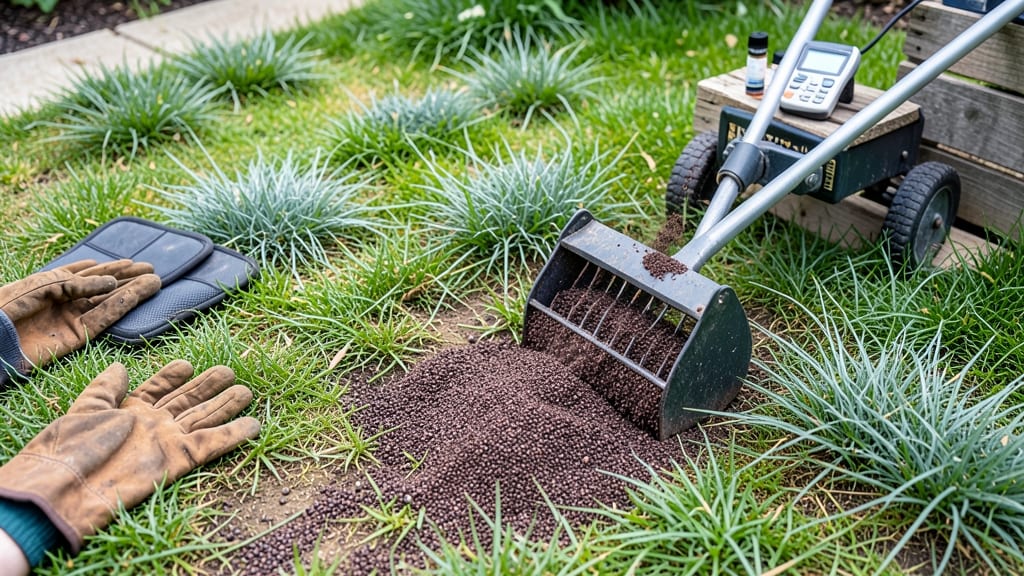
Fertilizing your lawn in spring is the key to unlocking stronger roots and a lush, weed-resistant yard—if you time it right.
Picture this: You’ve just mowed off last year’s brown patches, and the grass is finally waking up from winter. But if you fertilize too early, you’ll burn tender new shoots. Too late, and you miss the 6-week window when roots need that nitrogen boost most.
The difference between a thriving lawn and one that struggles all season comes down to those few weeks.
Most lawns in Zone 6a should get their first feeding 4–6 weeks after the last frost, when soil temps hit 55°F and grass shows signs of active growth. That’s usually early April for cool-season grasses like fescue or rye, but warm-season types in the South need a different approach.
I’ll break down the exact timing for your region, plus how to prep your soil for maximum absorption.
You’ll also discover the best fertilizer types for root growth vs. quick green-up, how to avoid common mistakes (like overdoing it), and when to switch to organic options. By the end, your lawn will be on track for year-round density—starting with that perfect spring kickoff.

Optimal spring fertilization timeline by climate Zone (with exact weeks)
Getting your lawn fertilization timing right in spring is like giving your grass a head start—it sets the stage for thicker roots, faster green-up, and weed suppression all season.
But the "perfect time" shifts dramatically depending on whether you're in cool-season (northern) or warm-season (southern) zones. Miss the window, and you might end up with burned grass or wasted fertilizer.
For cool-season grasses like Kentucky bluegrass and fescue, the goal is to fertilize 4-6 weeks after dormancy—right when soil temps hit 50°F (10°C). In warmer climates, Bermuda or Zoysia need a different approach: hold off until after the last frost when soil is 65°F (18°C) or warmer.
Let's break down the exact weeks by zone so you can feed your lawn at the ideal moment.
In northern climates, think of spring fertilization as your lawn's wake-up call. Once soil temperatures consistently hit 50°F (10°C), your cool-season grass will start actively growing. That's your cue to apply a high-nitrogen fertilizer (like 24-0-5) to jumpstart root development and leaf growth.
Pro tip: If you see crabgrass sprouting, hold off until you've applied pre-emergent herbicide first.
For southern lawns, patience is key. Warm-season grasses like Bermuda or Zoysia need soil temps above 65°F (18°C) before fertilizing. Waiting until late spring (May) ensures you're not wasting fertilizer on dormant grass. Here, focus on slow-release fertilizers to prevent burn damage from summer heat.
Regional adjustments matter too. In Pacific Northwest zones, aim for late March fertilization when rain tapers off. Meanwhile, Southeast lawns should wait until after Memorial Day to avoid fungal issues from humid conditions.
Always check your local frost dates—a simple Google search for "[your city] last frost date" saves guesswork.
A common mistake? Fertilizing too early when soil is still cold. This leads to leaching (fertilizer washing away) and weakened roots. Instead, use a soil thermometer ($10 at garden centers) to confirm temps.
For organic options, composted manure or fish emulsion work well but require 2-3 weeks to break down before applying.
After fertilizing, water deeply (1 inch) to activate nutrients. Early morning applications prevent burn risk from afternoon heat. And remember: mow high (3-4 inches) to shade roots and
5 Signs your lawn is ready for spring fertilizer (and 3 mistakes that ruin it)
Spring fertilization is your lawn’s growth supercharge, but timing it wrong can leave you with burnt grass or wasted money. The key is watching for these 5 clear signs your lawn is ready—plus avoiding the 3 biggest mistakes that derail even the best-laid plans.
I’ve learned the hard way that rushing the process can backfire, especially when soil temps are still too cool.
First, check your soil temperature—it should consistently stay above 55°F for at least a week. This warmth signals your grass roots are waking up and ready to absorb nutrients.
If you’re in Zone 6a, that usually lands in early April, but don’t guess: use a soil thermometer for accuracy. I’ve seen too many gardeners fertilize too early, only to watch their lawn turn yellow from nutrient overload.
Next, look for active grass growth. If your lawn springs back quickly after mowing (within 3–4 days) and blades are uniformly green, it’s ready. Patchy or slow-to-recover grass needs more time.
This stage is critical because fertilizing dormant grass is like feeding a sleeping bear—it just won’t wake up to use the nutrients.
🌱 Numbered Highlights: Your Spring Fertilizer Checklist
- Soil Temp: 55°F+ for 7+ days (use a thermometer!)
- Grass Growth: Blades spring back in 3–4 days after mowing
- Color: Uniform green (no yellow/brown patches)
- Weather: 5-day forecast shows no heavy rain (fertilizer washes away)
- No Weeds: Grass outcompetes weeds naturally (sign of strength)
✅ Do this: Test soil pH (ideal: 6.0–7.0) before applying fertilizer
Don’t overlook the weather forecast. If your 5-day outlook shows heavy rain within 48 hours of fertilizing, hold off. Rain washes away nutrients before your grass can absorb them, turning your $50 fertilizer into a $50 lesson.
I once fertilized just before a downpour and had to reapply—double the work, half the results.
The third mistake? Choosing the wrong fertilizer type. Slow-release fertilizers (like 24-0-5) are best for spring because they feed roots over 6–8 weeks, while quick-release options can burn tender new growth.
Pro tip: Look for "spring blend" labels—they’re formulated for early-season root development. I switched to organic options last year, and my lawn’s drought resistance improved dramatically.
Finally, skip the pre-emergent herbicides if you’re fertilizing. These chemicals block weed seeds but can also inhibit grass growth when applied together. Instead, let your fertilized lawn outcompete weeds naturally.
I’ve seen lawns go from 50% weeds to 90% grass in one season just by timing fertilization right and avoiding herbicide conflicts.
Once you’ve checked all five signs and avoided the three mistakes, it’s time to feed your lawn. Apply your fertilizer on a dry, calm morning and water lightly to activate it. Within weeks, you’ll see blades thicken and roots deepen—proof you’ve given your lawn the perfect spring start. 🌱