
How To
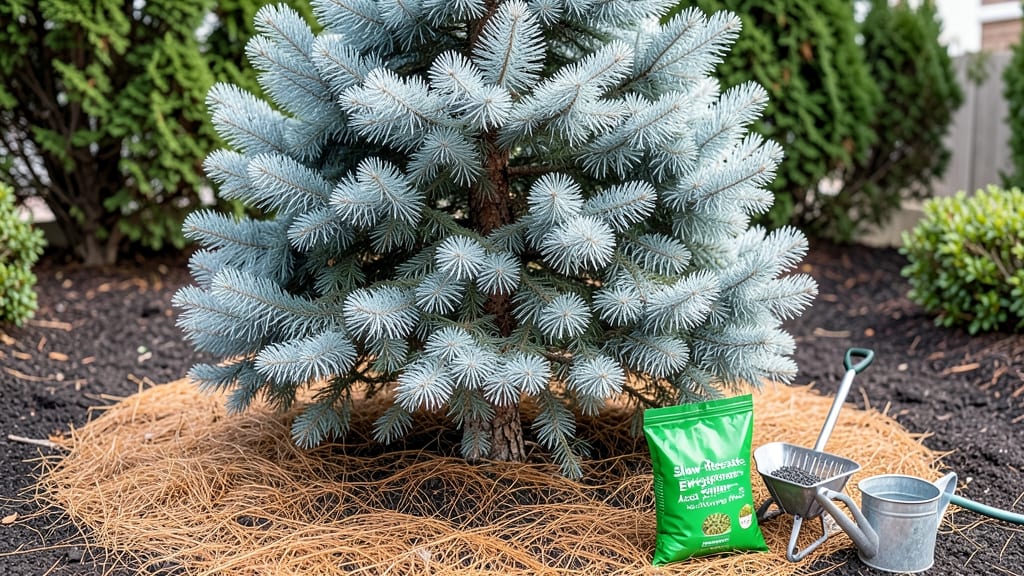
To fertilize a blue spruce at the right time means feeding it when it’s hungry—not when it’s resting or stressed.
Your 🌲 isn’t just a Christmas tree—it’s a long-term investment in curb appeal and forest-like beauty, but without proper fertilization timing, its growth can stall or its needles can turn dull.
Most gardeners fertilize too late in spring or skip fall entirely, missing the two key windows that make all the difference.
Early spring, just as new growth begins (think early April in Zone 6), is your first chance to give it a nutrient boost. Then, in late fall, a light feeding helps prepare it for winter dormancy—though this is where many make the fatal mistake of overdoing it.
Below, I’ll break down the exact timing for each season, what to feed (organic vs. synthetic), and how to spot when your spruce is begging for help—or when it’s better to wait.

Spring fertilization schedule for blue spruce: the 3 critical timing rules
Spring is the most critical time to feed your blue spruce because it aligns with its natural growth cycle. Skipping this window can lead to sparse needle growth and weaker root systems. The key is understanding when to fertilize—not just what to use—but how your tree’s biology dictates timing.
Blue spruces wake from dormancy when soil temperatures reach 50°F (10°C), typically in early April in most USDA Zone 6 regions. This is your first cue to prepare for fertilization. However, applying fertilizer too early can stress the tree before it’s ready to absorb nutrients efficiently.
Here’s the 3-rule framework I follow to ensure my blue spruces thrive: Rule 1—fertilize after new growth begins (not before), Rule 2—use a balanced NPK ratio (10-10-10) to support both foliage and roots, and Rule 3—avoid fertilizing after mid-June to prevent late-season growth that can’t harden off before winter.
For young blue spruces (under 5 years old), I use a half-strength fertilizer in early spring to avoid burning tender roots.
Mature trees (10+ years) can handle a full dose of 1-2 lbs per 100 sqft, but I always spread it evenly under the drip line—never near the trunk.
Soil tests reveal the truth about your blue spruce’s needs. If your soil is acidic (pH < 6.0), blue spruces thrive in this range, but a pH above 7.0 can lock out essential nutrients. I recommend testing in early spring and adjusting with elemental sulfur if needed before fertilizing.
Organic fertilizers like composted manure or worm castings release nutrients slowly, reducing the risk of burnt needles. Synthetic fertilizers, however, provide immediate results—ideal for correcting deficiencies quickly. I alternate between the two to balance convenience and long-term soil health.
Watch for new growth flushes after fertilizing. If your blue spruce produces soft, pale needles in late spring, it’s a sign of over-fertilization. Cut back on nitrogen and increase watering to flush excess salts from the root zone. Conversely, stunted growth means it’s time to feed again.
Regional climate plays a role too. In warmer southern zones (7+), blue spruces may need a second late-spring feeding in June. In colder northern zones (Zone 4-5), wait until after the last frost to avoid fertilizer loss from leaching or freeze-thaw cycles.
Pro tip: Pair spring fertilization with a 2-3 inch mulch layer to retain moisture and regulate soil temperature. Avoid piling mulch against the trunk, as this can cause rot and attract pests. Instead, create a mulch donut around the base.
Fall fertilization secrets: how late is too late for blue spruce?
Fall is the time many gardeners pack up their tools, but for blue spruce trees, this season holds a hidden fertilization opportunity that most miss. While spring gets all the attention, late summer through early fall is actually the second-best window to nourish your spruce before winter dormancy.
The key lies in understanding how your tree prepares for winter and when to stop feeding to avoid stress.
Most gardeners assume fertilizing in fall is a no-go, but the truth is more nuanced. A light feeding in late summer (around August to early September) can give your blue spruce a growth boost before cold sets in.
This timing allows roots to absorb nutrients while still supporting foliage development, but there’s a strict deadline to avoid late-season stress.
Stop fertilizing your blue spruce by mid-October in most climates. Applying nutrients too late—after first frost or when growth slows—can trigger new shoot growth that won’t harden off before winter.
This weak growth is prone to winter burn and can even kill branches. For USDA Zone 5 or colder, halt feeding by September 15th.
Instead of fertilizing, focus on fall soil preparation. Work a 2-3 inch layer of compost into the root zone in early fall to improve soil structure and nutrient availability for next spring. This organic matter breaks down slowly, providing gradual release nutrients without the risks of late-season feeding.
Another critical fall task is deep watering. Blue spruce trees need consistent moisture to prepare for winter, but overwatering in cold soil can suffocate roots. Water deeply every 2-3 weeks until the ground freezes, ensuring the root zone stays moist but not soggy.
Pair this with a 3-inch mulch layer (avoid piling against the trunk) to insulate roots and retain moisture.
Watch for signs of stress like yellowing needles or sparse growth in spring, which may indicate missed fall care. If your tree shows these symptoms, a soil test in early spring will reveal if winter conditions depleted nutrients or if fall prep was insufficient.
Adjust next year’s plan based on these findings—sometimes less is more when it comes to late-season feeding.
Remember, blue spruce trees are slow growers compared to fruit trees or shrubs. Their needle retention and winter hardiness depend on proper fall care, not aggressive feeding.
By focusing on soil health and timely watering rather than late fertilizers, you’ll set your tree up for vibrant spring growth without the risks of overstimulation.