
Fertilization
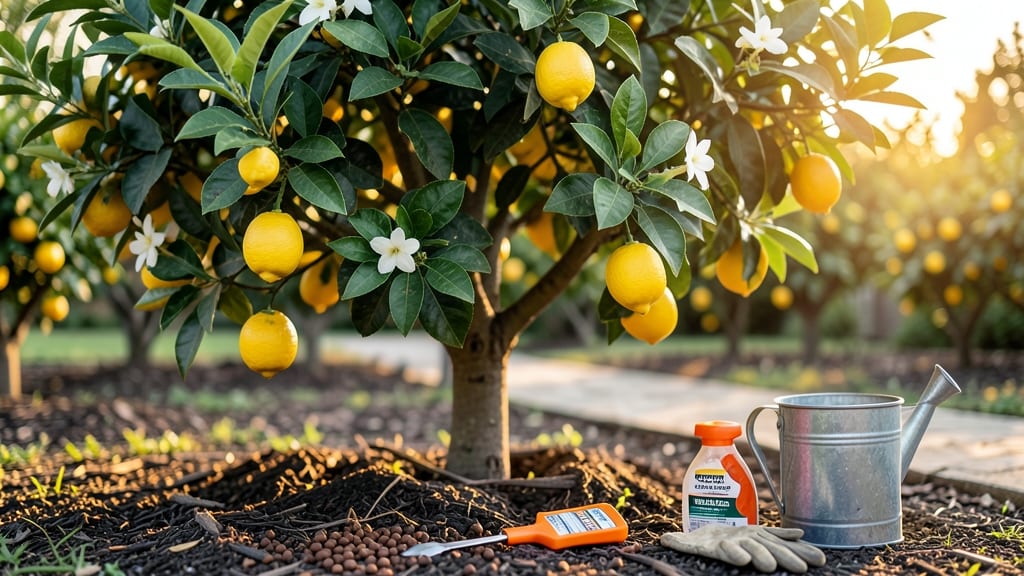
To fertilize citrus in Arizona, aim for early spring and late fall—when the trees are ramping up growth and preparing for winter fruit production.
Skipping the timing can leave your 🍊 trees struggling, even in Arizona’s ideal climate. Too much fertilizer in summer scorches roots, while winter applications waste nutrients the tree can’t use. The key is feeding when the tree is actively growing but not under stress.
In this guide, I’ll break down the exact months to fertilize, how Arizona’s heat and soil type change the rules, and the best fertilizers to avoid overdoing it.
You’ll learn when to lighten up, when to go heavy, and how to spot the signs your tree is begging for nutrients—or screaming for a break.
By the end, you’ll have a fertilization schedule tailored to your Arizona microclimate, whether you’re in the desert or near the coast. No more guesswork, just healthier trees and bigger harvests.

Optimal fertilization schedule for Arizona citrus trees: spring vs. fall timing explained
Arizona’s unique climate—with its hot summers and mild winters—creates ideal conditions for citrus trees, but fertilization timing is everything.
Unlike temperate climates, Arizona’s microclimates (desert vs. coastal) drastically affect nutrient absorption. Spring and fall are your two golden windows, but the how and when depend on your tree’s age and location.
In spring (February–March), citrus trees wake up from dormancy and need a nutrient boost to fuel new growth and flowering. This is when you’ll see that spring flush of leaves—your tree’s signal to feed.
Meanwhile, fall (September–October) fertilization preps roots for winter and sets the stage for next year’s fruit. Skipping these windows means missed opportunities for bigger harvests and healthier trees.
Here’s the critical difference: Young trees (under 3 years) need light, frequent feedings every 6–8 weeks, while mature trees (3+ years) thrive on heavier applications twice a year. Arizona’s alkaline soil also demands the right fertilizer blend—citrus-specific formulas with low nitrogen and balanced phosphorus/potassium to prevent burn and encourage fruiting.
🌱
🌿 Spring vs. Fall Fertilization Comparison for Arizona Citrus
| Factor | Spring (Feb–Mar) | Fall (Sep–Oct) |
|---|---|---|
| Purpose | Stimulate new growth and flowering | Strengthen roots and fruit set for winter |
| Fertilizer Type | Citrus-specific (6-6-6 or 8-3-9) | Slow-release organic or low-nitrogen blend |
| Application Rate | Young: ½ cup | Mature: 1 cup | Young: ¼ cup | Mature: ½ cup |
| Microclimate Note | Coastal areas: delay until March to avoid fungal risk | Desert regions: water deeply post-application to prevent salt buildup |
| Avoid If... | Soil is wet or temps exceed 90°F | Temps drop below 60°F or tree shows dormancy signs |
💡 Pro Tip: Always water fertilizer into soil to prevent root burn.
Arizona’s desert microclimates (like Phoenix) demand quicker nutrient uptake, so granular fertilizers work best. In contrast, coastal areas (e.g., Tucson) benefit from organic slow-release options to avoid leaching from frequent rains.
For young trees, split spring feedings into two applications—once in February and again in March—to match their rapid growth spurts.
Mature trees, however, can handle a single heavy feeding in early spring, followed by a light fall top-up in October. This two-step approach mirrors Arizona’s natural dry-wet cycles, ensuring nutrients are available when roots are most active.
Skip summer fertilization entirely—your tree’s energy is focused on fruit ripening, not new growth.
One common mistake? Over-fertilizing in fall. Too much nitrogen now can delay dormancy, leaving trees vulnerable to winter stress. Instead, opt for a low-nitrogen blend (like 4-6-8) to prioritize root development over foliage.
In cooler desert valleys (e.g., Flagstaff), push fall feeding to November to align with shorter days.
🪴
Soil tests are your secret weapon. Arizona’s alkaline soil (pH 7.5–8.5) locks out key nutrients like iron and zinc, so test every 2–3 years. If results show low phosphorus, switch to a bone-meal supplement in spring.
For young trees, mix fertilizer with the top 2–3 inches of soil to protect roots from direct contact. Mature trees? Spread granules in a 12-inch ring around the drip line and water thoroughly.
Remember: Timing beats quantity. A well-timed spring feeding in February can double your harvest yield compared to a haphazard summer application. And in Arizona, where water is scarce, efficient fertilization means healthier trees with less waste.
☀️
Signs your Arizona citrus tree needs fertilizer (and when to avoid it)
Arizona’s alkaline soil and intense sun can trick even experienced gardeners into thinking citrus trees thrive without extra nutrients. But subtle clues—like yellowing leaves or sparse fruit—often signal your tree is hungry.
The key is spotting these signs early before deficiencies become irreversible. Citrus trees in AZ need balanced fertilization to combat nutrient lockout caused by high pH soils (7.5–8.5).
Don’t confuse natural seasonal changes with nutrient deficiencies. For example, lemon trees drop leaves in winter, but persistent yellowing on mature leaves (especially between veins) almost always means iron or zinc deficiency.
Arizona’s heat accelerates nutrient depletion, so timing matters more than quantity. Over-fertilizing can burn roots, while under-fertilizing stunts growth—both are common mistakes in our desert climate.
Start by examining your tree’s leaf color and growth patterns. Healthy citrus leaves are glossy green, while nutrient-deficient leaves show distinct patterns: yellowing between veins (iron/zinc), purple stems (phosphorus), or small, sparse leaves (nitrogen). Arizona’s alkaline soil binds iron and zinc, making these deficiencies more common.
A simple soil pH test (ideal range: 6.0–7.0 for citrus) can reveal if you need to amend soil with sulfur or chelated nutrients.
Watch for poor fruit set or small, bitter fruit—another red flag. Citrus trees need consistent nutrients to develop sweet, juicy fruit. If your orange or grapefruit tree produces few blooms or tiny fruit, it’s likely starving for potassium or magnesium.
Young trees (under 3 years) show deficiencies faster than mature trees, so fertilize them every 6–8 weeks during growing seasons. Mature trees can handle bi-monthly feedings with a citrus-specific 6-6-6 or 8-3-9 blend.
Over-fertilizing is just as damaging as under-fertilizing. Signs include burnt leaf edges, excessive leaf drop, or white crust on soil (salt buildup). Arizona’s dry climate worsens this—always water deeply after fertilizing to flush excess salts away.
If you see roots protruding above soil or blackened bark, flush the soil with water immediately and avoid fertilizing for 2–3 months.
Pro tip: Use organic matter like compost or worm castings to improve soil structure and nutrient availability. Mix 2–3 inches of compost into the topsoil annually to combat Arizona’s nutrient-poor, alkaline conditions. Pair this with a slow-release fertilizer in spring to avoid nutrient spikes.
Remember, citrus trees in AZ thrive on consistency—not excess. Adjust your approach based on your tree’s signals, not just the calendar.