
Trees
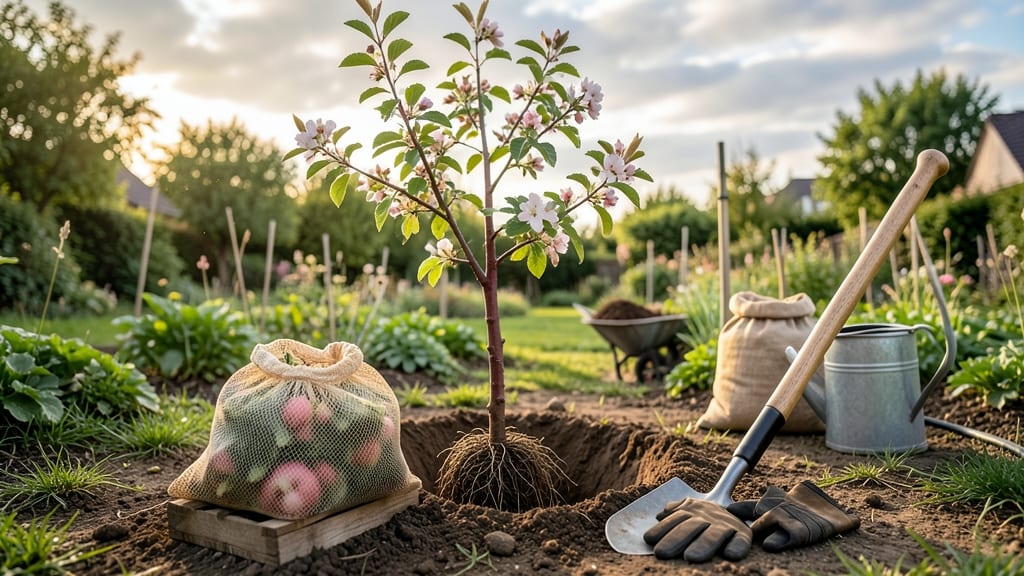
Planting an apple tree 🍎 in England during late autumn to early spring sets the stage for a thriving orchard—because timing directly impacts how well your tree takes root and bears fruit.
Picture this: you’ve just planted your dormant apple tree in March, only to watch it wilt under a late frost. Or worse, you wait until May, and your tree struggles to establish roots before summer heat arrives.
These mistakes happen more often than you’d think, but the good news is that knowing your region’s microclimate can make all the difference.
England’s USDA zones 8a-9a mean coastal areas like Cornwall enjoy milder winters, while inland spots like Yorkshire face colder snaps. That’s why I’ve broken down the best months to plant—whether you’re working with bare-root saplings or container-grown trees—and how to prep your soil for success.
Inside, you’ll discover exact planting windows by region, soil prep secrets, and the one trick that keeps your apple tree healthy through its first critical year. Let’s get those roots growing!
Best months to plant apple trees in England by region
England’s varied climate means the best time to plant apple trees depends on where you live.
In Southern England, milder winters allow planting from November to March, while Northern England gardeners should focus on November to February to avoid late frosts. Central England falls somewhere in between, with a December to March window.
Understanding your region’s frost risks and soil conditions is key to giving your tree the best start.
For bare-root apple trees, winter planting (when the tree is dormant) is ideal—roots establish before spring growth begins. If you’re planting container-grown trees, however, you have more flexibility, as they can go in during spring or autumn.
Always check the last frost date for your area to avoid planting too early in cold zones like Yorkshire or too late in warmer areas like Cornwall.
Soil preparation is just as critical as timing. Test your soil’s pH (ideal: 6.0–7.0) and amend with compost or well-rotted manure to improve drainage. In clay-heavy soils common in the Midlands, add sand or grit, while sandy soils in coastal regions benefit from organic matter.
A well-prepared site ensures your apple tree thrives from day one.
🌱 Best Planting Months for Apple Trees in England by Region
| Region | Bare-Root Trees | Container-Grown Trees | Key Considerations |
|---|---|---|---|
| Southern England (e.g., London, Sussex) | November – March | March – April or October – November | Milder winters; avoid late frosts in March. |
| Central England (e.g., Birmingham, Oxford) | December – March | March – April or September – October | Moderate climate; watch for early spring frosts. |
| Northern England (e.g., Manchester, York) | November – February | March – April or September | Colder winters; plant early to avoid frost damage. |
| All Regions (General Tip) | Dormant season preferred | Spring or autumn flexibility | Avoid waterlogged soils in winter. |
In Southern England, where winters are milder, you can plant bare-root trees as late as March, but aim for November to January to maximize root growth before spring. For container-grown trees, March to April is perfect—soil warms up, and the tree can establish before summer heat arrives.
In coastal areas like Devon or Kent, wind protection is also key; use a windbreak or sheltered spot to reduce stress.
Central England gardeners should prioritize December to February for bare-root planting, as this avoids the risk of late spring frosts that can damage new growth. Container-grown trees can go in during March or September, but September planting must be done early enough for roots to settle before winter. Soil drainage is critical here—avoid low-lying areas where water pools after heavy rain.
For Northern England, where winters are colder, stick to November to February for bare-root trees. Container-grown trees can be planted in March or September, but September planting must finish by mid-September to allow root establishment.
In colder zones like Yorkshire or the Lake District, choose hardy apple varieties like Bramley’s Seedling or Cox’s Orange Pippin, which tolerate frost better than delicate varieties.
After planting, mulch around the base with organic matter to retain moisture and regulate soil temperature. Water deeply once a week for the first two months, then taper off as the tree establishes.
In drought-prone areas like East Anglia, consider installing a drip irrigation system to ensure consistent moisture during dry spells.
One common mistake is planting too late in Northern England or too early in Southern England. Always check your local frost dates—planting a bare-root tree in late March in Yorkshire could mean frost damage to new shoots.
Similarly, planting container-grown trees in autumn without proper mulching can leave roots exposed to winter cold.
For best results, pair your apple tree with a pollination partner if growing from seed or a non-self-fertile variety. In small gardens, consider cordon varieties like ‘Golden Hornet’, which take up less space but still produce fruit.
With the right timing and care, your apple tree will reward you with decades of harvests—starting as early as 3–4 years after planting.
How to choose the right apple tree variety for your planting season
Choosing the right apple tree variety depends heavily on your planting season and local climate. In England, autumn and winter are ideal for bare-root trees, while spring suits container-grown varieties.
Each season offers unique advantages—winter planting gives roots time to establish before spring growth, while spring planting aligns with active root development. Let’s explore the best varieties for each season and their key traits.
For autumn/winter planting, opt for hardy varieties like Bramley’s Seedling or Cox’s Orange Pippin. These thrive in England’s cooler months and establish strong root systems before spring. Spring planting, however, favors varieties like Gala or Fuji, which benefit from warmer soil and longer growing seasons.
Pollination needs also vary—some varieties are self-fertile, while others require cross-pollination from a second tree.
Hardiness zones (typically USDA 8a-9a in England) play a critical role. Southern regions can handle Fuji or Braeburn, while Northern areas may struggle with late frosts unless you choose dwarf varieties like Golden Delicious on M9 rootstock. Always check a variety’s frost tolerance before planting—some, like Granny Smith, tolerate colder climates better than others.
| Variety | Best Planting Season | Pollination Needs | Hardiness Zone | Key Notes |
|---|---|---|---|---|
| Bramley’s Seedling | Autumn/Winter | Requires pollinator | 8a-9a | Classic cooking apple; needs cross-pollination. |
| Cox’s Orange Pippin | Autumn/Winter | Self-fertile | 8a-9a | Sweet-tart flavor; thrives in cooler climates. |
| Gala | Spring | Self-fertile | 8a-9a | Early harvest; great for fresh eating. |
| Fuji | Spring | Requires pollinator | 8a-9a | Crisp and sweet; needs warm summers. |
| Golden Delicious (Dwarf) | Spring/Autumn | Self-fertile | 7a-9a | Compact size; versatile for eating/baking. |
When selecting a variety, consider fruit use. Bramley’s Seedling, for example, is perfect for cooking, while Gala shines for fresh eating. Pollination compatibility is another key factor—planting two compatible varieties ensures better yields.
For instance, Cox’s Orange Pippin pairs well with Bramley’s Seedling, while Fuji needs a partner like Gala to set fruit.
For small gardens, dwarf varieties like Golden Delicious on M9 rootstock are ideal—they stay under 12 feet tall and produce fruit faster than standard trees. If space isn’t an issue, semi-dwarf varieties like Braeburn offer a balance of size and productivity.
Always match the rootstock to your soil type—M9 suits well-drained soils, while MM106 tolerates heavier clay.
Finally, local nurseries are your best resource for variety selection. They’ll know which apples thrive in your specific microclimate, whether you’re in the milder Southwest or colder Northern England. Ask about disease resistance too—some varieties, like Discovery, are bred to resist common apple scab and canker.