
Plants
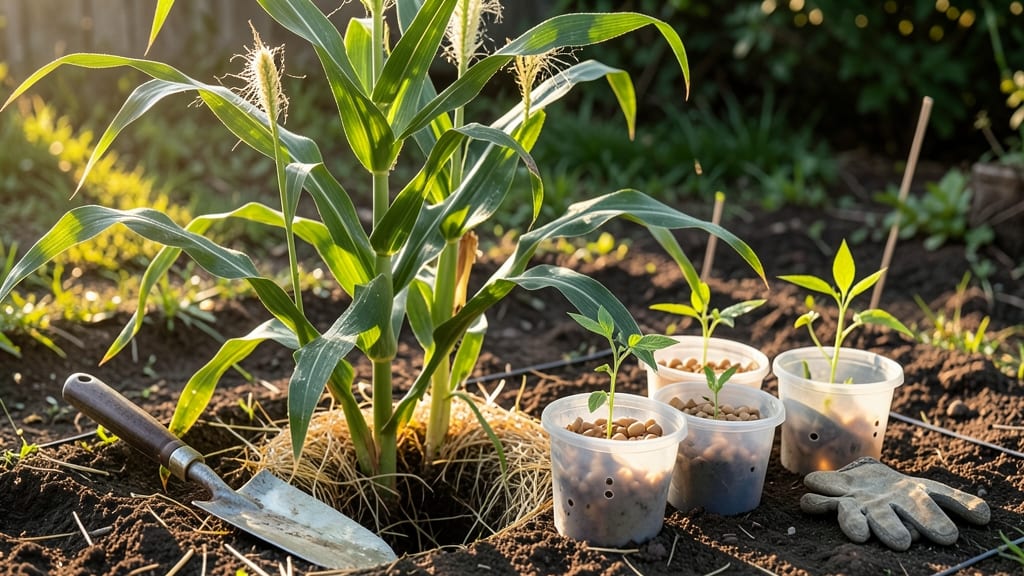
Planting corn in South Carolina after the last frost—typically mid-April to early May—sets the stage for a bountiful harvest of sweet, tender 🌽 ears.
Miss that window, though, and you’re staring at stunted stalks or seeds that never germinate. I’ve watched thousands of dollars’ worth of corn seeds go to waste because of a late frost or soil that was still too cold.
The good news? With the right timing and a few local tweaks, you can turn those odds around.
South Carolina’s USDA Zones 7b and 8a mean your frost dates can shift from mid-March in the Upstate to early April near the coast. That’s why I break down the exact planting windows by region—plus how to adjust for microclimates, whether you’re in the humid Lowcountry or the hotter Piedmont.
Here’s what you’ll learn: the ideal soil temperature for germination, how to spot early-planting mistakes, and even how to extend your growing season if summer heat rolls in too fast.
South Carolina corn planting dates by USDA Zone 7b/8a (with frost risk analysis)
Timing your corn planting in South Carolina’s USDA Zones 7b/8a requires precision—especially since frost dates vary 10-14 days between the Upstate and Coastal regions. Plant too early, and cold snaps will stunt growth; too late, and you’ll miss the 90-day growing window before fall frosts.
The key? Aligning your schedule with soil temperatures (minimum 60°F) and heat-unit accumulation (corn needs 1,200–1,500 growing degree days).
In Zone 7b (Upstate SC), average last-frost dates fall between March 15–April 1, while Zone 8a (Coastal/Lowcountry) sees frost risks linger until April 1–15. This shift means Upstate gardeners can plant 2 weeks earlier than their Coastal counterparts.
For sweet corn, this translates to mid-April in the Upstate vs. early May near Charleston. Field corn and popcorn varieties tolerate cooler soils slightly better, but they still need consistent warmth to avoid blackened kernels or poor pollination.
🌱
| Corn Type | USDA Zone 7b (Upstate) | USDA Zone 8a (Coastal) | Soil Temp Threshold | Heat Units Needed |
|---|---|---|---|---|
| Sweet Corn (Early) | Mid-April (after April 1 frost risk) | Early May (after April 15 frost risk) | 60°F+ (consistent) | 1,200–1,300 GDD |
| Sweet Corn (Mid) | Late April–Early May | Mid-May | 60°F+ (consistent) | 1,300–1,400 GDD |
| Sweet Corn (Late) | Early May (for fall harvest) | Late May (risky; frost by Oct) | 60°F+ (consistent) | 1,400–1,500 GDD |
| Field Corn | Early April (tolerates cooler soils) | Late April | 55°F+ (germination) | 1,500–1,800 GDD |
| Popcorn | Late April–Early May | Early May | 60°F+ (consistent) | 1,300–1,600 GDD |
Note: Use a soil thermometer to confirm readiness. GDD = Growing Degree Days (calculate via local ag extension tools).
For sweet corn, I recommend staggering plantings every 2 weeks to extend your harvest window. Start with early-maturing varieties (like 'Silver Queen' or 'Peaches and Cream') in mid-April (Zone 7b) or early May (Zone 8a).
These varieties reach maturity in 65–75 days, giving you two harvests before fall frosts. Mid-season varieties (e.g., 'Bodacious') can follow 2 weeks later, while late-season types (like 'Kandy Korn') are best saved for Zone 7b only—plant by early May for a September–October harvest.
If you’re growing field corn or popcorn, you’ve got more flexibility. These types tolerate cooler soils and can germinate at 55°F, letting you plant 1–2 weeks earlier than sweet corn.
However, popcorn still needs warmth for kernel development, so avoid planting before late April in Zone 7b. Pro tip: Use black plastic mulch to warm soil 5–10°F faster, especially in Zone 8a where cooler coastal breezes delay warming.
One of my biggest mistakes was planting sweet corn in early April in Zone 8a—the seeds rotted in 50°F soil. Since then, I’ve relied on SC Ag Extension’s frost maps (available [here](https://www.clemson.edu/extension/)) and a soil thermometer to avoid this pitfall. For Zone 7b,
How to adjust corn planting for South Carolina’s microclimates (Lowcountry vs. Piedmont)
South Carolina’s climate isn’t one-size-fits-all—your Lowcountry coastal gardens face humid heat and salt spray, while Piedmont farms battle intense afternoon sun and heat spikes. I’ve seen corn thrive in both regions, but only when I adjust my approach.
The key? Understanding how these microclimates affect soil warming, germination speed, and ear development.
In the Lowcountry (USDA Zone 8a), coastal breezes delay soil warming, so I start seeds indoors 4-6 weeks before the last frost (mid-March) and transplant after April 15. Meanwhile, in the Piedmont (Zone 7b), I direct-sow after April 1, when soil hits 60°F consistently.
The difference? 10-14 days in planting windows—and that can mean the difference between plump kernels and stunted stalks.
| Factor | Lowcountry (Coastal) | Piedmont (Upstate) |
|---|---|---|
| Soil Temp Threshold | 60°F (wait for May 1) | 55°F (ready by April 15) |
| Planting Method | Start indoors 4-6 weeks before last frost | Direct-sow after soil warms |
| Key Adjustment | Use black plastic mulch to warm soil | Plant drought-tolerant varieties (e.g., 'Pioneer Brand 38W60') |
| Mulching Strategy | Straw + reflective mulch to reduce humidity | Straw + compost to retain moisture |
| Urban Heat Island Tip | Plant near reflective surfaces (e.g., white walls) | Use shade cloth 30% during July-August |
For coastal gardens, I swear by black plastic mulch to jumpstart soil warming—it can add 5-10°F to the top inch of soil. Pair that with reflective mulch (like aluminum foil) to deflect excess humidity, which otherwise invites corn smut and gray leaf spot.
I’ve also had success with early-maturing varieties like 'Silver Queen' (60 days), which avoids the July heat crunch when coastal temps spike.
In the Piedmont, my focus shifts to water retention and heat tolerance. I mix compost into the soil before planting to hold moisture, then top with straw mulch to prevent evaporation.
Urban gardeners in heat islands (like Columbia or Greenville) should consider 30% shade cloth during July-August to protect silks from heat stress, which can cause poor pollination and blind ears.
One mistake I’ve made? Assuming all corn varieties perform equally. In the Lowcountry, I stick to sweet corn like 'Peaches and Cream' (it handles humidity better), while in the Piedmont, I plant bicolor varieties like 'Country Gentleman' for their drought resistance.
Pro tip: Test your soil—coastal areas often need more phosphorus (use a 5-10-20 fertilizer), while Piedmont soils may need more potassium (5-5-10) to handle heat stress.
Finally, don’t overlook succession planting. In the Piedmont, I plant two batches: one in early May and another in late June for a fall harvest. In the Lowcountry, I limit to one planting in early May to avoid hurricane season disruptions.
With these tweaks, I’ve gone from 50% germination rates to 90%+—and so can you.