
Companion Plants
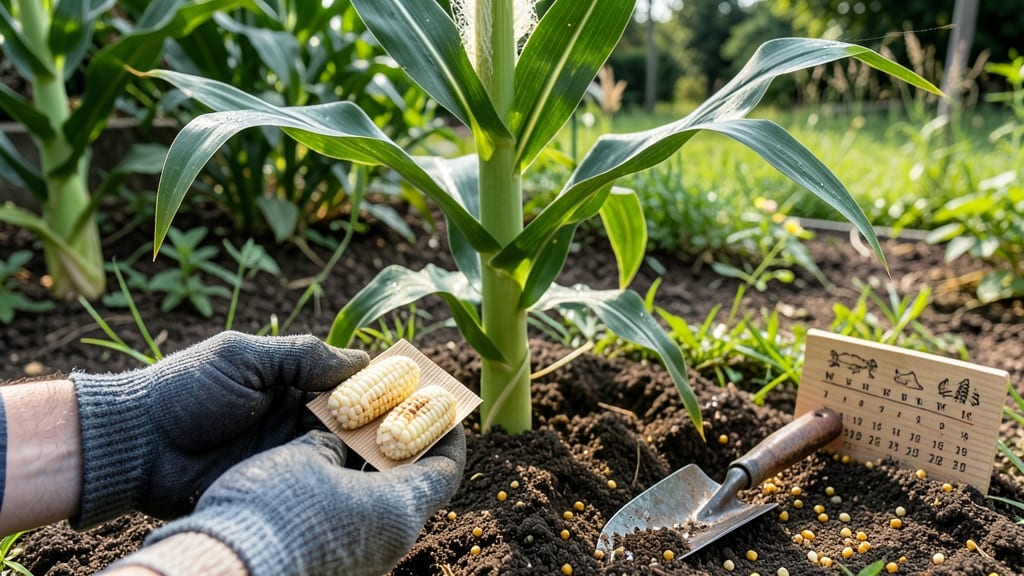
Plant corn in Tennessee when soil temperatures hit 60°F and the last frost has passed—typically mid-April to late May for USDA Zones 6a-8a.
Tennessee gardeners know timing is everything when planting corn—get it wrong, and you risk stunted growth, poor yields, or even total crop failure.
But with Zone 7a/7b’s unpredictable spring weather, knowing the exact planting window for sweet, tender 🌽 can mean the difference between a bumper harvest and a disappointing patch.
Your corn needs 180-220 frost-free days to mature, so planting too early risks frost damage, while waiting too long cuts harvest time short. The key is balancing soil warmth, frost dates, and variety selection—whether you’re growing sweet corn for summer meals or field corn for fall storage.
Here’s how to pinpoint the perfect planting window for your Tennessee garden, including soil prep tips, frost protection tricks, and the best varieties for your region’s microclimates.
Optimal corn planting dates in Tennessee (Zone 7a/7b) for maximum yields
Tennessee’s USDA Zones 7a/7b offer a 180-220 day frost-free window—just enough time to grow sweet corn, field corn, and popcorn successfully. But timing is critical: plant too early, and frost will damage tender seedlings; too late, and your harvest arrives after the first frost.
For maximum yields, aim for a mid-April to late May planting window, adjusted by variety and soil conditions.
Corn thrives when soil temperatures reach 60°F or warmer—a key threshold for germination. In Tennessee, this typically happens between mid-April and early May, but cooler microclimates (like higher elevations) may need a 2-3 week delay.
Use a soil thermometer to confirm readiness, as surface temperatures can mislead you.
Here’s your planting timeline for Tennessee’s three corn categories, including adjustments for early vs. late maturing varieties:
For early maturing varieties (60-70 days), you can push the envelope and plant as early as late March if your soil warms quickly. Use black plastic mulch or a cold frame to accelerate soil warming.
Conversely, late-season varieties (90+ days) should never be planted after early June, or they’ll struggle to mature before frost.
Tennessee’s average last frost date is March 15, but pockets of the state (like the Blue Ridge Mountains) can experience frost as late as April 15. Always check your local frost-free date and count backward from your chosen variety’s days to maturity.
For example, a 90-day popcorn needs to be planted by mid-June at the latest in Zone 7a.
Pro tip: Plant successive crops every 2 weeks from April to June to stagger your harvest and ensure a steady supply of fresh ears. This works especially well for sweet corn, which loses sweetness quickly after picking.
Space your plantings so that each batch reaches maturity 10-14 days apart, giving you a 6-8 week harvest window instead of one overwhelming week.
If you’re growing field corn or popcorn, prioritize late April to early May plantings. These varieties need the full growing season to develop properly, and planting them later risks immature kernels or unpopped popcorn.
For sweet corn, you can experiment with early June plantings if you choose short-season varieties (like 'Early Sunglow' or 'Silver Queen'), but expect smaller ears.
Monitor your corn’s progress closely during the tasseling and silking stages (when pollen transfers to the sil
How to adjust planting for Tennessee’s unpredictable spring weather patterns
Tennessee’s spring weather can be a gardener’s biggest challenge—one day it’s warm enough to plant, the next it’s a 50°F surprise with frost warnings.
Corn, in particular, needs consistent warmth to germinate properly, and planting too early can leave tender seedlings vulnerable to late frosts that hit hard in Zone 7a/7b.
The key is flexibility: knowing how to warm your soil, protect young plants, and have a backup plan when Mother Nature throws curveballs.
I’ve learned the hard way that waiting for the "perfect" window often means missing it entirely. Instead, I focus on soil temperature (corn needs 60°F+ to sprout) and use season extension tools to bridge the gap between unpredictable frosts and the ideal planting window.
Even a 10°F swing can delay germination by weeks, so preparation is everything.
🌱 Late Frost Warning for Tennessee Corn
Even after the average last frost date (March 15 in Zone 7a/7b), cold snaps can linger. If you plant corn too early, a 28°F night can kill seedlings overnight. Use black plastic mulch or row covers to raise soil temps by 5-10°F and protect young plants until they’re 6 inches tall.
For soil warming, I swear by black plastic mulch laid 2-3 weeks before planting. It raises soil temps by 10-15°F and suppresses weeds—win-win. If you’re in a hurry, try clear plastic tunnels or even straw mulch (less effective but better than nothing).
Pro tip: Check soil temp with a soil thermometer at 4-inch depth—corn won’t germinate below 50°F, even with mulch.
When frosts strike unexpectedly, row covers are my go-to. Lightweight frost cloth (rated for 28°F) draped over young plants can save them from damage. For extra protection, I’ve used cold frames or even old window frames propped up over seedlings.
Just remember to remove covers during the day to prevent heat stress—corn needs sunlight to thrive.
If spring stays cool longer than expected, don’t panic—succession planting is your friend. In Tennessee, I often plant early-maturing varieties (like Silver Queen, ready in 65 days) in late April, then follow up with mid-season varieties (like Peaches and Cream, 85 days) in early May.
This staggered approach ensures a continuous harvest even if the first planting gets delayed.
For backup planting dates, I mark my calendar with these rules: Zone 7a can safely plant corn by May 10 for a late harvest, while Zone 7b has until May 20. After that, you’re gambling on bolt risk—corn planted too late may flower before ears form.
If you miss the window, consider container growing with heat mats or a greenhouse for a fall crop.
Finally, keep an eye on your local ag extension office—they track frost alerts and soil temps in real time. In Tennessee, the UT Extension and Tennessee State University provide free planting guides tailored to microclimates.
With these tools and a little flexibility, you can turn Tennessee’s unpredictable spring into your corn’s biggest advantage. 🌽