
Plants
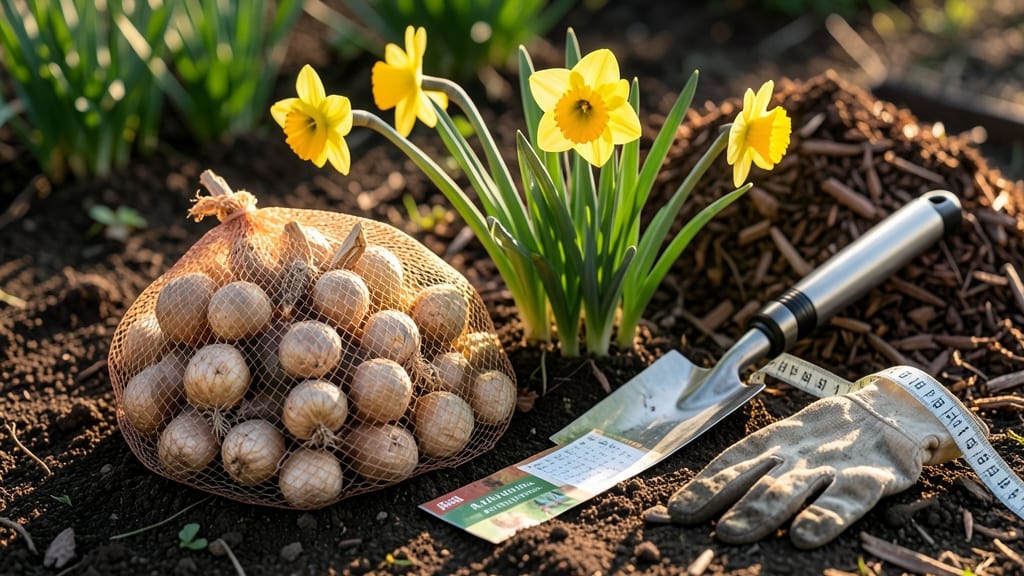
Planting daffodils in Massachusetts in October or November ensures they’ll bloom beautifully next spring, but timing matters more than you might think.
Picture this: you’ve just dug a hole, dropped in those bulbs, and—BAM!—an unexpected frost hits. Too early, and your daffodils 🌼 might rot; too late, and they won’t get enough root time before winter.
The sweet spot? 4-6 weeks before the ground freezes, usually between mid-October and early November in most of the state.
Massachusetts’ USDA Zones 5b-6b mean frost can arrive as early as mid-October in inland areas or linger into November near the coast. That’s why I always check the local forecast before planting—because nothing ruins a spring garden like a winter-killed bulb.
In this guide, I’ll walk you through the exact planting window for your region, how to prep your soil for success, and the one trick that guarantees your daffodils will pop up like clockwork next April.
Massachusetts frost dates and best planting months for daffodils
Massachusetts spans USDA Hardiness Zones 5b-6b, where frost dates vary dramatically between inland areas and coastal regions. For daffodils (Narcissus spp.), timing your fall planting to avoid winter frost damage is critical—plant too early, and bulbs may rot; too late, and they won’t establish roots before freezing.
The ideal window is 4-6 weeks before your region’s average first frost, which typically falls between mid-October and early November.
Coastal areas like Barnstable County often experience milder winters, with first frosts arriving around October 20-25, while inland regions like Franklin County can see frost as early as October 10.
This variation means your planting schedule should shift 1-2 weeks earlier the farther west or inland you garden. Always check your local Almanac frost date for precision.
Daffodils thrive when planted in well-draining soil at a depth of 6-8 inches, with the bulb’s pointy end facing upward. In Massachusetts, aim to complete planting by November 15 in most zones to ensure bulbs establish roots before the ground freezes solid.
If you’re in a warmer microclimate (e.g., near Boston Harbor), you might extend planting into early December, but avoid planting after the ground freezes.
Here’s how to adjust for early or late frosts: If your area experiences an unusually early frost (e.g., October 5 instead of October 15), rush planting by 2 weeks earlier—even if it means planting in September.
Conversely, if frost is delayed, you can plant as late as December 1 in Zone 6b, but bulbs may bloom later the following spring.
For urban gardeners in cities like Boston or Worcester, microclimates can create warmer pockets where frost arrives later. Test your soil’s readiness by pushing a broadfork into the ground—if it’s too wet or frozen, wait a few days.
In containers or raised beds, bulbs may need extra protection (like mulch) if temperatures dip below 20°F.
Pro tip: Plant daffodil bulbs in clusters of 3-5 for a natural, drifts-like appearance. Space them 4-6 inches apart to allow airflow, which reduces rot risk during winter.
After planting, apply a 2-3 inch layer of mulch (straw or shredded leaves) to insulate bulbs from temperature fluctuations and retain moisture.
If you miss the fall window, you can plant daffodils in early spring (March-April), but blooms will arrive 2-3 weeks later than fall-planted bulbs. Spring planting is riskier because bulbs may not establish roots before summer heat arrives.
For reliable blooms, stick to fall planting—just time it right for your specific Massachusetts region.
Remember, daffodils are deer-resistant and squirrel-proof, making them a low-maintenance choice for Massachusetts gardens. Once planted correctly, they’ll return year after year with minimal effort—just enjoy the vibrant spring displays they provide!
How to time your daffodil planting for maximum blooms (step-by-step)
Timing your daffodil planting in Massachusetts is all about working with—not against—the fall frost window. Early bloomers like Jonquil need a slightly different approach than late varieties like Ice Follies, but the core principle remains: plant when soil temps hit 60°F and 4-6 weeks before freezing.
For most of MA, that’s mid-October to early November, but coastal areas may extend planting into early December.
Before you dig, check your bulb variety—some need deeper planting than others. Standard daffodils (1.5-2 ft tall) require 6-8 inches deep, while dwarf varieties (under 1 ft) only need 4-6 inches.
Spacing matters too: 4-6 inches apart in beds, 8-12 inches for larger clumps. Urban gardeners can use containers with drainage holes, planting 3-5 bulbs per 12-inch pot.
🌱 Step-by-Step Daffodil Planting Guide for Massachusetts
- ⏰ Choose Your Window: Plant early bloomers (Oct 15-30) first, then late bloomers (Nov 1-15). Coastal MA can extend to Nov 30.
- 🌡️ Test Soil Temps: Use a soil thermometer—ideal temps are 50-60°F. If below 40°F, wait or mulch heavily.
- 🪴 Prep the Soil: Loosen 12 inches deep with compost. Daffodils hate soggy soil—amend clay with sand or perlite.
- 📏 Dig & Plant: Hole depth = 3x bulb height. Place bulbs pointy end up, 2-3 inches apart in rows.
- 💧 Water Immediately: Soak soil to 12 inches deep. No need to fertilize—wait until spring foliage emerges.
- 🍂 Mulch Lightly: Use 2-3 inches of straw to insulate bulbs. Avoid thick mulch—it traps moisture and rots bulbs.
- 📅 Mark Your Calendar: In late spring, remove dead blooms but leave foliage until it yellows naturally.
For container gardening, urban MA gardeners can plant daffodils in well-draining pots filled with a mix of potting soil and perlite. Use terracotta pots (they dry faster) and place them in sheltered spots like patios or under trees.
Remember: containers freeze faster than ground soil, so plant 2 weeks earlier than your frost date.
After planting, resist the urge to fertilize—daffodils store energy in their bulbs over winter. Instead, focus on watering deeply once after planting, then let nature take over. In spring, when you see green shoots, add a balanced fertilizer (5-10-10) to encourage strong foliage growth.
This ensures your bulbs have enough energy to rebloom next year.
Pro tip: If you miss the fall window, daffodil bulbs can store in a cool, dark place (like a fridge) until spring planting. However, spring-planted bulbs often won’t bloom until the second year, so fall is always best.
For urban gardeners, consider spring-planted containers if you’re late—just move pots to a sunny spot and water consistently.
With the right timing and care, your Massachusetts daffodils will reward you with bold, early spring color that outshines even the snowiest winters. Plant now, and you’ll have months of cheerful blooms to look forward to—no waiting until summer! 🌼