
Lawn
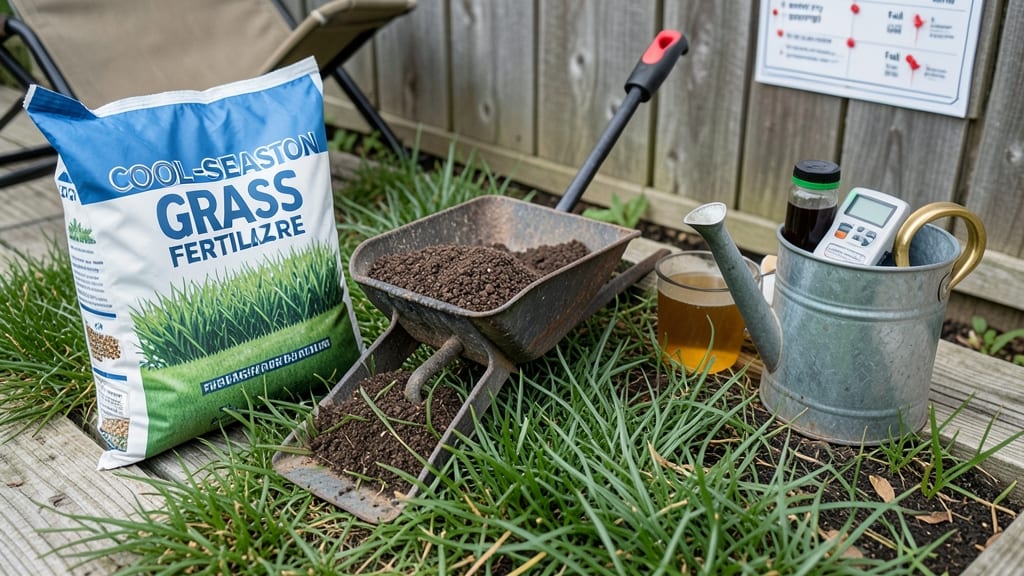
To fertilize lawn in Kentucky, aim for early spring and fall when your 🌱 Kentucky Bluegrass is most active and can absorb nutrients efficiently.
Kentucky’s humid subtropical climate demands a precise fertilization schedule to keep your lawn vibrant, healthy, and resistant to weeds—but timing is everything. Get it wrong, and you’ll waste money or even harm your grass.
Most Kentucky lawns thrive with two key feedings per year: one in late April or early May to jumpstart growth after winter, and another in early October to strengthen roots before cold weather sets in.
Below, I’ll break down the exact months to fertilize, how to adjust for Kentucky’s 6a-7b climate zones, and when to skip feeding entirely—so you get a lush, weed-free lawn without overdoing it.

Kentucky’s ideal fertilization timeline: spring vs. fall for cool-season vs. warm-season grass
Kentucky’s humid subtropical climate creates a unique challenge for lawn care—too much heat or rain can wash away nutrients if you fertilize at the wrong time. Cool-season grasses like Kentucky Bluegrass thrive in spring and fall, while warm-season grasses like Bermuda or Zoysia peak in summer.
Your fertilization schedule must align with these cycles to avoid nutrient runoff or grass stress.
Most Kentucky homeowners focus on spring and fall fertilization, but the exact timing depends on your grass type. Cool-season grasses need their first feeding in early spring (March-April) to break dormancy, while warm-season grasses should wait until late spring (May-June) when soil warms.
Fall applications in September-October strengthen roots before winter, but only for cool-season varieties.
Don’t forget pre-emergent herbicides—they must be applied before weeds germinate, typically in early spring (March) for crabgrass and late summer (August) for winter weeds. Mixing this with your fertilizer schedule requires careful planning to avoid chemical conflicts.
Organic fertilizers like compost or manure release nutrients slowly, making them ideal for spring applications when grass needs steady growth. Synthetic quick-release fertilizers work better in fall for a rapid nutrient boost before winter dormancy. Your choice depends on your lawn’s current health and your long-term sustainability goals.
Kentucky’s USDA zones 6a-7b mean frost dates vary slightly by region, but most areas see their last frost around April 15 and first frost around October 15. Use these dates as your guide for adjusting fertilization windows by 1-2 weeks north or south of Louisville.
Here’s the critical comparison between spring and fall fertilization for both grass types, including pre-emergent timing and fertilizer type recommendations:
| Season | Grass Type | Best Fertilization Window | Pre-Emergent Timing | Fertilizer Type | Key Goal |
|---|---|---|---|---|---|
| Spring | Cool-Season (Bluegrass, Fescue) | March 15-April 15 | March 1-15 (crabgrass) | Organic (compost) or slow-release | Break dormancy, promote growth |
| Spring | Warm-Season (Bermuda, Zoysia) | May 1-June 15 | June 1-15 (winter weeds) | Synthetic (high nitrogen) | Establish summer vigor |
| Fall | Cool-Season (Bluegrass, Fescue) | September 15-October 15 | August 15-30 (prevent winter weeds) | Quick-release (synthetic) or compost | Strengthen roots for winter |
| Fall | Warm-Season (Bermuda, Zoysia) | None (dormant) | N/A | N/A | Grass goes dormant |
For cool-season grasses, the fall fertilization window (September-October) is just as critical as spring. A light application of 0.5 lbs nitrogen per 1,000 sq ft helps grass store energy for winter. Avoid heavy feeding—too much nitrogen now can lead to late-season growth that weakens before frost.
If you’re using pre-emergent herbicides, apply them 2-4 weeks before your target weeds appear. In Kentucky, that means March for crabgrass and August for winter annuals. Wait at least 30 days after applying pre-emergent before fertilizing to prevent chemical burn.
Soil testing is your secret weapon—Kentucky’s clay-heavy soils often need lime applications every 3-5 years to maintain a pH of 6.0-7.0. Test in early spring before fertilizing to adjust your N-P-K ratio accordingly. For example, if your soil is acidic, add
5 Signs your Kentucky lawn needs fertilizer (and how to fix it fast)
Your Kentucky Bluegrass might be silently screaming for nutrients even if it looks green from a distance. Pale patches or thin, sparse growth are the first red flags that your lawn is starving for essential nutrients like nitrogen, phosphorus, or potassium.
Kentucky’s humid subtropical climate means nutrients leach out faster, especially after heavy rains. If you’ve noticed weeds taking over or your lawn recovering slowly after mowing, it’s time to act before the problem worsens.
Don’t wait for bare spots to appear—catch these 5 early warning signs and fix them before your lawn’s health declines further. Here’s how to diagnose and treat nutrient deficiencies fast:
🌱 Numbered Highlights: 5 Signs Your Lawn Needs Fertilizer
- 🟢 1. Pale or Yellowing Grass
Healthy Kentucky Bluegrass has a deep green hue. If your lawn looks dull or yellowish, it’s a clear sign of nitrogen deficiency. Test your soil and apply a high-nitrogen fertilizer like 30-0-4. - 🌱 2. Thin or Patchy Growth
If your lawn has bare spots or thin grass that won’t fill in, it’s struggling to grow. Phosphorus or potassium deficiencies often cause weak root systems—apply a balanced fertilizer (e.g., 10-10-10) to boost growth. - 🪴 3. Weeds Invading Your Lawn
Weeds like crabgrass or dandelions thrive in nutrient-poor soil. A healthy lawn naturally resists weeds, so fertilizing with a slow-release formula can crowd out invaders. - ✂️ 4. Slow Recovery After Mowing
If your grass takes weeks to bounce back after mowing, it’s nutrient-deficient. A quick fix? Use a liquid fertilizer with iron and nitrogen for fast results. - 🌧️ 5. Soil Compaction or Hard Surface
If your lawn feels spongy or hard underfoot, poor soil structure is blocking nutrient absorption. Aerate your lawn in fall and top-dress with compost to improve drainage and fertility.
Once you’ve identified the issue, soil testing is your next step. Kentucky’s USDA zones 6a-7b mean soil pH and nutrient levels vary—some lawns need lime to raise pH, while others benefit from sulfur to lower it.
For fast results, choose a slow-release fertilizer with a 30-0-4 or 24-0-10 ratio (high nitrogen for green-up). Apply it in early spring (April-May) or early fall (September-October) when grass is actively growing. Avoid fertilizing in summer heat—it stresses the lawn.
If your lawn still struggles after fertilizing, consider organic amendments like compost or manure. These improve soil health long-term, reducing the need for frequent synthetic fertilizers. A little prevention now saves time (and money) later! 🌿