
How To
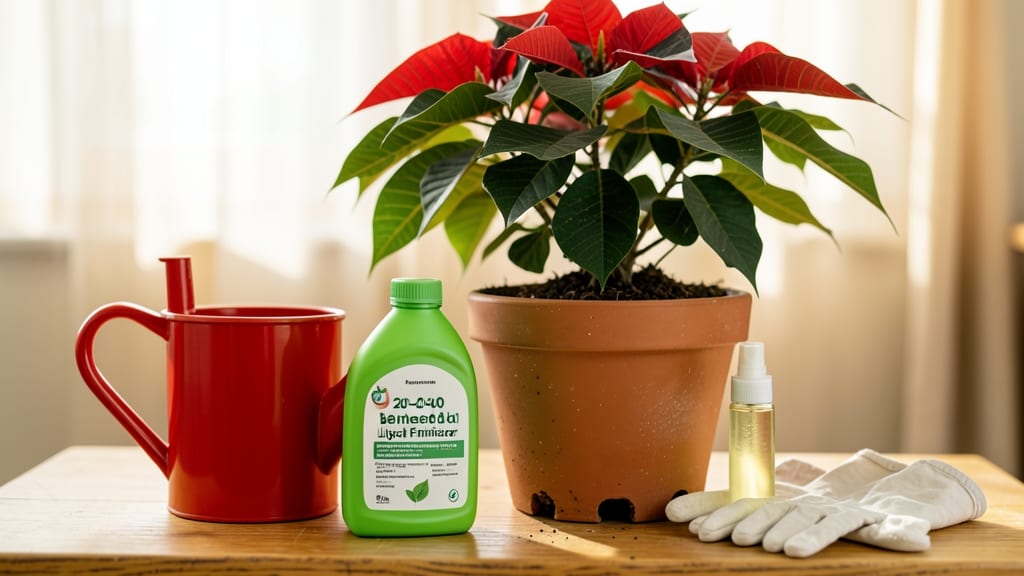
To fertilize poinsettias at the right time means the difference between a show-stopping 🎄 holiday plant and one that fizzles out by December.
Poinsettias aren’t just holiday stars—they thrive with the right care, and timing your fertilizer perfectly can mean the difference between vibrant blooms and wilted disappointment. But when exactly should you feed these festive plants to maximize their show-stopping color?
Most gardeners skip fertilizing in spring, when poinsettias are still dormant, and mistakenly think they’re done after the holidays. The truth? A spring flush in early summer and a fall feeding in September-October are the game-changers for next year’s blooms.
Here’s the exact schedule—when to feed, how much to use, and how to adjust based on light and growth. By the end, your poinsettias will be the brightest on the block.

Best fertilization schedule for poinsettias: spring growth vs. holiday bloom
Timing your poinsettia's fertilizer is everything—these plants have two distinct growth phases that demand different care. In spring, they focus on leafy growth, while fall is all about preparing for their show-stopping holiday blooms.
Missing these windows can leave you with weak stems or lackluster color. Let's break down the exact schedule to keep your poinsettia thriving year-round.
Poinsettias are sensitive to overfeeding, especially during their dormant periods. Fertilizing at the wrong time can cause leaf burn or stunted growth. The key is understanding their natural growth cycles: a spring flush of foliage followed by a fall bloom push.
By aligning your fertilizer with these phases, you'll encourage vibrant red (or pink, white, or yellow!) bracts that steal the show.
Here's the critical comparison between spring growth feeding and fall bloom preparation—including dilution ratios and frequency—to keep your poinsettia healthy without overdoing it.
| Season | Fertilizer Type | Frequency | Dilution Ratio | Key Goal |
|---|---|---|---|---|
| Spring (March-May) | Balanced (10-10-10) | Every 6-8 weeks | Half-strength | Encourage leafy growth |
| Summer (June-August) | Balanced (10-10-10) | Every 4-6 weeks | Full-strength | Build root strength |
| Early Fall (September-October) | High-phosphorus (5-10-5) | Every 3-4 weeks | Full-strength | Promote vibrant blooms |
| Late Fall-Winter (November-February) | None | Dormant period | N/A | Conserve energy for next season |
Spring is all about gentle encouragement—think of it as a wake-up call for your poinsettia after its winter rest. Start feeding with a half-strength balanced fertilizer in early March to avoid shocking the plant.
This timing aligns with their natural growth cycle when they begin producing new leaves. Use a 10-10-10 fertilizer diluted to half-strength (mix 1 tsp per gallon of water) every 6-8 weeks until May.
During summer, your poinsettia enters its growth power phase. This is when you can switch to full-strength fertilizer every 4-6 weeks to build strong roots and foliage. The goal here is to create a sturdy base that will support next year's blooms.
Avoid fertilizing in direct sunlight hours—always apply in the morning to prevent leaf burn from the combination of fertilizer salts and afternoon heat.
By late summer, it's time to shift gears completely. In September and October, switch to a high-phosphorus fertilizer like a 5-10-5 blend to trigger bloom production. This is the most critical feeding window—skipping it will result in pale, underwhelming bracts.
Apply full-strength fertilizer every 3-4 weeks until early November. After that, let your poinsettia rest through winter—no fertilizer needed!
One common mistake is continuing to fertilize through winter months. Poinsettias enter a natural dormancy period after blooming, and feeding during this time stresses the plant. Instead, reduce watering slightly and provide bright indirect light to maintain health. Resume feeding in early March to kickstart spring growth.
For indoor gardeners, pay attention to your light conditions. Poinsettias in low-light spaces may need slightly less frequent feeding (every 8 weeks in spring/summer) since their growth slows naturally. Conversely, those with supplemental grow lights can feed more aggressively (every 4 weeks) to match their accelerated growth rate.
Pro tip: Always water your poinsettia before fertilizing to prevent root burn. The soil should be slightly moist but not soggy—think of it as giving your plant a drink before its vitamin boost. This simple step makes all the difference in preventing fertilizer damage.
Remember, poinsettias are short-day plants—they bloom in response to shorter daylight hours in fall. Your fertilization schedule works hand-in-hand with this natural rhythm. By following this precise timing, you'll reward yourself with vibrant, long-lasting blooms that make every holiday season brighter.
Signs your poinsettia needs fertilizer (and when to stop)
Your poinsettia might be whispering for nutrients if its leaves turn yellow or develop brown edges. These nutrient deficiency signs often appear when the plant isn't getting enough phosphorus or nitrogen during its active growth phase.
I've seen stunted growth or sparse foliage in my own plants when they needed a boost—usually in early summer or late summer before their fall color show.
But here's the tricky part: overfeeding causes just as many problems. Too much fertilizer can lead to leaf burn (crispy brown edges) or even root rot if the soil stays too salty.
I once ruined a poinsettia by fertilizing too late in the season—it ended up with sad, wilted leaves just when I wanted it to bloom.
⚠️ callout-warning ⚠️
- November 1st: Pause feeding to prevent new growth that won't harden off before winter
- After blooming: Stop fertilizing immediately to let the plant rest
- Winter months: No fertilizer needed during natural dormancy (Dec-Feb)
Watch for pale green leaves or slow growth—these are clear signals your poinsettia needs fertilizer. I always check the soil moisture first though; dry soil can mimic nutrient deficiencies. If the top inch feels dry, water first before assuming it's time to feed.
For indoor poinsettias, I've found that balanced 10-10-10 fertilizer works best when applied every 4-6 weeks during active growth.
One common mistake is fertilizing right after repotting. Newly potted plants need 4-6 weeks to recover before taking in nutrients. I learned this the hard way when my poinsettia's leaves curled after I fertilized too soon—turns out it was still stressed from the transplant.
Always wait until you see new growth before adding fertilizer.
For holiday-season poinsettias, timing is everything. Start fertilizing in early September to build strong roots and foliage. By mid-October, switch to a low-phosphorus fertilizer (like 5-10-5) to encourage bract color development.
I've noticed that over-fertilizing in November leads to weak stems that can't support the heavy foliage—always reduce frequency as winter approaches.
Remember that poinsettias are finicky about their care routine. If you see yellowing leaves with green veins, it's likely a magnesium deficiency—time to add Epsom salt to your water. But if the leaves turn brown and crispy, you've probably overdone it with fertilizer.
Flush the soil with water to remove excess salts, then hold off on feeding for at least 2 weeks to let the plant recover.