
Trees
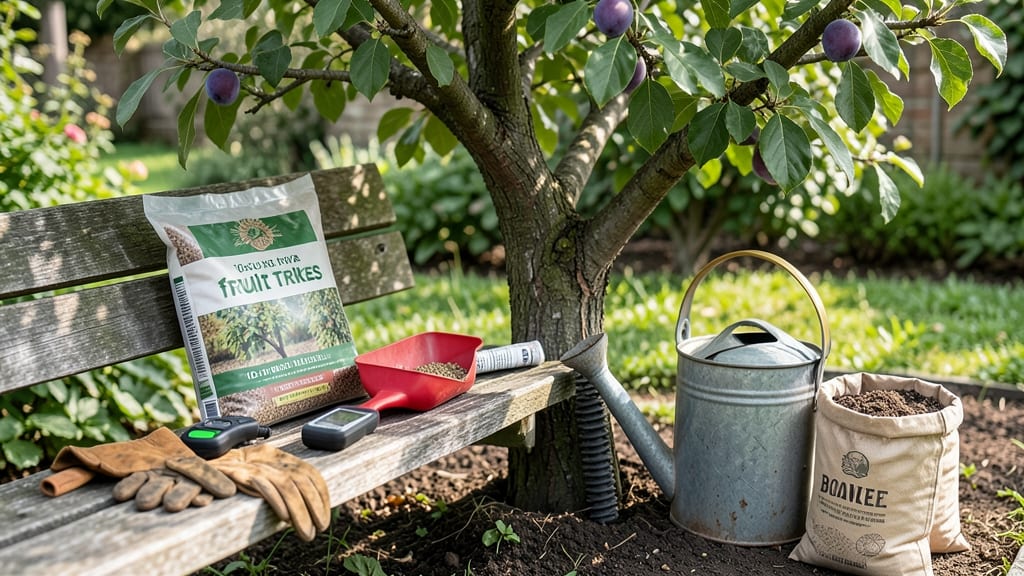
Fertilizing stone fruit trees 🍑 at the right time—early spring before buds swell—is the key to explosive blooms and heavy fruit set.
Picture this: You’ve waited all winter for those first peach blossoms, only to watch them wilt because you fertilized too late. Or worse, your tree grows leaves but no fruit because you missed the window entirely.
The secret isn’t just when to feed your tree—it’s syncing it with chill hours, regional climates, and growth stages.
In Zone 6a, that means applying fertilizer in late winter to early spring, right as the soil warms but before new growth kicks in. But if you’re in a subtropical area with fewer chill hours, the timing shifts—sometimes even calling for a second feed in early summer.
We’ll break down the exact cues (like leaf emergence or post-harvest recovery) so you never guess again.
You’ll also learn how to choose the right fertilizer—whether organic compost or a balanced synthetic—and how much to use without burning your tree’s roots. No more wasted money or stunted growth; just peak productivity every season.

Optimal fertilization timeline based on chill hours and growth stages
Stone fruit trees—peaches, plums, and cherries—thrive when fertilization aligns with their chill hour requirements and growth phases. In high-chill zones (USDA 5-7), trees need 400-1,000 chill hours to break dormancy, while low-chill varieties (USDA 8-10) require only 200-400 hours.
Fertilizing at the wrong time can delay blooming or reduce fruit quality, so timing is everything.
Your first fertilization window opens in early spring, right as buds begin to swell. This is when trees transition from dormancy to active growth and need a nutrient boost to support new leaves and flowers.
For high-chill zones, this typically happens in March or April, while low-chill zones may see bud break as early as February.
| Growth Stage | High-Chill Zones (USDA 5-7) | Low-Chill Zones (USDA 8-10) | Fertilizer Type |
|---|---|---|---|
| Dormancy (Winter) | No fertilization | No fertilization | N/A |
| Bud Break (Early Spring) | March-April (after last frost) | February-March | Balanced (10-10-10) + micronutrients |
| Flowering (Late Spring) | April-May | March-April | Light nitrogen (5-10-10) |
| Fruiting (Summer) | June-July | May-June | Potassium-rich (e.g., 10-5-20) |
| Post-Harvest (Late Summer) | August-September | July-August | Slow-release organic |
During bud break, your tree is most receptive to nitrogen-rich fertilizers to fuel leaf and shoot growth. I recommend a balanced 10-10-10 fertilizer applied when 1/3 of buds have swollen.
For organic gardeners, compost or fish emulsion works well. Avoid high-nitrogen fertilizers later in the season, as they can delay dormancy and harm winter hardiness.
Once flowers appear, switch to a lower-nitrogen formula to support fruit development. A 5-10-10 ratio encourages blooming without excessive foliage. This is also when micronutrients like zinc and boron become critical—deficiencies here can cause poor fruit set or blossom end rot.
In low-chill zones, this shift happens earlier, often by late March, so stay ahead of the schedule.
As fruit begins to form, prioritize potassium and phosphorus to strengthen cell walls and improve sweetness. A 10-5-20 fertilizer is ideal during summer months. Apply it 2-3 times between June and July, always watering deeply afterward to prevent root burn.
In high-chill zones, this timing aligns with peak fruit expansion, while low-chill trees may need adjustments for earlier harvests.
After harvest, your tree enters a recovery phase. This is the perfect time for a slow-release organic fertilizer or compost to rebuild soil nutrients without stimulating late-season growth.
Avoid fertilizing in fall or winter, as new growth won’t harden off before cold weather, leaving your tree vulnerable to frost damage. In low-chill regions, this post-harvest window may extend into September.
One common mistake is fertilizing during dormancy. Trees in winter are metabolically inactive and can’t use nutrients, leading to root burn or wasted resources. Instead, focus on soil health by adding mulch or compost in late fall to prepare for spring.
For young stone fruit trees (under 3 years), reduce fertilizer by half to avoid overstimulating root growth over top growth.
Pro tip: Test your soil in early spring before fertilizing. Stone fruit trees prefer a slightly acidic pH (6.0-6.5). If your soil is too alkaline, amend it with sulfur or peat moss before applying fertilizer.
In high-chill zones, where soils may be heavier, consider a mycorrhizal fungus treatment to improve nutrient uptake during critical growth phases.
Finally, always apply fertilizer in the early morning to prevent leaf burn from heat stress. Water thoroughly before and after application, and keep fertilizers 2-3 inches away from the trunk to avoid damaging bark. By syncing your fertilization schedule with ch
Best fertilizers for stone fruit trees: NPK ratios and organic vs. synthetic options
Stone fruit trees thrive when given the right nutrients at the right time, but choosing the wrong fertilizer can lead to poor fruit set or even tree decline. Peaches, plums, and cherries need a balanced approach with NPK ratios tailored to their growth stages.
For example, young trees benefit from a 10-10-10 ratio, while mature trees often need more phosphorus to support heavy fruiting.
Organic fertilizers like compost or fish emulsion provide slow-release nutrients and improve soil health, while synthetic options offer precise NPK control. However, stone fruits also require micronutrients like zinc and boron, which are often lacking in standard fertilizers.
I’ve found that chelated micronutrients or Epsom salt (for magnesium) can make a huge difference in fruit quality.
Over-fertilizing is a common mistake—it can lead to excessive leaf growth at the expense of fruit production. Always follow the label instructions and adjust based on your tree’s age and health. For instance, a young peach tree might only need half a cup of fertilizer, while a mature plum tree could require up to a pound spread over a larger area.
Pros & Cons: Fertilizer Types for Stone Fruit Trees
Balanced Synthetic (e.g., 10-10-10)
- Pros: Fast nutrient uptake, precise NPK control
- Cons: Risk of over-fertilization, lacks micronutrients
High-Phosphorus (e.g., 5-10-5)
- Pros: Boosts flowering/fruiting, ideal for mature trees
- Cons: Can cause nitrogen deficiency if overused
Organic Compost
- Pros: Improves soil structure, slow-release nutrients
- Cons: Requires frequent applications, slower results
Micronutrient Supplement (e.g., Zinc/Boron)
- Pros: Prevents deficiency issues, enhances fruit quality
- Cons: Overuse can be toxic; requires careful dosing
For organic gardeners, I recommend using a mix of compost, worm castings, and a fish emulsion for nitrogen. These options also improve soil microbial activity, which is crucial for nutrient absorption. If you prefer synthetics, look for slow-release formulas to avoid nutrient spikes that can burn roots.
One trick I’ve learned is to test your soil before fertilizing. Many stone fruit trees grow in slightly acidic soil (pH 6.0–6.5), and micronutrients like iron or manganese become unavailable if the pH drifts too high or low. Adjust your fertilizer blend accordingly—lime can raise pH, while sulfur lowers it.
Finally, always water deeply after applying fertilizer to help nutrients reach the roots. A drip irrigation system set to run for 30–60 minutes post-fertilization works best. Avoid fertilizing in extreme heat or drought, as this can stress the tree and reduce nutrient uptake.