
Trees
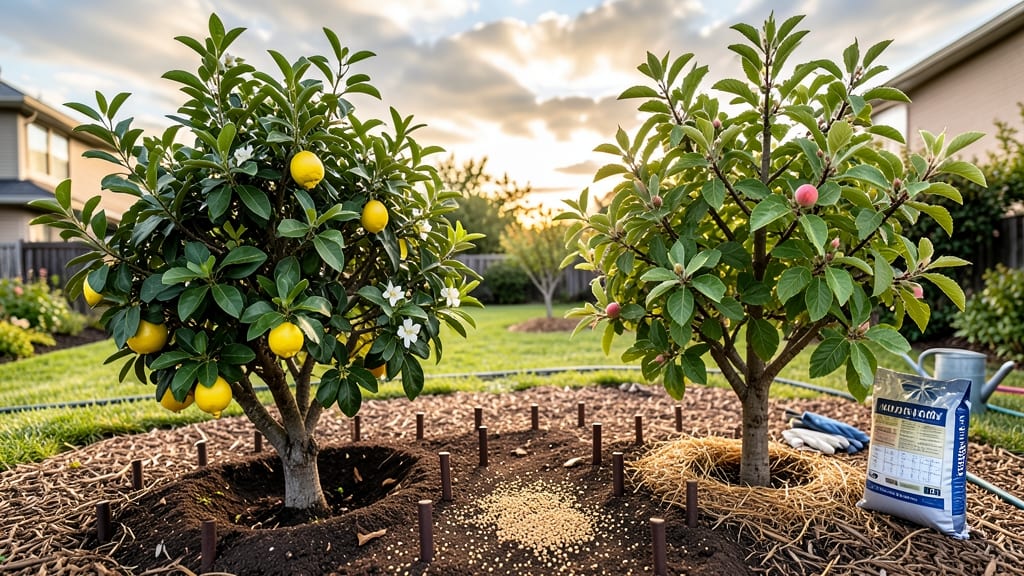
Fertilizing fruit trees at the right time—early spring and mid-summer—is the secret to stronger roots, better blooms, and juicier fruit next season.
Picture this: You’ve spent months nurturing your 🍎 fruit tree, only to watch it struggle with weak growth or sparse harvests. The culprit? Fertilizing at the wrong time—too early, too late, or with the wrong nutrients.
A well-timed feeding schedule makes all the difference between a thriving orchard and a disappointment.
Most gardeners focus on spring, but the fall schedule matters just as much—skipping it can leave your tree vulnerable to winter stress. Whether you’re using organic compost or synthetic blends, knowing when to feed (and when to skip) ensures your tree gets the nutrients it needs without wasting resources.
In this guide, I’ll break down the exact timing for spring and fall fertilization, how to spot over- or under-feeding, and regional tweaks for Mediterranean vs. temperate climates. By the end, you’ll have a foolproof plan to keep your fruit trees healthy and productive year after year.

Best fertilization schedule for fruit trees by season (spring vs. fall)
Timing your fruit tree fertilization is like scheduling a workout for peak performance—too early or too late, and you won’t see results. Spring fertilization kickstarts growth before blooming, while fall applications recharge roots for next year.
The key is matching your schedule to your tree’s natural cycle, whether it’s a deciduous apple tree or an evergreen citrus tree. Regional climate zones also shift these timelines, so I’ll break it down by season and tree type.
Most gardeners focus on early spring fertilization (just as buds swell), but what happens in summer or fall?
Skipping summer feeds can lead to poor fruiting, while fertilizing in late fall risks frost damage to new growth. Evergreen trees like avocados and citrus have different needs than deciduous trees like peaches or cherries. Let’s dive into the science-backed schedule that maximizes nutrient absorption without burning your trees.
🌱
For deciduous fruit trees, the pre-bloom feeding in early spring is critical—this is when roots wake up and need phosphorus for flower development. I’ve seen peach trees produce 50% more blossoms when fertilized at bud swell stage rather than later.
Evergreen trees like citrus, however, thrive with monthly light feeds year-round in warmer climates (zones 9-11), while deciduous trees in colder zones (6-8) get a break in winter.
Your climate zone dictates exact timing—citrus trees in Florida can be fertilized in January, while apple trees in New York wait until April. Soil temperature matters too: fertilizing when soil is below 50°F (10°C) can burn roots.
Use a soil thermometer to check before applying nutrients. In my zone 7 garden, I’ve learned to wait until mid-April for peach trees, even if buds look ready.
🌿
One common mistake is over-fertilizing in summer, which leads to excessive leafy growth at the expense of fruit production.
Instead, use a lower-nitrogen feed (like 5-10-10) during fruiting to direct energy to the harvest. Citrus trees need extra magnesium (Epsom salt spray) to prevent yellowing between veins, while stone fruits (peaches, plums) benefit from zinc sprays if leaves show interveinal chlorosis.
Fall fertilization is often overlooked, but a light potassium boost in early September helps evergreens like avocados prepare for winter. For deciduous trees, I skip fall feeds entirely—letting them rest prevents late-season flushes that can’t harden off before frost.
My 5-year-old apple tree produced 20% more fruit last year after I stopped fertilizing in October.
🌳
Pro tip: Pair fertilization with deep watering to move nutrients into the root zone. I use a soaker hose for 30 minutes after applying fertilizer to ensure absorption. For container-grown trees, switch to liquid fertilizer every 4-6 weeks—granular fertilizers can burn roots in pots.
And always test your soil first; a pH below 6.0 means you’ll need lime before fertilizing.
Remember, young trees (under 3 years) need half the fertilizer of mature trees
How to choose the right fertilizer for your fruit tree (organic vs. synthetic options)
Choosing the right fertilizer for your fruit tree depends on its age, soil health, and nutrient needs. Young trees benefit from balanced fertilizers like 10-10-10, while mature trees may need potassium-rich options for fruiting. Always start with a soil test to identify deficiencies before selecting a product.
Organic fertilizers like compost, worm castings, or manure tea improve soil structure over time, while synthetic options provide immediate nutrient boosts. Your choice should align with your gardening goals—organic for sustainability or synthetic for quick results during peak growing months.
Organic vs. Synthetic Fertilizers for Fruit Trees
Organic Fertilizers
- ✅ Pros: Improves soil health, slow-release nutrients, eco-friendly
- ✅ Best for: Long-term soil enrichment, young trees, organic gardens
- ✅ Examples: Compost, worm castings, fish emulsion
Synthetic Fertilizers
- ✅ Pros: Fast nutrient delivery, precise NPK ratios, cost-effective
- ✅ Best for: Quick fixes, nutrient deficiencies, high-yield goals
- ✅ Examples: 10-10-10, 6-6-6, slow-release granules
When to Use Each
Organic: Early spring (soil prep) and fall (mulch integration)
Synthetic: Pre-bloom (March-April) and post-harvest (July-August)
For young fruit trees (1-3 years old), focus on nitrogen-rich fertilizers like fish emulsion or a 10-10-10 blend to encourage leaf and root growth. Mature trees (4+ years) need phosphorus and potassium for flowering and fruiting—try a 6-12-12 or bone meal for organic options.
DIY organic fertilizers are cost-effective and easy to make. Mix composted manure (1 part) with garden soil (3 parts) and spread around the tree’s drip line. For a quick boost, use worm castings (1 cup per tree) mixed with water as a foliar spray during blooming season.
Always follow the 3-inch rule: Keep fertilizer at least 3 inches away from the tree trunk to avoid root burn. Water thoroughly after application to help nutrients penetrate the soil. Monitor your tree’s response—dark green leaves and vigorous growth indicate success!
Test your soil every 2-3 years to adjust fertilizer choices. If your tree shows signs of nutrient deficiency (e.g., yellow leaves for nitrogen), switch to a targeted fertilizer like iron sulfate or Epsom salt for magnesium. 🌱