
Trees
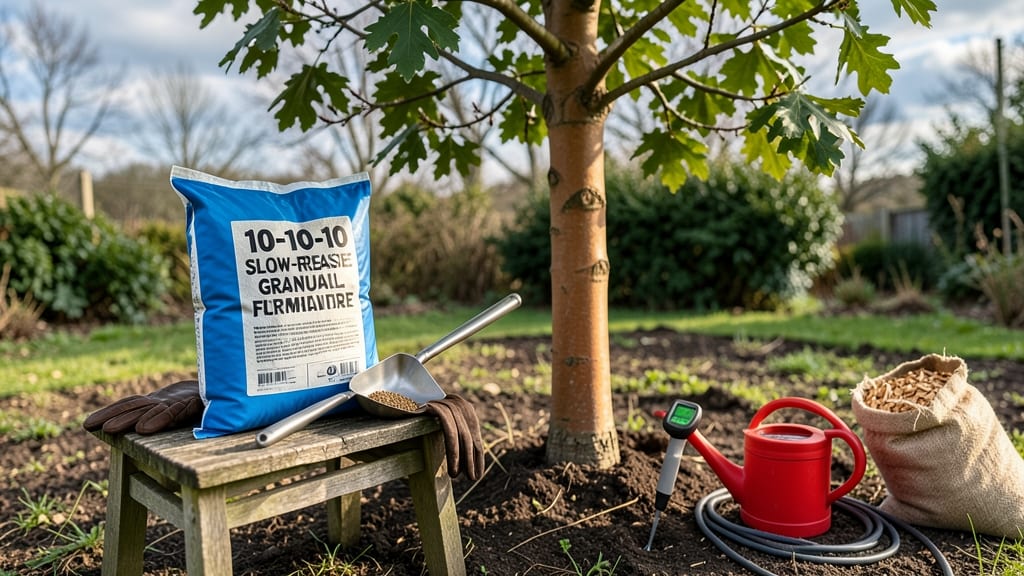
Fertilizing young trees at the right time—especially in their first three years—is the difference between a thriving 🌳 and one that struggles to grow.
Newly planted trees need the right nutrients at the right time to establish strong roots and thrive for decades—but fertilizing too early or too late can stunt growth or even kill them. Timing is everything, especially in the critical first three years.
Most gardeners skip fertilizing entirely in the first year, but that can leave your tree vulnerable to nutrient deficiencies. Instead, focus on spring and early summer when roots are actively growing and can absorb nutrients efficiently.
In this guide, I’ll break down the exact months to fertilize, how often to do it, and the best types of fertilizer for young trees—so you can set yours up for long-term success.

Best fertilization timeline for young trees in their first 3 years
Newly planted trees need nutrient precision to survive their first three years. Over-fertilizing can burn delicate roots, while under-fertilizing leaves them weak. The key lies in seasonal timing and age-specific care—newly planted trees have different needs than 2-3 year olds.
Let’s break down the month-by-month schedule that ensures strong root growth and long-term health.
Before you fertilize, test your soil. A simple pH test (ideal range: 6.0–7.0) reveals nutrient deficiencies. Organic matter like compost or aged manure often replaces synthetic fertilizers for young trees, providing slow-release nutrients without risk of burning roots.
I always recommend starting with a soil test kit from your local extension office—it’s the foundation of smart fertilization.
Here’s your seasonal fertilization roadmap for young trees, tailored by age and growth stage:
For newly planted trees (Year 1), I prioritize root development over top growth. In early spring, apply a slow-release fertilizer like compost or a 10-10-10 blend.
This gives roots time to absorb nutrients without stress. Skip fertilization in the first 6–8 weeks after planting—roots are still fragile and need to acclimate.
By Year 2, your tree is ready for two fertilization sessions: once in early spring to kickstart growth and again in mid-summer to sustain energy.
Use a balanced NPK fertilizer (like 12-12-12) or an organic option such as fish emulsion. Evergreen trees (like pines) benefit from a higher phosphorus ratio (e.g., 10-20-10) to encourage root expansion.
Year 3 is when trees show their true potential. Fertilize in early spring and late summer to support foliage and trunk thickening. If your tree shows signs of yellowing leaves or stunted growth, a soil test can reveal if it needs more nitrogen, phosphorus, or micronutrients. Adjust your fertilizer blend accordingly—never guess!
One common mistake I see is fertilizing too late in the season. By late summer (August–September), trees are preparing for dormancy.
A light feeding with low nitrogen (e.g., 5-10-10) can help, but avoid heavy applications. Winter fertilization is a no-go—it forces trees to grow when they should rest, weakening their resilience to frost.
Pro tip: Water deeply before and after fertilizing to help nutrients reach the roots. Mulch (2–4 inches of organic mulch) retains moisture and regulates soil temperature, creating the perfect environment for nutrient absorption.
I always apply mulch in a donut shape, keeping it 6 inches away from the trunk to prevent rot.
Remember, less is more with young trees. Over-
Signs your young tree needs fertilizer (and when to wait)
If your young tree's leaves are turning yellow between the veins, it's often a sign of nitrogen deficiency—but not always. Newly planted trees sometimes show these symptoms due to transplant shock rather than nutrient needs.
Before reaching for fertilizer, check if the soil is too dry or compacted, as these issues can mimic nutrient deficiencies.
Another red flag is stunted growth compared to similar trees in your area. If your tree isn’t gaining 6-12 inches per year (typical for young trees), it may need a nutrient boost—but only after ruling out other problems like poor drainage or root damage during planting.
🌱
- Transplant shock (wilted leaves, slow recovery after planting)
- Drought stress (crispy leaf edges, dry soil 2+ inches deep)
- Fungal issues (mushy stems, white powder on leaves)
- Winter dormancy (bare branches, no new growth)
Fertilizing during these conditions can burn roots or stress the tree further. Focus on watering deeply or mulching instead.
For evergreen trees, yellowing needles that don’t fall off may indicate iron deficiency, while deciduous trees with yellow leaves that drop early often need phosphorus for root development. Test your soil first—many young trees thrive in native soil without extra nutrients.
If you’ve ruled out stress factors and still see slow growth or poor color, apply a balanced fertilizer (10-10-10) in early spring when roots are active. For newly planted trees (first year), a single light feeding in late spring is often enough—overdoing it can harm delicate roots.
🌿
Remember: Patience pays off. Young trees often grow slowly their first year as they establish roots. If your tree shows healthy green leaves and steady (though modest) growth, skip fertilizing entirely—it may not need your help yet. Monitor for new shoots in spring as a sign of vitality.