
Plants
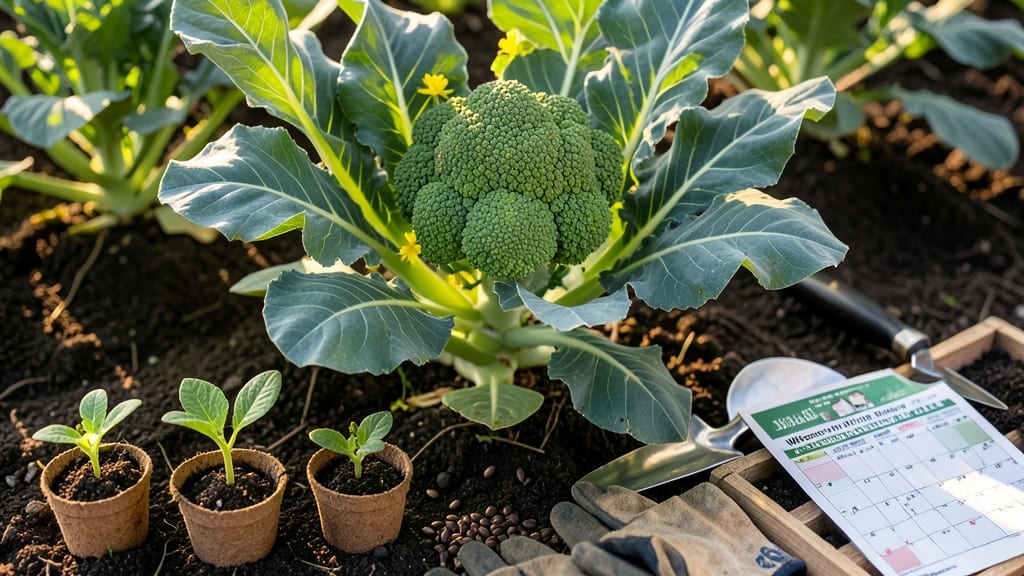
To plant broccoli in Wisconsin, aim for mid-April to mid-May for spring and late July to early August for fall, aligning with your USDA zone’s last frost dates.
Wisconsin gardeners know timing is everything—plant broccoli too early, and frost will ruin your crop; too late, and summer heat will make it bolt. Mastering the perfect window ensures a thriving harvest of this cool-season favorite 🥦.
Spring planting starts indoors 4-6 weeks before the last frost, while fall crops need to mature before winter sets in. Southern Wisconsin (Zone 5) has a slightly longer growing season than northern areas (Zone 4), so adjust your schedule accordingly.
Below, I’ll break down exact frost dates by region, whether to start seeds indoors or direct-sow, and how to extend your harvest with simple tricks like row covers and succession planting.
Wisconsin broccoli planting calendar by USDA zones 4-5
Timing your broccoli planting in Wisconsin means balancing frost dates with soil temperatures—too early, and frost zaps your seedlings; too late, and summer heat sends them bolting. My USDA Zone 4-5 garden thrives when I follow these precise windows for both spring and fall crops.
Broccoli loves cool weather (ideal soil temps between 40-85°F) and struggles when temperatures climb above 80°F. That’s why Wisconsin’s last frost dates—typically April 15-May 15 for Zone 4 and April 1-May 1 for Zone 5—dictate my planting schedule.
Miss these windows, and you’ll either lose seedlings or watch your plants bolt before harvest.
Spring planting starts 4-6 weeks before your last frost date, while fall planting happens 3 months before the first frost (usually late July-early August). This ensures mature plants can produce heads before winter sets in.
Here’s my Wisconsin broccoli planting calendar, broken down by zone and season to maximize your harvest:
| Season | USDA Zone 4 | USDA Zone 5 | Soil Temp | Notes |
|---|---|---|---|---|
| Spring Planting | Indoors: March 15-April 1 Outdoors: April 15-May 15 |
Indoors: March 1-April 1 Outdoors: April 1-May 1 |
40-65°F | Start seeds 4-6 weeks before last frost. Harden off seedlings for 7-10 days before transplanting. |
| Fall Planting | Outdoors: July 15-August 15 | Outdoors: July 1-August 1 | 50-75°F | Sow seeds 3 months before first frost. Use row covers to extend harvest into October. |
| Direct Sowing | Spring: April 15-May 15 Fall: July 15-August 15 |
Spring: April 1-May 1 Fall: July 1-August 1 |
45-70°F | Best for succession planting. Sow every 2-3 weeks for continuous harvests. |
| Harvest Window | Spring: June-July Fall: September-October |
Spring: June-July Fall: September-October |
N/A | Harvest when heads are 4-8 inches and deep green. Side shoots form after cutting the main head. |
For Zone 4 gardeners, I recommend starting broccoli seeds indoors by March 15 to give seedlings a head start. Transplant them outdoors 2-3 weeks before your last frost date, ensuring they’re hardened off to survive Wisconsin’s unpredictable spring weather.
In Zone 5, you’ve got a slightly longer window, but don’t delay—soil warming too quickly can trigger bolting.
Fall planting is where Zone 5 shines. With a later first frost, you can push your harvest into October by sowing seeds around July 1.
In Zone 4, aim for July 15 to avoid late-season heat stress. Pro tip: Use black plastic mulch to warm the soil faster in cooler zones.
Soil temperature is just as critical as air temperature. Broccoli seeds won’t germinate below 40°F, and growth stalls above 85°F. I use a soil thermometer to confirm temps before planting.
In my Zone 5 garden, I’ve had success with ‘De Cicco’ and ‘Waltham 29’—both tolerate Wisconsin’s cool nights and variable summers.
Don’t forget succession planting! Sow a new batch every 2-3 weeks from April through July to stagger your harvest. This ensures you’re never without fresh broccoli from June through October. Pair this with row covers in fall to protect plants from early frosts and extend your season.
My biggest lesson? Plan ahead. Wisconsin’s short growing season demands precision. Mark your calendar for April 15 (Zone 4) or April 1 (Zone 5) as your last frost deadline, and work backward from there. With the right timing
How to extend your Wisconsin broccoli growing season
Wisconsin’s short growing season can feel like a broccoli grower’s biggest challenge—but with the right strategies, you can enjoy fresh heads well beyond the traditional harvest windows. I’ve found that cold frames, row covers, and succession planting can add 4-6 extra weeks of production each season.
The key is protecting your plants from late frosts in spring and early chills in fall while preventing bolting when summer heat arrives.
Start by choosing heat-tolerant varieties like 'De Cicco' or 'Calabrese', which handle Wisconsin’s summer temperatures better than standard types. These varieties stay productive longer, even when daytime temps hit 80°F+. Pair them with shade cloth during peak afternoon heat to keep plants cool and prevent premature flowering.
For spring extensions, use low tunnels or cold frames to harden off young plants and protect them from late frosts. I’ve seen broccoli planted in early April thrive under these structures until mid-May, giving you a head start on the season.
Just remember to ventilate on warm days to prevent overheating—broccoli wilts faster than you’d expect in trapped heat.
🌱 Wisconsin Broccoli Season Extension Guide
Spring: Use cold frames for 4-6 weeks after last frost to push harvests into June-July.
Fall: Plant heat-tolerant varieties by late July and cover with row fabric to extend harvests until October.
Succession Planting: Sow seeds every 2-3 weeks from April-July for continuous harvests.
Pro Tip: Combine row covers with drip irrigation to maintain moisture without overheating soil.
Fall is where succession planting truly shines. Instead of one big planting in July, I recommend sowing seeds every 2 weeks from mid-July through early August. This staggered approach ensures you always have mature plants ready for harvest before winter sets in.
Pair this with floating row covers to shield young plants from late-season pests and light frosts.
Don’t overlook soil preparation as your secret weapon. Amend beds with compost and aged manure before planting to improve heat retention and moisture retention. I’ve noticed that broccoli in enriched soil handles Wisconsin’s temperature swings better, staying productive longer.
Add a 2-inch layer of mulch around plants to keep roots cool and conserve water—this is especially critical during dry spells in late summer.
With these techniques, I’ve extended my Wisconsin broccoli season by nearly 3 months, from early June through mid-October. The trick is balancing protection with airflow—too much shelter leads to disease, but too little means bolting.
Start small with one row of 'De Cicco' under a cold frame this spring, and you’ll see how much easier it is to enjoy homegrown broccoli all season long 🥦.