
Trees
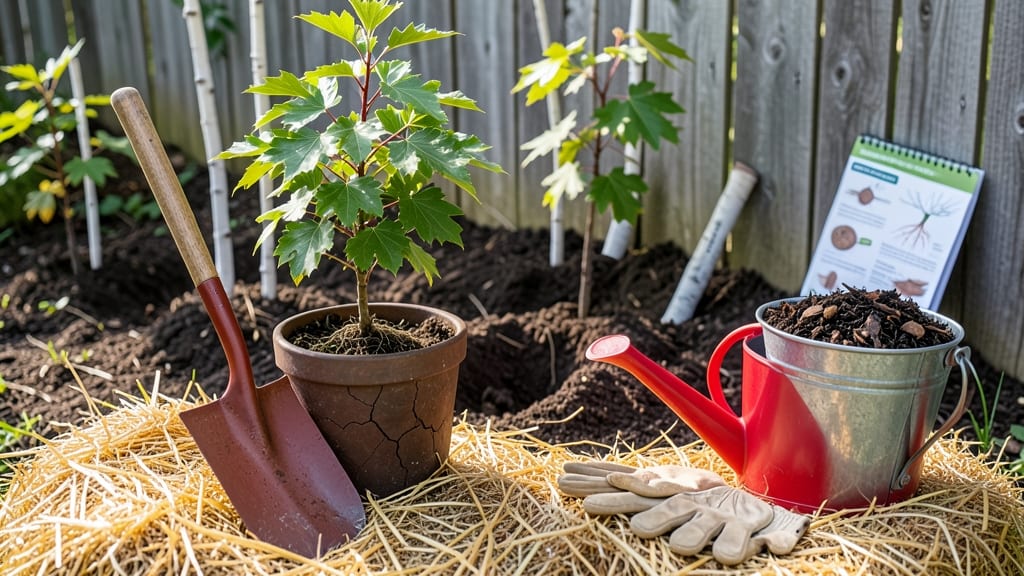
Planting trees in Wisconsin at the right time is the key to strong root growth before winter sets in — aim for early spring or early fall to give your 🌳 the best shot at thriving.
Picture this: You’ve just planted a sapling, only for it to freeze solid before it can take hold. That’s the nightmare scenario when timing goes wrong in Wisconsin’s 4a-6b zones.
But get it right, and your tree will establish deep roots before the first frost, setting it up for decades of growth.
Wisconsin’s short growing season means you’ve got just two ideal windows: early spring (April) when the soil warms up, or early fall (September) before temperatures drop.
Evergreens and deciduous trees each have their own sweet spots, and soil prep makes all the difference between a struggling sapling and a sturdy, mature tree.
Below, I’ll break down the exact months to plant by tree type, how to prep your soil for Wisconsin’s climate, and the top native trees that handle our winters like pros. Let’s get your trees off to the right start!
Best planting windows for Wisconsin trees by USDA Zone (3-5)
Wisconsin’s USDA Zones 3-5 create unique challenges for tree planting, where timing directly impacts survival rates. Northern Wisconsin (Zone 3-4) faces earlier frosts, while southern areas (Zone 4-5) enjoy slightly longer growing seasons.
The key is planting when soil temperatures stay above 40°F and roots can establish before winter dormancy.
For deciduous trees like oaks and maples, the ideal window spans early spring (April) to early fall (September). Evergreens, including pines and spruces, prefer late fall (October) or early spring (March-April) to avoid transplant shock during summer heat.
Wisconsin’s microclimates mean your exact timing may vary by just a few weeks—check your last frost date (typically mid-April in the north to late April in the south).
Soil conditions matter just as much as timing. Wisconsin’s clay-heavy soils in many regions benefit from amending with compost before planting. Aim for well-draining soil with a pH between 6.0 and 7.0, as most trees thrive in slightly acidic to neutral conditions.
Northern Wisconsin’s shorter growing season demands extra attention to root development before the first frost, which can arrive as early as mid-October.
Regional variations play a critical role. In Zone 3 (northern WI), focus on early spring planting (March-April) to capitalize on cooler temperatures and consistent moisture. Southern Wisconsin’s Zone 5 areas can extend planting into late fall (October), but avoid planting after mid-November to prevent winter stress. Always verify your local frost dates using the Midwest Regional Climate Center.
Here’s a month-by-month breakdown of Wisconsin’s planting windows, tailored to tree type and regional differences:
For bare-root trees, prioritize early spring (March-April) planting, as roots can reestablish quickly in cool, moist soil. Container-grown trees offer flexibility year-round, but avoid planting during summer heatwaves (July-August) when transplant shock risks rise.
In northern Wisconsin, fall planting after September 15th is risky due to earlier frosts, while southern regions can extend into early October.
Wisconsin’s soil temperature is your best guide. Use a soil thermometer to confirm 40°F+ for deciduous trees and 45°F+ for evergreens. In Zone 3 areas, wait until late April to ensure frost-free conditions.
Southern Wisconsin’s Zone 5 can start as early as mid-March, but monitor nighttime temperatures closely. Always mulch heavily (3-4
How to prepare your Wisconsin site for fall vs. spring planting
Wisconsin’s cool, wet springs and early frosts create two distinct windows for tree planting: early spring (April) and early fall (September). Each season demands different prep work to ensure your new saplings thrive.
Spring planting focuses on warming soil and early moisture, while fall prep prioritizes root establishment before winter dormancy.
Before digging, test your soil pH (ideal: 6.0-7.0 for most trees) and drainage. Wisconsin’s clay-heavy soils often need organic matter like compost or peat moss to improve aeration. Evergreens, like blue spruce, prefer slightly acidic soil (5.5-6.5), while oaks and maples thrive in neutral soil (6.5-7.5).
A simple soil test kit (available at garden centers) costs under $20 and saves you from costly mistakes.
Now, let’s dive into the season-specific prep that makes all the difference in Wisconsin’s climate.
🌳 Wisconsin Tree Planting Prep Checklist
- ✅ Spring: Test soil pH, add compost, plant after last frost (mid-April)
- ✅ Fall: Improve drainage, mulch 3-4" deep, plant 6-8 weeks before frost
- ✅ Both Seasons: Dig hole 2x wider than root ball, avoid fertilizing at planting
💡 Pro Tip: Wisconsin’s northern zones (4a) need earlier fall planting (August) than southern zones (5b).
For spring planting, start by amending the soil with compost or aged manure to boost nutrients. Work it into the top 12 inches of soil, mixing thoroughly. Avoid fresh manure—it can burn roots and attract pests.
Once your hole is dug (twice as wide as the root ball but no deeper), place your tree at the correct depth: the root flare should sit 1-2 inches above ground level. This prevents root rot from soil settling.
Mulching is non-negotiable in Wisconsin’s freeze-thaw cycles. Use 3-4 inches of wood chips or straw, keeping it 6 inches away from the trunk to prevent moisture buildup.
In spring, mulch also retains soil warmth, helping roots establish faster. Water deeply after planting—15-20 gallons for young trees—to settle the soil and eliminate air pockets.
Fall prep shifts focus to drainage and insulation. Since Wisconsin’s early frosts (mid-October in most areas) cut the growing season short, aim to plant 6-8 weeks before frost. Improve drainage by adding sand or perlite if your soil stays soggy after rain.
For evergreens, like white pine, consider a windbreak to protect tender new growth from winter desiccation. A thick layer of mulch (4-6 inches) acts as insulation, shielding roots from temperature swings.
One critical difference between seasons: fertilizer timing. In spring, hold off on fertilizing until 4-6 weeks after planting—new roots need time to establish before competing with new shoots. In fall, a light application of balanced fertilizer (10-10-10) can encourage root growth before dormancy, but avoid heavy feeding.
Wisconsin’s short growing season means trees prioritize root development over foliage, so patience and soil prep are your best tools for success.