
Plants
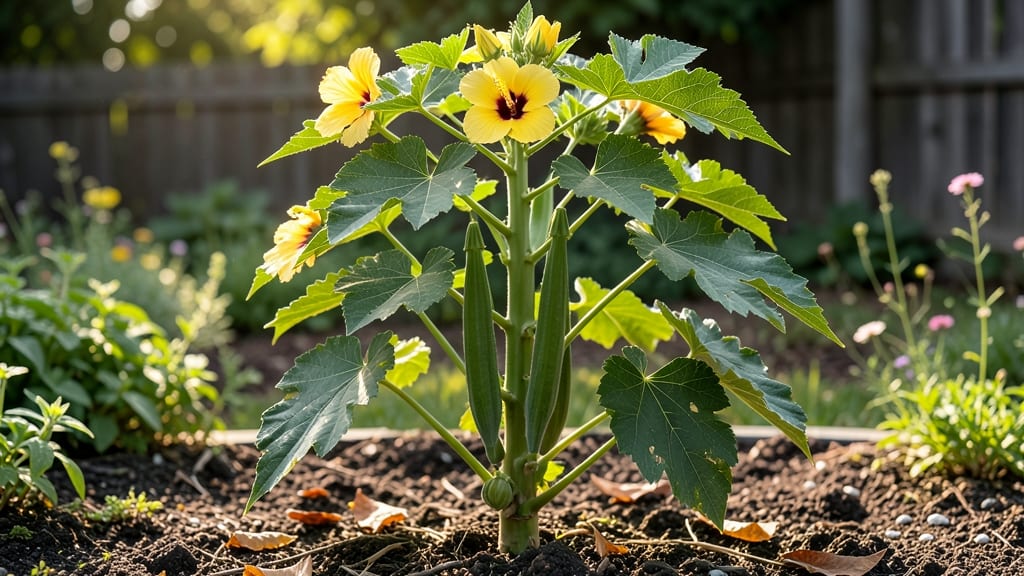
Okra plants grow between 4 and 10 feet tall, depending on the variety and growing conditions—some varieties stretch like small trees, while others stay compact enough for containers.
If you're picturing okra as a delicate garden flower, think again. These plants can shoot up faster than weeds, especially in warm climates, and their height plays a big role in how you plan your garden layout.
Whether you're working with tall varieties like 'Clemson Spineless' or dwarf types like 'Burgundy,' understanding their mature size helps you decide between trellises, pruning, or simply giving them space to sprawl.
Below, I’ll break down the height ranges by variety, share tips to control growth, and show you how to pick the right type for your garden—no matter how small or large your space.


Okra plant height by variety: from dwarf to giant types
When planning your garden layout, understanding okra plant height by variety is essential. Some varieties grow like bushy shrubs, while others climb like tall vines. The right choice depends on your space and growing goals.
I’ve grown Clemson Spineless and Emerald varieties, and the difference in their mature heights is striking—one stays under 5 feet, while the other can reach 10 feet without support!
Okra’s height also affects harvesting ease and space efficiency. Tall varieties need staking or trellises, while dwarf types thrive in containers. Let’s explore the exact height ranges for popular varieties and how to optimize their growth for your garden’s unique conditions.
Okra Variety Height Comparison
| Variety | Height Range | Growth Habit | Space Needs | Best For |
|---|---|---|---|---|
| Clemson Spineless | 6–10 ft | Vining | 18–24 in apart | Large gardens, trellises |
| Emerald | 4–6 ft | Bushy | 12–18 in apart | Containers, small spaces |
| Burgundy | 5–8 ft | Semi-vining | 15–20 in apart | Medium gardens, raised beds |
| Jambo | 3–5 ft | Compact bush | 10–12 in apart | Containers, balconies |
| Blushing Beauty | 7–9 ft | Vining | 18–24 in apart | Trellises, vertical gardens |
The Clemson Spineless variety is my go-to for large gardens because it grows 6–10 feet tall and produces abundant pods. Without proper support, it can become top-heavy and flop over. I always use 6-foot bamboo stakes or a trellis system to keep it upright and make harvesting easier.
For smaller spaces, Emerald okra is a game-changer. This variety stays between 4–6 feet tall and has a bushy growth habit, making it perfect for containers or raised beds. I’ve grown it in 10-gallon pots on my balcony with great success—just ensure it gets full sun and well-draining soil.
If you’re looking for a dwarf okra variety, Jambo is ideal for beginners or urban gardeners. It tops out at just 3–5 feet and thrives in small containers.
The compact size also means fewer pests and easier access to pods. Plus, its vibrant green pods add a pop of color to any garden!
Tall varieties like Blushing Beauty can reach 7–9 feet and are perfect for vertical gardening. I’ve seen them trained up chicken wire trellises or even old fences in rural gardens. The key is to provide support early—okra’s woody stems can’t handle sudden weight gains.
When choosing a variety, consider your garden layout and harvesting preferences. Tall okra needs more space and support, while dwarf types are low-maintenance and versatile. I always recommend testing a few varieties in your space to see which thrives best under your local conditions.
Pro tip: If you’re growing okra in cooler climates, opt for shorter varieties like Emerald or Jambo. They mature faster and are less likely to suffer from bolting or stem weakness in less-than-ideal temperatures.
🌱
How to control okra plant height: pruning, support & care tips
Okra plants can grow 6 to 10 feet tall if left unchecked, but with the right techniques, you can manage their height for a more compact garden. The key lies in pruning, support systems, and proper soil care.
I’ve learned that ignoring these factors often leads to overgrowth, especially in warm climates where okra thrives. Let’s explore how to keep your plants at your desired height while maximizing yields.
One of the first steps is understanding that okra grows in two main forms: bush-type (shorter and stockier) and vining-type (taller and sprawling). Bush varieties like 'Emerald' typically stay between 3 to 5 feet, while vining types like 'Clemson Spineless' can easily reach 8 to 10 feet.
Knowing your variety’s growth habit helps you plan pruning and support strategies early in the season.
⚠️ callout warning
⚠️ Overgrowth Alert: How Tall Do Okra Plants Grow?
Without control, okra can grow 8-10 feet tall—taller than most gardeners expect! Dwarf varieties (3-5 ft) exist but need regular pruning to stay compact. Vining types left unsupported will sprawl wildly, stealing space from other plants.
🌱 Pro Tip: Prune early and often to encourage bushier growth and prevent leggy stems.
Pruning is your best tool for controlling height. I recommend starting when plants are about 12 inches tall and pinching off the top set of leaves. This encourages lateral branching, which results in a stockier, bushier plant with more pods.
For taller varieties, prune aggressively every 2-3 weeks to keep growth in check. Just be sure to use clean, sharp pruners to avoid disease spread.
Support systems like trellises or stakes are game-changers for vertical growth. Install a 5-foot tall trellis at planting time and gently tie stems to it as they grow. This not only saves space but also improves air circulation, reducing the risk of fungal diseases like powdery mildew.
For container gardens, use bamboo stakes or tomato cages to support dwarf varieties without taking up extra space.
Soil and nutrient management play a huge role in height control. Okra thrives in well-draining, slightly acidic soil (pH 6.0-6.8). Over-fertilizing with high-nitrogen feeds can lead to excessive leafy growth at the expense of pod production.
Instead, use a balanced 5-10-10 fertilizer every 4-6 weeks during the growing season. This promotes steady, controlled growth without skyrocketing height.
One common mistake I see is overwatering, which can cause okra plants to grow too tall and leggy. While okra needs consistent moisture, it’s drought-tolerant once established. Water deeply 2-3 times per week during hot spells, but avoid soggy soil.
Mulching with straw or grass clippings helps retain moisture while keeping roots cool, which naturally slows rapid height growth.
Finally, don’t forget that harvesting regularly is a natural way to control plant height. Okra pods grow quickly, and removing them every 2-3 days encourages the plant to focus on producing more pods rather than elongating stems.
Aim to harvest when pods are 3-4 inches long for the best texture and flavor. This frequent harvesting trick works wonders for keeping plants manageable.