
Plants
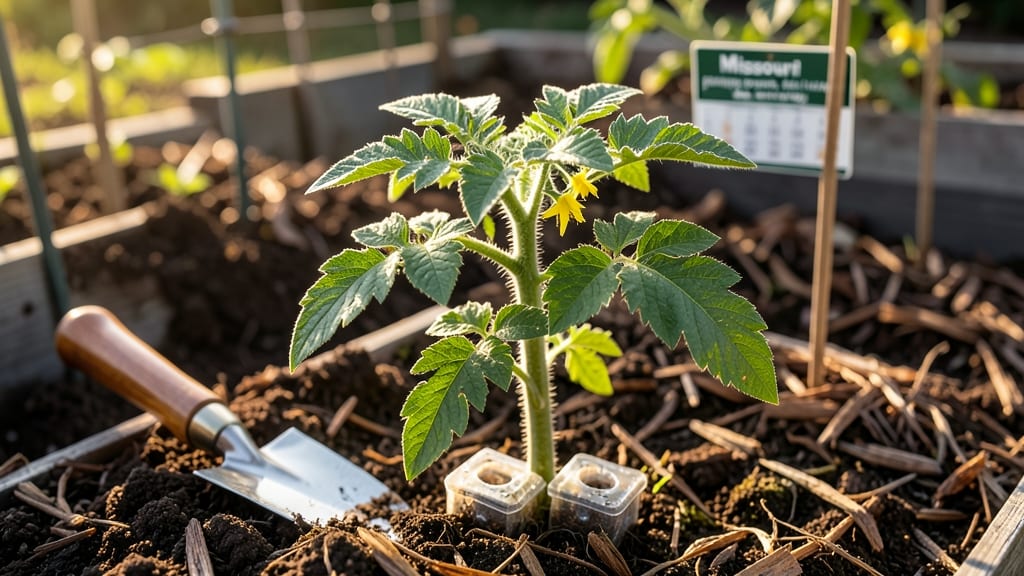
Planting tomatoes in Missouri at the right time means the difference between a bountiful harvest and a sad, leggy plant that never sets fruit.
Missouri gardeners know timing is everything when planting tomatoes—but getting it wrong can mean stunted growth or lost crops.
The key is waiting until the soil warms to at least 60°F and all frost danger has passed, which typically lands between April 15 and May 30, depending on your zone.
This isn’t just about avoiding frost; it’s about giving your 🍅 tomatoes the best possible start. Cold soil slows root growth, and seedlings can rot if planted too early. Even in Missouri’s 5b-6b zones, a late frost in April can wipe out your hard work overnight.
Below, I’ll break down the exact frost-free deadlines by region, soil temperature rules, and how to adjust for container planting or late starts. By the end, you’ll know precisely when to put those tomato plants in the ground for the most productive season possible.
Missouri’s frost-free deadlines & growing zones for planting tomatoes
Timing your tomato transplants in Missouri means the difference between a bumper crop and wasted seedlings. The state’s USDA zones 5a-6a create distinct planting windows, and missing the frost-free deadline can stunt your plants for weeks.
I’ll break down the exact dates for each zone, plus how to adjust for your specific location using local climate data.
Missouri’s last average frost dates range from early April in southern zones to mid-May in northern areas. For zone 6a (southern MO), you can plant as early as April 15, while zone 5a (northern MO) typically waits until May 1-15.
These deadlines align with when soil temperatures consistently reach 60°F—the minimum for healthy tomato growth.
Here’s the critical data you need to plan your tomato planting schedule by Missouri zone, including average frost dates and ideal transplant windows:
| Zone | Last Frost Date (Avg.) | Safe Transplant Window | Frost-Free Days | Key Notes |
|---|---|---|---|---|
| 6a (Southeast MO) | April 1-15 | April 15-May 1 | 160-180 days | Warmest zone; earliest planting |
| 5b (Central MO) | April 15-30 | May 1-15 | 150-170 days | Moderate risk; use row covers |
| 5a (Northern MO) | May 1-15 | May 15-30 | 140-160 days | Latest zone; choose fast varieties |
Use these deadlines as your planting guide, but always verify with your local Missouri climate station—unpredictable spring weather can shift frost dates by weeks.
For example, St. Louis (zone 6b) might see frost as late as April 25, while Kansas City (zone 5b) could face late frosts until May 5.
Pro tip: Check the National Weather Service or your county extension office for 10-day forecasts before planting. A late frost in early May can wipe out tender seedlings overnight—so don’t rush!
If you’re in zone 5a, consider starting seeds indoors 6-8 weeks before your target transplant date to give them a head start.
For gardeners in transition zones (like parts of central Missouri), I recommend using black plastic mulch to warm soil faster and row covers for early-season protection. These tools can extend your planting window by 2-3 weeks, giving you more flexibility if frost lingers.
Missouri’s first frost dates typically arrive between October 10-25, depending on the zone. This means your tomato plants have roughly 160-180 frost-free days to mature. Choose varieties with 60-70 day harvest times (like ‘Early Girl’) to ensure success, especially in northern zones.
Remember: Soil temperature matters more than air temperature. Even if daytime highs reach 70°F, cold nights can keep soil below 60°F. Use a soil thermometer to confirm readiness—this simple tool prevents costly mistakes. Planting too early in cold soil stresses seedlings and invites disease.
If you’re unsure about your exact last frost date, err on the side of caution. A 2-week delay is better than risking frost damage. For container gardeners, you can plant slightly earlier since pots warm up faster, but still monitor soil temps closely.
Mastering these frost-free deadlines will give your tomatoes the best possible start. Next, we’ll dive into soil temperature rules and how to test your garden bed for peak planting conditions—don’t miss it!
Soil temperature rules: when to plant tomatoes in Missouri (and how to test it)
Tomatoes thrive when planted in warm soil, but Missouri’s unpredictable spring weather can leave you guessing. The key threshold is 60°F soil temperature—any cooler, and your seedlings risk stunted growth or even death.
Unlike northern states, Missouri’s USDA zones 5b-6a demand precision, as cold soil delays root establishment by up to 2 weeks.
Even after the last frost date (typically mid-April in most regions), soil may still be too cold. I’ve seen 50°F surface temps in May during cloudy stretches—enough to shock young plants. That’s why I always test soil temperature before planting, using methods I’ll share below.
⚠️ WARNING: Planting too early in cold soil ⚠️ Missouri’s average soil warms to 60°F between April 25- May 10, but this varies by microclimate.
Northern zones (like St. Louis) may need to wait until May 15, while southern areas (e.g., Springs) can plant by mid-April. Cold soil delays germination and weakens seedlings, making them vulnerable to damping-off disease. Always test before planting—never rely on air temperature alone.
Testing soil temperature is simpler than you think. The most accurate method is using a soil thermometer, which costs about $10 and gives precise readings. I bury the probe 2-3 inches deep (where roots will grow) and check readings for 3 consecutive days at mid-morning.
If temps hover around 55°F, hold off—your tomatoes will thank you later.
For a no-cost alternative, try the finger test. Press your finger into the soil: if it feels cool to the touch (like a chilled soda can), the soil is too cold. Warmer soil will feel tepid, similar to body temperature.
This method works best in loamy soil (Missouri’s most common type) and gives a rough estimate. Pair it with a clear plastic mulch to speed up warming.
If your soil is still too cold, don’t panic—you can warm it faster with these tricks. Lay down black plastic mulch 1-2 weeks before planting to absorb sunlight and raise temps by 5-10°F.
For containers, use dark-colored pots or wrap them in bubble wrap on the sides. I’ve also had success with straw mulch, which insulates while letting moisture through.
Once your soil hits 60°F consistently, it’s time to plant! Water deeply before transplanting to help roots establish in the warm soil. Avoid overwatering afterward—consistent moisture (not soggy soil) is key.
With the right soil temp, your tomatoes will bolt upward within 10 days, setting you up for a bountiful harvest.