
Light Requirements
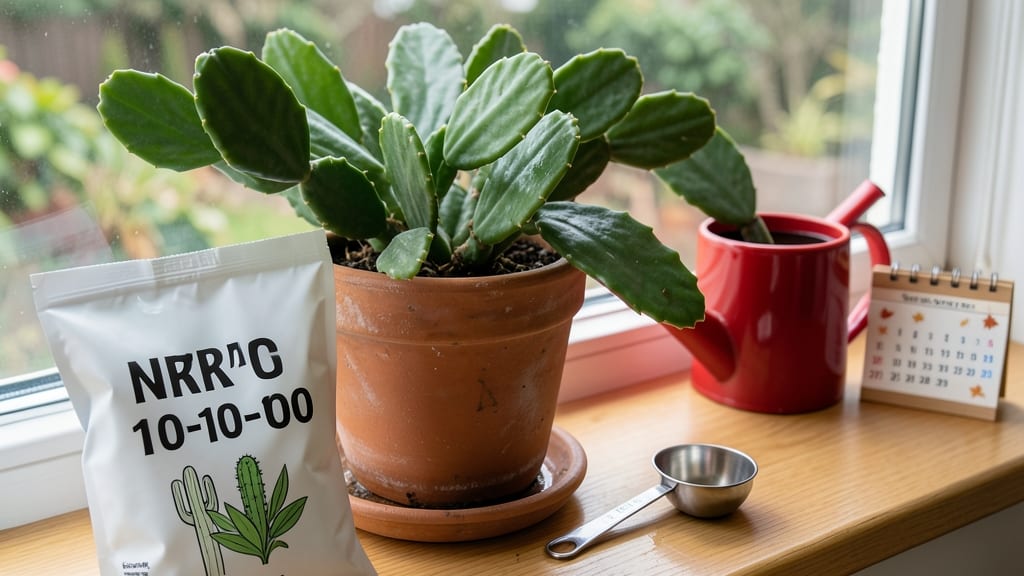
Fertilizing your Christmas cactus 🌸 at the right times—spring, mid-summer, and post-bloom—is the key to vibrant flowers and healthy growth.
Picture this: your plant bursts into color every holiday season, but this year, the buds barely form. The issue? You missed the critical feeding windows when the plant needs nutrients most. Too little fertilizer means sparse blooms; too much can burn the roots and kill your chances entirely.
Most gardeners overcomplicate it, but the science is simple: feed lightly in early spring to kickstart growth, give a mid-summer boost after flowering, and avoid fertilizing during dormancy.
Below, I’ll break down the exact schedule, signs your plant is hungry (or overfed), and the best fertilizer types to use without risking root damage.
By the end, you’ll know exactly when to reach for that fertilizer bottle—and when to leave it on the shelf.

3 Critical times to fertilize your Christmas cactus for maximum blooms
Your Christmas cactus thrives when you feed it at the right moments—think of it like giving your plant a nutrient boost during its growth cycles. Unlike many houseplants, this tropical beauty has three key fertilization windows that align with its natural growth patterns.
Miss these, and you might end up with fewer blooms or leggy, weak stems. The secret? Timing your fertilizer to match your plant’s active growth phases.
Most gardeners make the mistake of fertilizing year-round, which can burn roots or disrupt blooming. Instead, focus on three strategic times: early spring, mid-summer, and post-bloom. Each of these periods serves a different purpose—whether it’s kickstarting new growth, recovering after flowering, or preparing for dormancy.
Let’s break down the science-backed schedule that’ll transform your Christmas cactus into a blooming powerhouse.
- Early Spring (March): Stimulate new growth before blooming season with a balanced fertilizer (10-10-10).
- Mid-Summer (August): Support recovery after flowering with a light feed to rebuild root strength.
- Post-Bloom (October): Prepare for dormancy with a final light feeding to support next year’s buds.
Let’s start with the first critical window: early spring fertilization. This is when your Christmas cactus wakes up from its winter dormancy and begins producing new growth. In March, apply a balanced fertilizer (like 10-10-10) to provide equal parts nitrogen, phosphorus, and potassium.
Nitrogen fuels leafy growth, while phosphorus and potassium prepare the plant for its upcoming blooming phase. Use half the recommended dose to avoid overfeeding—your plant’s roots are still recovering from dormancy.
If you live in a warmer climate (like USDA Zone 10+), your Christmas cactus might start growing earlier. In these regions, begin fertilizing in February instead of March. The key is to fertilize when you see new stems emerging—this is your plant’s signal that it’s ready for nutrients.
For container plants, mix the fertilizer into the top inch of soil or dilute it in water for a gentle application.
The second fertilization window arrives in mid-summer (August), just as your Christmas cactus finishes blooming. This is a recovery phase where the plant rebuilds its energy reserves. Use a light feed—about a quarter of the recommended dose—to avoid shocking the roots.
Focus on a fertilizer with slightly more phosphorus (like 5-10-5) to strengthen roots and prepare for next year’s growth. This step is often overlooked, but it’s crucial for preventing bud drop in future blooms.
For gardeners in cooler climates (like Zones 8-9), you might delay this feeding until late July if your plant hasn’t fully recovered from blooming. Watch for signs of stress, like yellowing leaves or slow growth—these indicate your plant needs a nutrient boost.
If your Christmas cactus is outdoors in a shady spot, it may need an extra light feeding in September to compensate for lower light levels.
The third and final feeding happens in October, right after your plant finishes blooming. This is your post-bloom recovery window, where you give your Christmas cactus one last nutrient push to support next year’s buds. Use a balanced fertilizer again, but reduce the dose to half strength.
This timing helps the plant store nutrients for its dormant period while avoiding overstimulation before winter. After October, stop fertilizing entirely—your plant enters dormancy and won’t benefit from additional nutrients.
If you’re growing your Christmas cactus outdoors in a tropical climate (like Hawaii or Florida), you can extend the fertilization window slightly. In these areas, a light feeding in November can help maintain growth, but avoid fertilizing after December 1st to respect the plant’s natural dormancy cycle.
Always water thoroughly before and after fertilizing to help nutrients absorb evenly and prevent root burn.
One common mistake is fertilizing during winter (November-February). Your Christmas cactus is dormant during these months, and feeding it can lead to salt buildup in the soil or even root damage.
Instead, focus on providing bright indirect light and minimal watering. If you notice yellow leaves or soft stems in winter, it’s likely due to overwatering or over-fertilization—not a nutrient deficiency.
To maximize blooms, pair your fertilization schedule with proper light exposure. Your Christmas cactus needs 4-6 hours of bright indirect light daily to thrive. Place it near an east- or west-facing window, or use a grow light if natural light is limited.
After blooming, reduce watering slightly to encourage dormancy, then resume a normal schedule in spring. With this science-backed approach, your Christmas cactus will reward you with vibrant, long-lasting blooms year after year.
Signs your Christmas cactus needs fertilizer (and when to skip it)
Your Christmas cactus (Schlumbergera) sends clear signals when it craves nutrients. Yellowing leaves, stunted growth, or bud drop before blooming often mean it’s time to feed. But over-fertilizing can burn roots and prevent flowers—so timing matters more than quantity.
First, check the soil. Press your finger 1 inch deep—if it’s dry and the plant looks leggy or weak, it’s likely nutrient-deficient. However, if the soil smells sharp or leaves show brown tips, you’ve overdone it.
⚠️ callout warning ⚠️
- Spring (March-April): Feed when new paddles emerge—this kickstarts growth before blooming.
- Summer (August): Light feed only if leaves look pale after flowering (never in winter!).
- Fall/Winter: SKIP—your plant is dormant and won’t absorb nutrients.
Warning: Fertilizing in winter or over-feeding causes root burn and stunted blooms.
Watch for slow growth after repotting—this is your cue to fertilize 4-6 weeks later. Use a balanced 10-10-10 fertilizer diluted to half-strength to avoid shocking the roots. If buds form but drop prematurely, reduce fertilizer and increase bright indirect light.
Another red flag: Pale green leaves or soft stems signal nitrogen deficiency. In this case, switch to a low-phosphorus fertilizer (like 5-10-10) to avoid promoting leafy growth over flowers. Always water thoroughly before fertilizing to prevent salt buildup.
Pro tip: If your cactus blooms sparingly or not at all, it may need a rest period—skip fertilizer for 2 months and focus on 12-hour darkness to trigger buds. Over-fertilized plants often skip blooming entirely.
Remember, less is more with Christmas cacti. A monthly light feed in spring/summer is better than a heavy dose once a year. When in doubt, skip it—your plant will thank you with vibrant blooms next holiday season. 🌸