
Trees
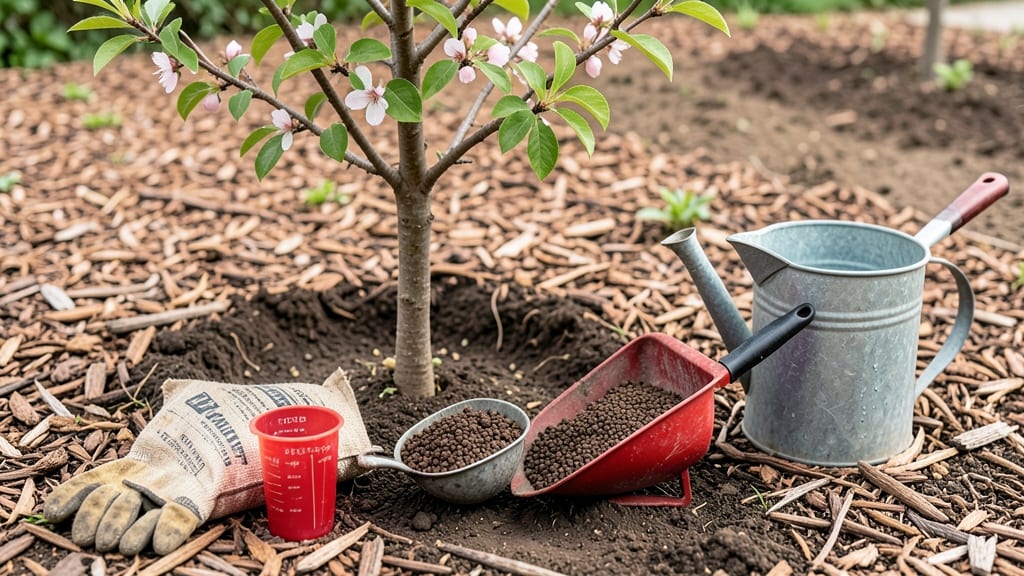
Fertilizing new trees at the right time is the key to helping them take root and grow strong for decades to come.
New trees need careful nurturing to establish strong roots and thrive for decades—but fertilizing too early (or too late) can stunt growth or even kill them. Timing your first-year feeding schedule correctly is the difference between a healthy, resilient tree and one struggling to survive.
In Zone 6, the best window to fertilize your 🌳 is just after planting in late spring or early fall, when the soil is warm but not scorching. A light feeding in early spring (around April) gives young roots the nutrients they need without overwhelming them.
Below, I’ll break down the exact schedule, the signs your tree needs (or doesn’t need) fertilizer, and the three biggest mistakes that sabotage new trees—so you can skip the guesswork and set yours up for long-term success.

Critical fertilizing timeline for new trees in their first year
Fertilizing new trees at the wrong time can do more harm than good. In their first year, trees focus energy on root establishment—not rapid top growth—so timing is everything. Too much fertilizer too soon can burn delicate roots, while waiting too long delays critical nutrient uptake.
My approach prioritizes seasonal growth cycles and soil conditions to create a stress-free feeding schedule.
For newly planted trees (first 3 months), hold off on fertilizer entirely. Their roots are still adjusting to the soil, and over-fertilizing now can cause salt buildup that stunts growth.
Instead, focus on deep watering and mulch application to protect roots and retain moisture. This initial period is about root zone colonization—not feeding.
The real fertilizing window opens when your tree shows new spring growth (typically 3–6 months after planting). This is when roots have expanded enough to handle nutrients. A light application of balanced fertilizer (10-10-10) in early spring kickstarts photosynthesis without overwhelming the system.
For trees planted in late spring or summer, wait until the following spring before fertilizing.
Here’s my first-year fertilizing timeline broken down by tree age and season, with soil type considerations:
For sandy soils, which drain nutrients quickly, I recommend a third light feeding in early summer (June) using a slow-release fertilizer. Monitor your tree’s response—if you see dark green leaves and steady growth, you’re on track.
If leaves yellow or wilt, flush the soil with water to reduce salt buildup and wait 3 months before reapplying fertilizer.
One of the biggest mistakes I see is fall fertilization. Trees entering dormancy don’t need nutrients, and any unused fertilizer can leach into groundwater or burn roots as soils freeze.
Instead, focus on mulching in late fall to insulate roots and protect against winter stress. This passive approach is far more effective than forcing growth in cold weather.
If your tree was planted in late summer or fall, delay all fertilization until the following spring. The priority becomes root establishment in cold soils, not top growth.
Use a soil probe to check moisture levels—dry soil in winter means roots aren’t active enough to process nutrients, even if you apply them.
For container-grown trees, the timeline shifts slightly. Since roots are already established in a limited space, you can apply a half-strength fertilizer every 6–8 weeks from spring to early summer.
However, always water thoroughly before and after feeding to prevent root burn. Containers dry out faster, so monitor moisture closely.
Remember, less is more with young trees. A single balanced fertilizer application in early spring and a second in late spring is often sufficient for most species. Over-fertilizing leads to weak, spindly growth and makes trees more susceptible to pests.
When in doubt, test your soil—a simple pH test can reveal if your tree needs nutrients or just better soil conditions.
By following this timeline, your new tree will develop a strong root system and enter its second year ready to handle more aggressive growth. Patience in the first year pays off with
Best fertilizers for new trees: organic vs. synthetic options
Choosing the right fertilizer for your new tree is just as important as when you apply it. Organic options like compost and aged manure feed roots slowly, while synthetic blends offer precise N-P-K ratios for rapid growth. Each has unique benefits—and drawbacks—depending on your tree’s needs and your gardening goals.
For young trees, I recommend starting with a balanced 10-10-10 fertilizer (equal parts nitrogen, phosphorus, potassium) to support root development and early growth.
Organic fertilizers like bone meal (high in phosphorus) or fish emulsion (rich in nitrogen) are excellent for nutrient-dense soils, while synthetic options provide consistent results in nutrient-poor conditions.
Here’s a quick comparison to help you decide which fertilizer aligns best with your new tree’s needs:
Organic Fertilizers
Pros
- Slow-release nutrients improve soil structure over time
- Enhances microbiome health in the root zone
- Safe for pet-friendly gardens (no harsh chemicals)
- Best for long-term soil fertility
Cons
- Results take 4–6 weeks to appear
- Requires larger quantities for immediate impact
- Can overheat roots if over-applied
- Limited nutrient precision (varies by batch)
Synthetic Fertilizers
Pros
- Immediate nutrient availability (visible results in 2–3 weeks)
- Precise N-P-K ratios tailored to tree species
- Works well in poor or sandy soils
- Easy to measure and apply
Cons
- Can burn roots if over-applied
- Requires frequent reapplication (every 4–6 weeks)
- May disrupt soil microbiome over time
- Not pet-safe (risk of toxicity)
If your new tree is planted in well-draining, nutrient-rich soil, organic fertilizers like composted cow manure or worm castings are ideal for gradual, sustainable growth.
For sandy or depleted soils, a synthetic 10-10-10 blend applied in early spring and late summer can give your tree the quick boost it needs to establish roots.
For fruit-bearing trees or those prone to pests, a balanced organic fertilizer like kelp meal (high in potassium) can strengthen immunity while promoting flowering. Always water deeply after applying fertilizer to help nutrients reach the root zone without burning tender foliage.
Pro tip: Mix organic and synthetic fertilizers for the first year—start with a light synthetic application in early spring to kickstart growth, then follow up with compost or manure in late summer to build soil health.
This hybrid approach ensures your tree gets both immediate and long-term benefits without risking over-fertilization.