
Plants
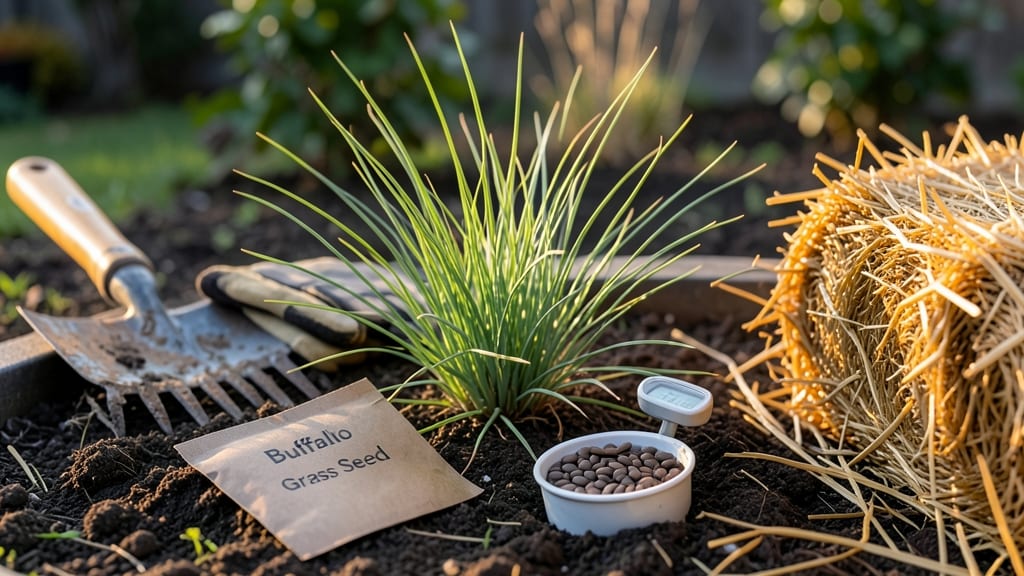
Plant buffalo grass seed in Kansas between late summer and early spring—two windows that avoid the brutal heat and early frosts that can kill young roots.
Kansas’ harsh winters and scorching summers demand precise timing when planting buffalo grass seed—or you risk thin patches, slow growth, or total failure. Get the window wrong, and your lawn could struggle for years.
In USDA Zones 5b-7a, the best times are late August to September (after summer heat subsides) or March to April (before the last frost). Planting too early risks frost damage, while waiting too late means weeds or drought will outcompete your grass.
Below, I break down the exact dates for your zone, soil prep secrets to lock in moisture, and how to beat Kansas’ drought and heat—so your buffalo grass 🌱 thrives from day one.
Best planting months for buffalo grass in Kansas by USDA Zone
Kansas’ USDA Zones 5-7 create distinct planting windows for buffalo grass seed, where timing directly impacts root establishment and winter survival. Unlike cool-season grasses, buffalo grass thrives when soil temperatures stay above 60°F—a threshold Kansas hits at different times depending on your zone.
Plant too early, and frost damage risks your seedlings; too late, and summer heat stresses them before roots form.
For Zone 5b (northern Kansas), aim for late August through September or early April when soil warms consistently. In Zone 6a (central Kansas), you’ve got a slightly longer window—mid-August to October—while Zone 7a (southern Kansas) can extend planting until mid-October or start as early as March.
Here’s the breakdown of optimal planting windows, soil temperature thresholds, and frost risk by zone to maximize your buffalo grass lawn’s success:
In Zone 5b, planting in early April gives seedlings a 3-4 month growing season before winter dormancy. However, if you miss this window, late August is your next best bet—just ensure soil stays warm enough for germination.
For Zone 6a and 7a, the extended fall window lets you plant later, but aim for 6 weeks before first frost to allow roots to anchor.
Spring planting in Zone 7a can start as early as March, but wait until soil temperatures stabilize above 55°F to avoid frost heave (when soil freezes and lifts seedlings).
Use a soil thermometer to confirm—planting too early in cold soil leads to poor root development and weak seedlings that struggle in summer heat.
For fall planting, prioritize late August to September across all zones. This window ensures seedlings establish roots before winter, reducing spring weed competition. In Zone 7a, you can push planting to mid-October, but seedlings may need winter protection (like straw mulch) if frost arrives early.
If you’re in Zone 5b and plant in late spring (May), expect slower growth due to summer heat stress. Seedlings planted in June or July often fail to establish before winter, leaving thin patches.
Always check 7-day weather forecasts for rain—buffalo grass needs 1-1.5 inches of water weekly during establishment, and Kansas’ summer drought can derail germination.
Pro tip: Test soil moisture before planting. Stick a screwdriver into the soil—if it goes in easily, it’s too dry. Wait for natural rainfall or water lightly to moisten the top 1 inch of soil. Overwatering before planting can wash seeds away or cause seed rot.
For best results, combine planting with lightly raking seed into topsoil (no deeper than ¼ inch) and a thin layer of straw mulch to retain moisture. This method works across all Kansas zones and helps seedlings compete with crabgrass and other weeds.
Critical factors that determine your exact planting date
Your exact planting date for buffalo grass seed in Kansas depends on local microclimates, soil moisture, and rainfall forecasts—not just the calendar. For example, Wichita’s Zone 7a might allow planting in early March, while Hays’ Zone 5b could need to wait until mid-April.
These variations can mean the difference between a lush lawn and a failed seedbed.
Start by checking your last frost date (typically April 15 for Zone 5b and March 20 for Zone 7a). Planting too early risks frost heave, where soil freezes and lifts young roots. Conversely, waiting too late means weed competition or drought stress before roots establish.
Soil moisture is another game-changer. Kansas’ clay-heavy soils retain water but can suffocate seeds if oversaturated. Aim for 60-70% soil moisture at planting—test by squeezing a handful of soil. If it holds shape but crumbles when poked, it’s ideal.
Rainfall forecasts also matter: if 0.5 inches of rain is predicted within 7 days of planting, you can skip pre-watering.
🌱 Critical Factors for Planting Buffalo Grass in Kansas
- 1. Microclimate: South-facing slopes warm faster than north-facing areas—plant 2-3 weeks earlier on slopes.
- 2. Soil Moisture: Test soil moisture 2 inches deep—aim for 60-70% saturation at planting.
- 3. Rainfall Forecast: If 0.5+ inches of rain is predicted within 7 days, skip pre-watering.
- 4. Seed Variety: ‘Bison’ germinates faster than ‘Turffalo’—plant ‘Bison’ 10-14 days earlier if unsure.
- 5. Last Frost Date: Use USDA frost maps to adjust for Zone 5b vs. 7a differences.
- 6. Weed Pressure: Plant when soil temps are 60°F+ to outcompete weeds.
Seed variety also plays a role. ‘Bison’ germinates in 10-14 days at 70°F soil temps, while ‘Turffalo’ takes 14-21 days. If you’re unsure about timing, choose ‘Bison’—it’s more forgiving for late spring plantings. For late summer plantings, ‘Turffalo’ handles cooler fall soils better.
Don’t overlook soil temperature. Buffalo grass seeds need 60°F+ soil temps to germinate. Use a soil thermometer ($10 at garden centers) to monitor—plant only when temps stay above 60°F for 5+ days. In Kansas, this usually means mid-May for spring or late August for fall.
Finally, create a Kansas-specific planting checklist: ☑️ Test soil moisture 2" deep ☑️ Check 7-day rainfall forecast ☑️ Confirm soil temps are 60°F+ ☑️ Adjust for microclimate (slopes vs. valleys) ☑️ Choose seed variety based on timing With these factors nailed down, your buffalo grass will establish twice as fast and outlast Kansas’ extremes.