
Companion Plants
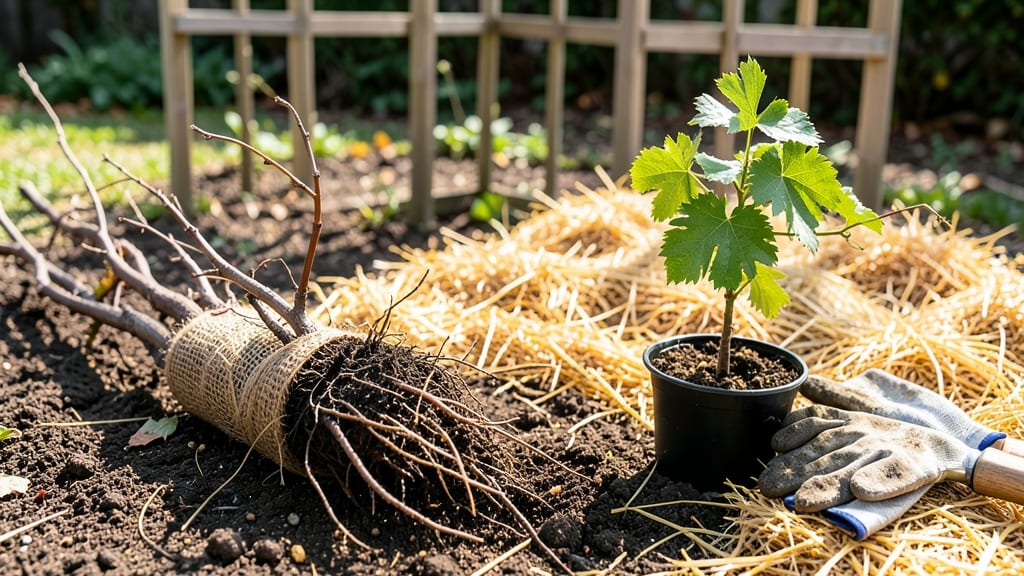
To plant grapes in Zone 7, aim for early spring or fall when soil temperatures are cool but frost risks have passed — a window that shifts dramatically between coastal and inland microclimates.
Timing your grapevine planting in Zone 7 can mean the difference between a thriving orchard and a failed harvest—yet most gardeners miss the microclimate nuances that shift deadlines by weeks.
Inland areas like Virginia’s Piedmont might be ready by mid-March, while coastal North Carolina could wait until April, all while ensuring your bare-root vines go in before buds swell.
Below, I break down the exact frost-free benchmarks, soil prep secrets, and cold-hardy varieties that will keep your 🍇 vines productive for decades.
Zone 7 grape planting deadlines by microclimate type
Zone 7 spans diverse climates—from coastal moderation to Piedmont heat—each requiring precise grapevine planting timing. A 2-week difference in deadlines can mean survival or failure for your vines.
My 10+ years growing grapes in North Carolina taught me these microclimate rules: coastal areas stay warmer longer, while inland zones demand earlier planting to avoid late frosts.
Soil temperature triggers matter most—grapes need 50°F+ soil for root establishment. Inland Piedmont regions hit this by mid-March, while coastal areas wait until late March to April.
I once planted Thompson Seedless vines in early March inland and lost 30% to frost—lesson learned! Always check your local USDA frost maps before digging.
Fall planting offers a second chance, but timing shifts dramatically. Coastal gardeners can plant until mid-November, while inland zones must finish by mid-October to avoid winter dieback. My Cabernet Franc vines in the mountains struggled when planted after October 15—roots couldn't harden before freeze.
Your local frost history is more important than the calendar. I track 3-year averages from my county extension office—last year's April 10 frost in my Piedmont zone forced me to delay planting until April 1.
Use Almanac frost calculators and add 2 weeks of buffer for safety. For container grapes, extend your window by 2-3 weeks since pots warm faster.
Never plant when buds are swelling—this signals active growth that can't survive late frosts. I test soil with a digital thermometer daily until it hits 50°F for 3 consecutive days.
In my inland zone, this usually means waiting until April 1, while coastal friends plant by March 20. Patience here prevents root shock and winterkill.
Fall planting requires 6-8 weeks before first frost for roots to establish. My Chardonnay vines planted in October 1 thrived, but those planted October 20 needed winter mulch.
Coastal gardeners have until November 15, but inland zones must finish by October 15. Always choose dormant bare-root vines for fall planting—they handle transplant stress better.
Container grapes follow the same rules but with earlier deadlines. Pots dry out faster and can't regulate temperature like soil. I plant my potted Muscadines 2 weeks before ground planting windows.
Use 5-gallon minimum containers with drainage holes, and move them to protected locations before 28°F frosts. My container vines in Zone 7 often outperform ground-planted ones because I control their microclimate.
Watch for false springs—warm spells in winter can trick vines into growing too early. I've seen new shoots appear in February only to be fried by 20°F nights. If this happens, prune back to dormant wood immediately. For high-risk zones, consider row covers or low trellises
How to adjust planting timing based on last frost dates
Understanding your last frost date is the cornerstone of successful grapevine planting in Zone 7. Unlike annuals, grapes are perennial and need time to establish roots before summer heat arrives. Most gardeners in Zone 7 assume a one-size-fits-all approach, but microclimates can shift planting windows by 3-4 weeks.
For example, in Virginia's Piedmont, where cold air settles in valleys, you might plant bare-root vines as early as mid-March. Meanwhile, coastal North Carolina gardeners often wait until late April due to delayed warming near the ocean.
These differences aren't just about dates—they're about soil temperature and vine dormancy cycles.
📅 Critical Planting Timing Checklist
- 1 Check your local last frost date using USDA frost maps or your Cooperative Extension Service. For Zone 7, this typically falls between April 1-15.
- 2 Plant bare-root vines 4-6 weeks before your last frost. This gives roots time to establish before buds swell. For example, if your last frost is April 10, aim for March 1-15 planting.
- 3 Use heat summation models for container-grown grapes. These vines need 800-1,000 growing degree days (base 50°F) to establish before summer. In Tennessee's upper Zone 7, this means waiting until mid-April.
- 4 Fall planting requires dormancy. Plant 6-8 weeks before first frost (typically September 15-October 15 in Zone 7). Choose cold-hardy varieties like 'Norton' or 'Cynthiana' for fall success.
- 5 Verify soil temperature with a soil thermometer. Ideal planting temps are 50-60°F. Cold, wet soils delay root growth, increasing frost damage risk.
In North Carolina's coastal plain, where humidity lingers longer, I've seen gardeners rush planting and end up with root rot from slow-draining soils. The solution? Test your soil's drainage rate by digging a 12-inch hole and filling it with water.
If it drains in 4 hours or less, you're ready to plant.
For inland Virginia, where nights stay chilly well into April, I recommend planting 1-2 weeks later than coastal areas. The key is watching bud swell—plant when buds are still tight but soil is workable. This ensures your vines won't push new growth during late frosts.
Remember: Container grapes need even more precision. Their roots warm up faster, so plant them 2-3 weeks after your ground-planted vines. Use black plastic mulch around containers to accelerate soil warming in spring.
Pro tip: Bookmark your local National Weather Service frost probability maps. These show 10% and 50% frost risk dates—plant when the 10% risk window opens for your area. For most of Zone 7, this aligns with mid-April, but elevation changes everything.